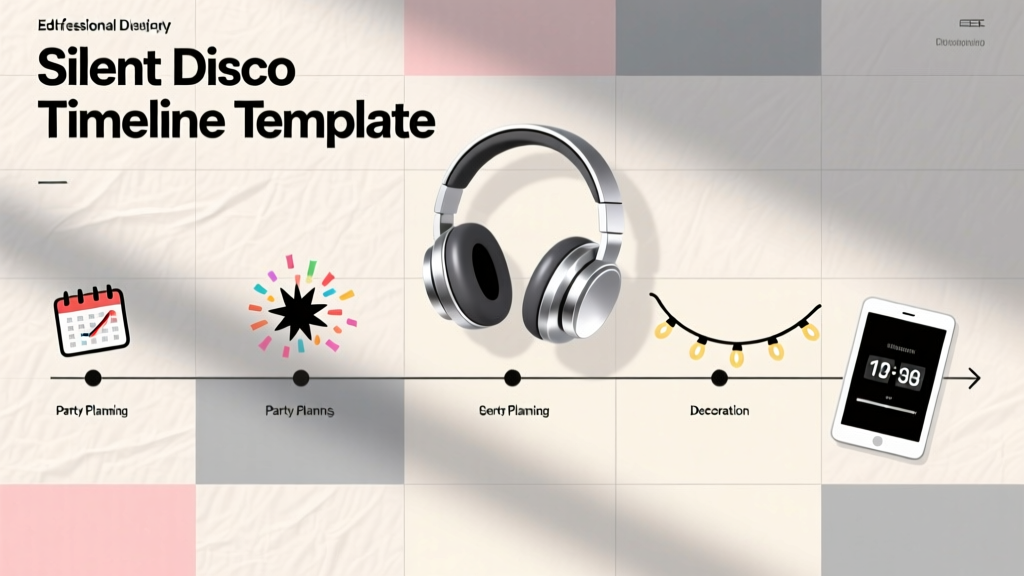
A Silent Disco Timeline Template
A silent disco looks effortless when it’s done well: guests dancing under lights, switching channels, laughing at the “three different parties on one dance floor” moment. Behind that ease is a detailed plan—because a silent disco is equal parts event production, audio logistics, and guest experience design.
Unlike a traditional DJ setup, you’re coordinating wireless headphones, multiple music channels, battery management, distribution and collection stations, and clear attendee instructions—all while keeping the vibe high. Proper planning prevents the classic silent disco pitfalls: dead batteries, long check-in lines, missing headphones, or a confusing “how does this work?” first impression.
This silent disco timeline template gives you a step-by-step planning schedule, practical checklists, budget guidance, vendor selection tips, and real-world examples you can adapt for weddings, corporate events, school functions, festivals, and private parties.
What Makes Silent Disco Planning Different?
A silent disco is a unique event format where guests listen to music through wireless headphones instead of speakers. The result is lower noise complaints, flexible music choices, and a memorable interactive experience. The tradeoff: more moving parts to coordinate.
Key elements you’ll plan for
- Headphone inventory: quantity, channel capability (2–3 channels), fit, sanitation, and spares
- Audio sources: DJs, playlists, live performers, or hybrid options
- Signal and interference: transmitter placement, venue layout, distance limitations
- Guest flow: distribution, ID/credit card holds (if used), returns, lost-and-found
- Power management: charging cycles, backup batteries, charging station access
- Lighting and atmosphere: uplights, dance floor lighting, glow accessories, signage
- Accessibility: clear instructions, volume safety guidance, accommodations for guests with hearing sensitivities
At-a-Glance Silent Disco Timeline (Quick Template)
Use this as a high-level planning map. The detailed timeline with checklists comes next.
- 8–12 weeks out: Define goals, confirm venue, choose format, shortlist vendors, outline budget
- 6–8 weeks out: Book headphone provider/DJs, finalize event layout, plan guest flow, confirm power needs
- 4–6 weeks out: Build playlists or DJ briefs, order lighting/decor, draft signage and instructions
- 2–4 weeks out: Confirm staffing, lock in run-of-show, finalize risk plan and inventory process
- 1 week out: Confirm vendor arrival times, print checklists, prep labels, test plan, comms plan
- Event day: Load-in, setup, sound check, doors, peak management, breakdown, reconciliation
- 1–3 days after: Return rentals, review damages/losses, gather feedback, document improvements
The Step-by-Step Silent Disco Planning Timeline Template
8–12 Weeks Before: Foundation & Feasibility
This phase determines whether your silent disco will feel premium and seamless or improvised and stressful.
Checklist
- Define event purpose and success metrics
- Examples: “500 attendees with a 15-minute max wait at pickup,” “70% participation on the dance floor,” “zero noise complaints”
- Choose your silent disco format
- 2-channel: simpler, lower cost
- 3-channel: best for mixed demographics (Top 40, throwbacks, EDM, Latin, etc.)
- DJ vs. curated playlists: DJs boost energy and transitions; playlists reduce cost and complexity
- Confirm venue and constraints
- Indoor/outdoor, curfew, power access, coverage area
- Rain plan for outdoor events (tenting, indoor fallback)
- Any restrictions on lighting, fog, or amplified sound (even if you’re “silent”)
- Draft your budget range (see budget section below)
- Start vendor research
- Silent disco headphone rental company
- DJs (if applicable)
- Lighting vendor (or DIY lighting plan)
- Security/staffing support for check-in and returns
Real-world example
Corporate summer party (150 guests): The planning team chose 3 channels—Top 40/Pop, 90s–2000s throwbacks, and EDM—to reduce “music complaints.” They set a success metric of under 10 minutes average headphone pickup time and hired two attendants dedicated to distribution.
6–8 Weeks Before: Book Vendors & Build the Guest Experience
Now you’re locking in key partners and turning the event idea into an operational plan.
Checklist
- Book your headphone rental provider
- Confirm quantity + spares (recommended 5–10% extra)
- Confirm number of channels and transmitter type
- Ask about sanitation process and replacement fees
- Clarify delivery/shipping vs. on-site tech support
- Book DJs or define your playlist plan
- If DJs: confirm they’ve done silent discos before
- If playlists: assign a “music captain” per channel
- Create a venue layout
- Headphone pickup station near entrance
- Return station positioned to prevent exit bottlenecks
- Transmitter placement for full coverage
- Lighting zones: dance floor, lounge, photo area
- Plan guest flow and tracking
- Decide: ID hold, credit card hold, deposit ticket, or trust-based system
- Prepare a simple inventory method (scan/numbered tags)
Vendor selection tips (headphone providers)
- Ask what’s included: transmitters, chargers, aux cables, signage, spare ear pads
- Confirm support model: on-site technician vs. remote troubleshooting
- Check range and reliability: ask for recommended transmitter placement for your square footage
- Review replacement costs: lost/damaged headphone fees can impact your final budget
4–6 Weeks Before: Content, Communication, and Atmosphere
Silent discos win when guests understand the experience quickly and the space feels energetic.
Checklist
- Build your channel identities
- Channel 1: “Red = Pop Hits”
- Channel 2: “Blue = Throwbacks”
- Channel 3: “Green = EDM/House”
- Create a short “How It Works” script for MC/DJ and signage
- Order lighting and decor
- Trends: LED wash lighting, intelligent moving lights (even one or two), neon signage, glow accessories
- Consider branded moments for corporate events (logo gobo, step-and-repeat)
- Plan staffing
- Recommended: 1 attendant per 75–100 guests at pickup; 1 per 100–150 at returns
- Assign one “floor lead” to handle issues and coordinate with DJs
- Confirm permits and insurance if required by venue/municipality
Practical tip: reduce confusion in the first 10 minutes
- Use large signage with three steps: Pick up → Switch channel → Adjust volume
- Add color-coded wristbands or stickers matching channel colors
- Have attendants demonstrate how to change channels and fit the headphones
2–4 Weeks Before: Operations, Risk Planning, and Run-of-Show
This is where professional event coordination habits pay off: documented plans, backups, and clear roles.
Checklist
- Finalize your event run-of-show
- Doors open, first track, welcome moment, peak set, last call, final song
- Confirm load-in/load-out schedule with venue and vendors
- Create an issue-response plan
- Dead battery: swap station + charging queue
- Signal drop: reposition transmitter / reduce obstructions
- Lost headphone: documentation + deposit/fee policy
- Guest discomfort: quiet zone + ear pad alternatives if available
- Inventory controls
- Number every headphone unit (or confirm vendor numbering)
- Use a simple check-out/check-in sheet (or scanning app)
- Decide your “cutoff” for returns and final reconciliation process
Run-of-show mini template (sample)
- T-120 min: Vendor load-in, transmitter setup, lighting focus
- T-60 min: Headphone distribution station set, signage placed, staff briefing
- T-30 min: Sound check on all channels, quick staff practice checkout
- Doors: Welcome announcement + “How it works” demo
- +60 min: First peak set (coordinate across channels)
- +120 min: Photo moment / group song prompt (encourages channel switching)
- Last 20 min: Begin return reminders, slow the pickup of new headphones if needed
- End: Final song countdown + organized returns
1 Week Before: Confirmations, Printing, and Final Prep
Checklist
- Confirm every vendor’s arrival time, parking, and point of contact
- Print your event binder (or digital equivalent)
- Vendor contacts, venue rules, layout, run-of-show, staffing assignments
- Headphone inventory checklist
- Prep signage and station supplies
- Stanchions/rope for lines
- Table covers, clipboards, pens, wristbands
- “Returns Here” signs visible from the dance floor
- Confirm music details
- DJs: must-have songs, do-not-play list, brand-safe requirements (corporate/school)
- Playlists: download offline, backup device, charging cables
Event Day: Setup, Showtime, and Breakdown
Event day checklist
- Setup & testing
- Test each channel in multiple venue zones
- Confirm lighting timing and intensity (avoid blinding guests)
- Set up a “help desk” for swaps and questions
- Staff briefing (10 minutes)
- How to fit headphones, switch channels, troubleshoot basic issues
- Lost/damage policy script
- Who handles escalations
- During the event
- Monitor lines; open a second pickup point if needed
- Encourage channel switching with fun prompts (theme battles, “blue team vs red team” songs)
- Track battery swaps if your model requires it
- Returns & reconciliation
- Create a clear exit path that funnels past the return station
- Count units before packing; note damages immediately
1–3 Days After: Wrap-Up and Process Improvement
- Return rentals on time to avoid fees
- Review loss/damage and resolve deposits if used
- Send a short feedback survey (best channel, wait times, overall satisfaction)
- Document improvements for next time (what signage worked, staffing levels, vendor notes)
Silent Disco Budget Considerations (Sample Breakdown)
Your budget depends on guest count, number of channels, whether you’re hiring DJs, and how “produced” the atmosphere is (lighting, decor, staff). Here’s a practical budget framework planners use.
Typical cost categories
- Headphone rentals (largest line item for most events)
- DJs or music management (1–3 DJs or curated playlist setup)
- Lighting (DIY uplights to full lighting package)
- Staffing (check-in/returns attendants, floor lead, security as required)
- Venue and permits (including insurance)
- Signage and supplies (wristbands, labels, stanchions)
- Contingency (recommended 10–15%)
Budget example: 100-guest private party (mid-range)
- Headphone rental (100 units + spares): 45–55%
- DJ or music setup: 15–25%
- Lighting/decor: 10–20%
- Staffing & security: 5–15%
- Signage/supplies: 2–5%
- Contingency: 10%
Smart ways to control costs
- Use a 2-channel system for smaller groups with a clear audience profile
- Hire one DJ + one curated channel (hybrid approach)
- Prioritize lighting over extra decor—lighting does more for energy and photos
- Reduce losses with clear returns flow and visible signage (loss fees add up fast)
Common Silent Disco Planning Mistakes to Avoid
- Under-ordering headphones: If you have 150 guests, ordering exactly 150 units leaves no room for breakage or late surges. Add 5–10%.
- Ignoring check-in logistics: The best DJ can’t save a first impression ruined by a 25-minute pickup line. Use stanchions and enough staff.
- No plan for returns: Guests will wander out still wearing headphones if the return station isn’t unavoidable and clearly marked.
- Weak signage and instructions: Silent discos need a simple “how it works” message repeated via signage and a quick demo.
- Skipping signal testing: Venue layouts, walls, and outdoor distances can create dead spots. Test channels around the entire footprint before doors.
- Not managing volume and comfort: Encourage safe listening levels and have a quiet zone for guests who need a break.
FAQ: Silent Disco Event Planning
How many headphones should I rent for a silent disco?
Plan for your peak attendance, not your RSVP count. A common standard is guest count + 5–10% extra for spares, swaps, and unexpected demand.
Do I need a DJ for a silent disco?
No. You can run a silent disco with curated playlists, but a DJ (or two) often improves energy, crowd reading, and transitions. Many planners choose a hybrid: one DJ-led channel and one or two playlist channels.
What’s the best number of channels?
Two channels works for smaller events or a single demographic. Three channels is the most popular for weddings, corporate events, and public parties because it reduces music conflicts and keeps guests engaged.
How do you prevent headphones from being lost or stolen?
Use an organized distribution/return plan: clear signage, a return station placed near the exit, assigned staff, and an inventory process (numbered units, simple check-in/out). For public events, consider a deposit or ID hold policy.
Can you host a silent disco outdoors?
Yes, and it’s a strong trend for noise-sensitive neighborhoods and venues with strict sound ordinances. You’ll need a weather plan (tenting or indoor backup), reliable power access, and signal testing across the outdoor footprint.
How long should a silent disco last?
Most silent discos run 2–4 hours. For corporate events and weddings, 2–3 hours often hits the sweet spot for energy and logistics (battery management, returns, and guest pacing).
Next Steps: Turn This Template Into Your Custom Event Plan
- Pick your date, venue, and estimated guest count
- Choose a 2- or 3-channel format and decide DJ vs playlist
- Request quotes from headphone rental vendors and confirm what’s included
- Build your run-of-show and staffing plan using the checklists above
- Design your guest flow first—pickup and returns are the make-or-break moments
If you want more step-by-step event planning, party organization, and coordination templates, explore the latest guides on smartpartyprep.com to plan with confidence and host with style.
More Articles
 How to Keep Meatballs Warm for Party: 7 Proven, Stress-Free Methods That Prevent Soggy, Cold, or Overcooked Disasters (No Chafing Dish Required)
 What Party Was Abraham Lincoln? The Surprising Truth Behind His Political Identity — And Why Most People Get It Wrong (Spoiler: It Wasn’t the GOP We Know Today)
 What Do You Take to a Gender Reveal Party? The Real-World Checklist No Guest Should Show Up Without (Including What to Skip, When to Bring Gifts, and How to Avoid Awkward Moments)