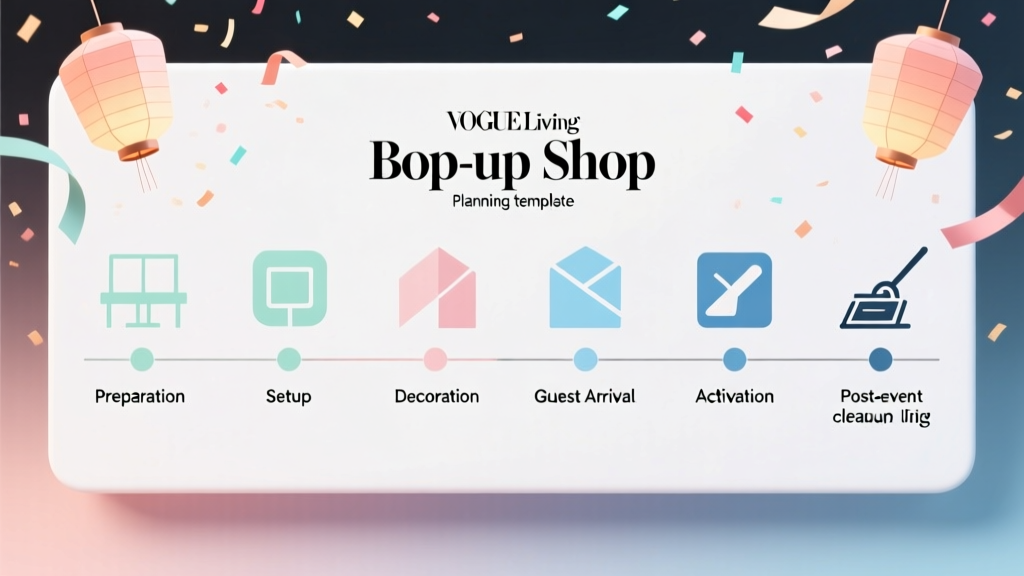
A Pop-Up Shop Timeline Template
Pop-up shops look effortless when done well: a curated space, a clear brand story, and a steady flow of shoppers who feel like they discovered something special. Behind that “overnight success,” though, is a detailed event planning timeline that coordinates venue, vendors, staffing, marketing, permits, and day-of logistics.
Whether you’re a first-time founder, a boutique owner testing a new neighborhood, or an event planner producing a brand activation, a pop-up shop benefits from the same professional coordination strategies used in larger events: backward planning from a fixed date, building in buffers, and assigning ownership for every task.
This pop-up shop timeline template gives you step-by-step guidance, checklist items, budget considerations, and real-world examples so you can stay organized, reduce last-minute costs, and create a shopping experience that feels intentional and on-brand.
What This Pop-Up Shop Timeline Covers (and How to Use It)
Use this template as a planning framework and adjust the timing based on your scale. A one-day pop-up in a shared market might need 2–4 weeks. A multi-day retail takeover in a premium space often needs 8–12 weeks. If you’re coordinating multiple vendors, influencers, or press, plan for the longer runway.
Quick Setup: Your Pop-Up Shop Planning Basics
- Event goal: Sales, lead capture, brand awareness, product testing, community engagement
- Event format: One-day pop-up, weekend shop, recurring monthly pop-up, brand activation
- Venue type: Retail vacancy, gallery, café collaboration, market booth, mobile trailer
- Success metrics: Revenue target, foot traffic, conversion rate, email/SMS signups, social reach
- Planning tools: Shared checklist (Google Sheets/Notion), calendar, budget tracker, vendor contacts list
Pop-Up Shop Timeline Template (8 Weeks to Event Day)
This is a flexible pop-up shop planning timeline built for most small-to-mid-sized pop-ups. If you have less time, keep the order of tasks and compress the deadlines.
8 Weeks Out: Define the Concept, Scope, and Budget
- Confirm your pop-up shop theme and customer promise (why someone should visit in person).
- Outline your product mix and inventory plan:
- Top sellers, limited editions, bundles, samples, add-ons
- Estimate units needed based on expected traffic and conversion
- Create a simple budget breakdown (see sample below).
- Set your event date(s), hours, and rain plan if any portion is outdoors.
- Assign roles:
- Event lead (final decisions)
- Vendor/venue coordinator
- Marketing lead
- Operations lead (inventory, POS, staffing)
7 Weeks Out: Secure Venue + Confirm Requirements
- Source venue options and request:
- Pricing and what’s included (tables, chairs, lighting, storage)
- Load-in/load-out times and freight/elevator access
- Insurance requirements (COI)
- Rules for signage, music, candles, food/beverage
- Confirm utilities and connectivity:
- Power outlets and capacity for lights, POS, phone chargers
- Wi-Fi reliability (or plan for hotspot backup)
- Start permits and compliance research:
- Sales tax permits, temporary retail permits (varies by city)
- Fire code occupancy limits
- Health permits if offering food samples
6 Weeks Out: Build Your Vendor Team and Experience Plan
- Select vendors as needed:
- Photography/videography
- DJ/playlist licensing (or simple curated playlist)
- Security (if high-value items or high foot traffic)
- Rentals (racks, mirrors, stanchions, pedestals)
- Floral/installation or décor support
- Map the customer journey:
- Street visibility → entry moment → browse zones → try-on/demo → checkout → post-purchase photo moment
- Draft a floor plan and fixture list:
- Display tables, shelves, rack spacing, fitting area, cashier station
- Backstock area and packaging station
- Start designing event branding: signage, price tags, QR codes, bag stickers, thank-you cards.
5 Weeks Out: Marketing Strategy + Partnerships
- Create a marketing calendar with weekly posting themes.
- Set up event pages and listings:
- Google Business Profile post, Eventbrite (if ticketing), local community calendars
- Instagram bio link landing page with hours, address, parking, and RSVP
- Outreach to partners:
- Neighbor businesses for cross-promotion (coffee shop collab, “show your receipt” perks)
- Micro-influencers (local creators with engaged communities)
- Local press/bloggers (send a short pitch + images)
- Plan an engagement hook aligned with current event trends:
- Personalization bar (monogramming, custom labels)
- Limited-time drops at set hours
- Photo moment with branded backdrop
- Workshops or demos (short, schedule-based)
4 Weeks Out: Operations Lock + Inventory Forecast
- Finalize inventory quantities and reorder deadlines.
- Confirm POS setup:
- Card reader tested, tap-to-pay enabled, offline mode configured
- Receipt options and return policy posted
- Staffing plan:
- Peak hours coverage
- Break schedule
- Roles: greeter, floor support, cashier, stock runner
- Create a day-of run of show:
- Load-in start, setup milestones, doors open, content capture windows, close, teardown
- Order packaging supplies:
- Bags, tissue, stickers, thank-you cards
- Bubble wrap or boxes for fragile items
3 Weeks Out: Design Details + Guest Comfort
- Confirm lighting plan (a major sales driver in retail pop-ups).
- Finalize signage:
- Hours, pricing, promotions, QR codes, payment methods
- Directional signs (entry, checkout, fitting room)
- Plan accessibility and flow:
- Clear walkways, stroller/wheelchair-friendly routes
- Queue plan for checkout (stanchions or floor markers)
- Prepare lead capture tools:
- QR code for email/SMS signup
- Incentive (10% off next purchase, giveaway entry)
2 Weeks Out: Confirmations + Staff Training
- Vendor confirmations in writing:
- Arrival times, contact numbers, payment schedule
- Setup requirements and what they’re bringing
- Staff training:
- Product knowledge, pricing, promos
- Checkout flow and troubleshooting (refunds, exchanges)
- Customer service scripts for busy periods
- Content plan (efficient and trend-aware):
- Short-form video shot list: setup timelapse, product highlights, customer reactions (with permission)
- Plan a “quiet hour” for filming before doors open
- Confirm insurance/COI and permits are approved.
1 Week Out: Final Prep + Packing List
- Send final event reminders:
- Email/SMS to your list
- Social countdown posts and stories
- Parking/public transit details
- Print and pack:
- Price lists, signage, QR codes, return policy signage
- Cash box (even if primarily card), small bills, tip jar if applicable
- Assemble an event kit:
- Scissors, tape, zip ties, extension cords, power strips, Sharpies
- First aid kit, stain remover, lint roller, paper towels
- Hand sanitizer, disinfecting wipes
- Confirm inventory packing plan:
- Labeled bins by product category
- Backstock separated from display stock
Event Day: Run of Show (Sample Schedule)
- Load-in & setup (3–5 hours before open): fixtures, signage, lighting, POS test, merchandising.
- Team huddle (30 minutes before open): roles, promos, emergency contacts, goals.
- Open doors: greeter active, lead capture live, music/ambience set.
- Peak-hour management: restock cycles, queue management, content capture in short bursts.
- Close: last call announcement, final transactions, inventory count, pack-out plan.
- Teardown: restore venue, load-out, take photos of the space for records.
48 Hours After: Follow-Up and Reporting
- Send thank-you email/SMS with a link to shop online or book services.
- Post recap content and tag partners/vendors.
- Reconcile sales, expenses, and inventory:
- Total revenue, profit estimate, top sellers, slow movers
- Foot traffic estimate and conversion rate
- Capture lessons learned while it’s fresh:
- What layout worked, what caused bottlenecks
- Which marketing channels drove visits
Pop-Up Shop Checklist (Copy/Paste)
- Planning: goals, date, hours, theme, floor plan, staffing plan
- Venue: contract, load-in/out, utilities, COI/insurance, permits
- Marketing: event page, content calendar, influencer outreach, signage plan
- Operations: inventory, POS, packaging, return policy, lead capture
- Experience: lighting, music, décor, photo moment, accessibility, line management
- Day-of: run of show, event kit, cash box, staff meals/water
- Post-event: follow-up, reporting, vendor payments, restock plan
Budget Considerations (Sample Breakdown)
Your pop-up shop budget will vary based on city, venue type, and production level. Use this starting point to avoid surprises and keep event coordination tight.
Sample Budget: 1–2 Day Pop-Up (Mid-Range)
- Venue rental: 25–40%
- Build-out & rentals (racks, tables, mirrors, lighting): 10–20%
- Marketing & signage (printing, ads, flyers): 10–15%
- Staffing: 10–20%
- Photo/video content: 5–15%
- Insurance/permits: 2–8%
- Décor/ambience (florals, backdrop, music): 3–10%
- Contingency buffer: 8–12%
Money-Saving Strategies That Don’t Cheapen the Experience
- Choose a venue with great natural light to reduce lighting rental needs.
- Co-host with a complementary brand and split venue/marketing costs.
- Use modular fixtures you can reuse: rolling racks, folding tables, risers.
- Invest in high-impact signage over excessive décor; clear pricing speeds up sales.
- Schedule a shorter professional photo session and supplement with staff-shot content.
Vendor Selection Tips (Practical and Contract-Smart)
- Match vendors to your goals: If your main KPI is sales, prioritize lighting, fixtures, and checkout efficiency before extras.
- Ask for pop-up experience: Vendors familiar with fast load-ins and tight footprints will save you hours.
- Confirm what’s included: Delivery fees, setup/strike labor, overtime rates, power needs.
- Get everything in writing: arrival window, contact person, payment terms, cancellation policy.
- Build a preferred vendor list: Great event planning becomes easier when you reuse reliable partners.
Real-World Examples: How the Timeline Changes by Pop-Up Type
Example 1: “New Collection Weekend Pop-Up” (Apparel Brand)
- Goal: Sell limited drop + collect emails
- Timeline focus: Inventory readiness, fitting room setup, content plan for try-ons
- Pro tip: Create bundles (top + accessory) to lift average order value during peak hours.
Example 2: “Neighborhood Collab Pop-Up” (Skincare + Coffee Shop)
- Goal: Brand awareness + sampling
- Timeline focus: Health/compliance for samples, cross-promo calendar, queue flow at the counter
- Pro tip: Offer a QR code coupon redeemable online so you can track pop-up-driven revenue.
Example 3: “Holiday Market Booth” (Handmade Goods)
- Goal: High-volume sales in a short window
- Timeline focus: Fast setup checklist, clear pricing signage, packaging speed
- Pro tip: Pre-make best-selling gift sets and keep backstock in labeled bins for quick restocks.
Common Pop-Up Shop Planning Mistakes to Avoid
- Underestimating setup time: Add a buffer. Load-in delays are common, especially in shared buildings.
- Weak signage and unclear pricing: If customers have to ask, your staff gets overwhelmed and sales slow down.
- Ignoring Wi-Fi/POS backups: Always test payments on-site and prepare offline mode plus hotspot options.
- Overdecorating without improving flow: A beautiful setup that creates bottlenecks hurts the customer experience.
- Not capturing leads: Even a successful sales day is a missed opportunity without email/SMS follow-up.
- No post-event plan: The real payoff often comes from retargeting and follow-up offers.
FAQ: Pop-Up Shop Planning and Coordination
How far in advance should I plan a pop-up shop?
For a simple pop-up in a shared market, 2–4 weeks can work. For a dedicated venue rental with vendors, marketing, and permits, aim for 8–12 weeks to secure the best dates and avoid rush fees.
Do I need permits to run a pop-up shop?
Many locations require temporary sales permits or sales tax registration, and venues may require proof of insurance. If you’re offering food samples, additional health regulations can apply. Check your city and venue requirements early in the timeline.
What’s the best layout for a small pop-up shop?
Prioritize clear traffic flow: a visible entrance moment, a simple loop to browse, and a checkout area that doesn’t block the door. Keep high-demand items away from the entrance to prevent crowding.
How do I estimate inventory for a one-day pop-up?
Start with a traffic estimate, then apply a conservative conversion rate (often 10–30% depending on audience fit) and an average items-per-order number. Build in extra units of top sellers and plan restock access from backstock.
Should I hire a photographer or rely on phone content?
If brand growth is a goal, a short professional session is worth it—especially for venue shots, product styling, and a few high-quality reels. Phone content still matters for real-time social posts; plan both.
How can I drive foot traffic without a big ad budget?
Use partner cross-promotions, local community groups, micro-influencers, and strong street-level signage. A simple incentive (giveaway entry, limited-time drop, personalization) increases urgency and shareability.
Next Steps: Turn This Template Into Your Pop-Up Action Plan
Pick your event date, then work backward using the 8-week timeline above. Add each checklist item into a shared planning doc, assign an owner, and set deadlines with a one-week buffer wherever possible. With a clear run of show, a realistic budget, and smart vendor coordination, your pop-up shop can feel polished, profitable, and memorable.
For more practical event planning templates, party organization checklists, and coordination guides, explore the latest resources on smartpartyprep.com.
More Articles
 Which political party believes in small government? The truth behind libertarian ideals, GOP platform shifts, and why 'small government' means wildly different things to Democrats, Republicans, and Libertarians in 2024.
 Which Party Is Leading in the Poll in Jamaica Right Now? The Most Accurate, Up-to-Date Snapshot — Updated Weekly with Methodology, Margin of Error, and What It Really Means for Your Vote
 What Is a Bachelor's Party? The Truth No One Tells You (It’s Not Just Beer & Pranks — Here’s How to Plan One That Actually Strengthens Friendships and Avoids Awkward Regrets)