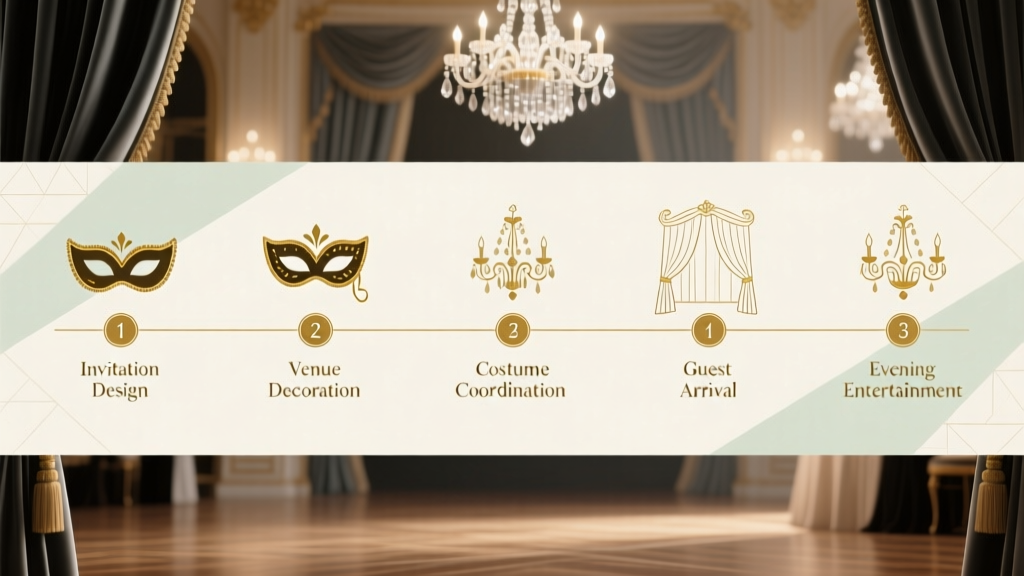
A Masquerade Ball Timeline Template
A masquerade ball is one of the most visually striking party themes you can plan—dramatic masks, elevated attire, cinematic lighting, and a sense of mystery that guests instantly understand. That same “wow factor,” though, comes with more moving parts than a typical cocktail party: dress code clarity, lighting design, music pacing, mask logistics, and a room flow that supports both mingling and reveals.
Proper event planning is what turns a beautiful idea into a seamless guest experience. A strong timeline template keeps your budget realistic, prevents last-minute vendor panic, and helps you coordinate a cohesive atmosphere—from the first invitation to the final dance. Use the planning timeline below as a step-by-step guide, whether you’re hosting a 30-person fundraising soirée, a 100-guest birthday masquerade, or a corporate gala with a theme.
Masquerade Ball Vision: Set the Tone Before You Set the Date
Choose a Clear Concept (Not Just “Masquerade”)
Successful event coordination starts with a cohesive creative direction. “Masquerade” describes the mask; your concept defines the entire aesthetic and planning decisions.
- Classic Venetian: gold accents, baroque décor, candlelight (real or LED), string quartet or classical + modern fusion playlist
- Modern Black & Gold: clean lines, metallics, lounge furniture, DJ and photo booth
- Gothic Masquerade: deep burgundy/black, dramatic florals, fog effects, moody lighting
- Garden Masquerade: floral masks, greenery installations, outdoor cocktail hour
Define Your Non-Negotiables
Before building a timeline, list the top priorities that will guide budget and vendor selection.
- Guest count target and type of audience (friends/family, donors, clients)
- Mask policy: provided, bring-your-own, or both
- Entertainment style: live music vs. DJ vs. curated playlist
- Food format: plated dinner, buffet, stations, heavy hors d’oeuvres
- Must-have moments: grand entrance, unmasking reveal, midnight toast, awards, fundraising appeal
Masquerade Ball Planning Timeline Template (8–12 Weeks)
This timeline works for most social events and small galas. For large-scale events (200+ guests or complex production), start 4–6 months out and expand each phase.
8–12 Weeks Out: Foundation & Bookings
Primary goal: lock in the big decisions that impact everything else.
- Set the budget framework (see the budget section below)
- Choose the date and time
- Ideal start time: 7:00–8:00 PM (allows a strong “evening glamour” atmosphere)
- Build in time for arrivals, photos, and a reveal moment
- Book your venue
- Confirm load-in/load-out times, noise restrictions, security requirements
- Ask about lighting options and whether candles are permitted
- Secure key vendors
- Caterer or bar service
- DJ or live musicians
- Photographer (masked photos need specific lighting skills)
- Planner/coordinator if you’re delegating logistics
- Create your event plan documents
- Master timeline
- Vendor contact list
- Floor plan draft
- Guest list tracker
Real-world example: A 60-guest birthday masquerade in a private dining space can book venue + catering together, then prioritize a DJ and photographer next. A nonprofit masquerade fundraiser should lock entertainment and AV early to support speeches and giving moments.
6–8 Weeks Out: Guest Experience & Design
Primary goal: define what guests will see, do, and feel.
- Send invitations
- Include a clear dress code: “Black tie optional,” “Formal,” or “Cocktail chic”
- Specify mask expectations: “Masks required upon arrival; unmasking at 10:30 PM”
- Add practical notes: parking, accessibility, coat check
- Plan décor and lighting (a major trend is lighting-first design)
- Uplighting to transform walls quickly
- Gobo monograms or themed projections for instant drama
- LED candles for safety and venue compliance
- Finalize entertainment direction
- Decide on “moments”: grand entrance music, reveal song, last dance
- Consider a roaming violinist or masked performers (popular for immersive events)
- Confirm menu style
- Masquerades work well with passed hors d’oeuvres early (guests mingle without being seated immediately)
- Plan a late-night bite if dancing is a focus
- Mask strategy
- Order backup masks (10–20% extra) for forgetful guests
- Consider mask comfort: adjustable ribbons, lightweight materials
4–6 Weeks Out: Logistics, Layout, and Run of Show
Primary goal: convert ideas into operational plans your team can execute.
- Create a detailed floor plan
- Entry moment + check-in
- Mask pickup station (if providing masks)
- Bar placement to avoid congestion
- Photo moment backdrop with flattering lighting
- Dance floor and DJ/band footprint
- Draft the “Run of Show” (minute-by-minute schedule for key moments)
- Confirm rentals (if needed)
- Linens, napkins, chargers, lounge furniture, stanchions for entry
- AV: microphones, speakers, projector (for slides or sponsor loop)
- Plan signage
- Welcome sign + dress code reminder
- Unmasking time sign
- Bar menu signage for speed of service
2–3 Weeks Out: Confirmations & Guest Management
Primary goal: reduce uncertainty and prevent day-of surprises.
- Chase RSVPs and finalize guest count range for catering
- Confirm vendor schedules
- Arrival and setup times
- Required staff meals or vendor meals
- Load-in instructions and parking
- Finalize menu and bar counts
- Consider one themed signature cocktail (trend: curated cocktails with custom names)
- Confirm dietary accommodations
- Prepare your event day toolkit
- Extra mask ties, fashion tape, safety pins
- Lint roller, stain remover pen
- Phone chargers, extension cords, gaffer tape
- Printed vendor contact sheet + timeline
7 Days Out: Final Numbers & Production Prep
- Submit final headcount (or confirm the deadline with your caterer)
- Print materials: seating cards (if used), signage, programs, QR codes for photo sharing
- Confirm music cues: entrance, reveal, toasts, last call
- Walk through the venue (in person if possible)
- Test lighting levels—masks can cast shadows on faces in photos
- Confirm where check-in and coat check will live
48–72 Hours Out: Pack, Assign, and Reconfirm
- Pack décor and supplies in labeled bins by area (entry, tables, bar, photo moment)
- Assign roles
- Point person for vendors
- Guest check-in lead
- Timeline keeper (ensures reveal and speeches happen on time)
- Reconfirm with vendors via email/text: arrival time, contact number, final timeline
Day-Of Masquerade Ball Timeline (Sample Run of Show)
Adjust times to match your event. This sample assumes an 8:00 PM guest arrival and ends at midnight.
Setup Timeline
- 1:00 PM – Venue access begins; coordinator arrival, layout review
- 2:00 PM – Rentals delivered; tables/chairs/linens placed
- 3:00 PM – Décor installation; lighting/AV setup
- 4:30 PM – Bar setup; glassware placed; signage installed
- 5:30 PM – Catering prep begins; staff briefing
- 6:30 PM – Sound check; run key microphone cues
- 7:15 PM – Final sweep: restrooms stocked, entry station ready, masks staged
Guest-Facing Timeline
- 8:00 PM – Doors open; check-in + mask pickup; welcome cocktail
- 8:15 PM – Passed appetizers begin; photo moment opens
- 8:45 PM – Host welcome (2–3 minutes) + evening overview
- 9:00 PM – Dinner service or food stations fully open
- 9:45 PM – Toasts/short program (keep it tight for energy)
- 10:15 PM – Dance floor opens; entertainment spotlight (DJ set or live set)
- 10:30 PM – Unmasking reveal moment (countdown + signature song)
- 11:15 PM – Late-night bites served
- 11:45 PM – Last call + final dance announcement
- 12:00 AM – Event ends; guest send-off
Masquerade Ball Checklist (Quick Reference)
- Venue contract signed + insurance confirmed
- Vendor team booked (catering, bar, music, photo/video, rentals, lighting/AV)
- Invites sent + RSVP tracking system in place
- Mask plan finalized + extras ordered
- Floor plan + run of show completed
- Décor items sourced (centerpieces, candles/LEDs, linens, signage)
- Entertainment cues documented (entrance, reveal, toasts)
- Day-of roles assigned + contact sheet printed
- Emergency kit packed
- Final headcount submitted + dietary needs confirmed
Budget Considerations (With Sample Breakdown)
A masquerade ball budget can scale dramatically based on venue, catering, and production. Use this as a planning baseline and adjust for your market.
Typical Budget Categories (Percentage Guide)
- Venue: 15–30%
- Food & beverage: 35–50%
- Entertainment (DJ/live): 8–15%
- Photo/video: 5–12%
- Décor/flowers/lighting: 10–20%
- Rentals & AV: 5–15%
- Stationery/signage: 2–5%
- Contingency: 5–10%
Sample Budget: 75 Guests, Mid-Range Masquerade (Example)
- Venue: $2,500
- Catering (heavy hors d’oeuvres + late-night bite): $4,800
- Bar (beer/wine + signature cocktail): $2,200
- DJ: $900
- Photographer: $1,200
- Lighting upgrade (uplights + gobo): $1,000
- Décor + florals: $1,200
- Masks (extras included): $300
- Signage/printing: $200
- Contingency (7%): $950
Estimated total: $15,250 (about $203 per guest)
Smart Ways to Save Without Losing Impact
- Invest in lighting and simplify florals—uplighting creates instant “masquerade mood.”
- Use one statement installation (entry arch, photo backdrop, or dramatic centerpiece) instead of decorating every surface.
- Offer a signature cocktail and limited bar options for faster service and lower costs.
- Provide a mask “upgrade” station (ribbons/feathers) rather than purchasing premium masks for all guests.
Vendor Selection Tips (What to Ask Before You Book)
Venue
- What lighting is included? Can we dim overhead lights?
- Are candles allowed? If not, what alternatives work?
- Is there a built-in sound system, and what are the limitations?
- What’s the end time and overtime fee?
Photographer
- Have you shot events with low light and masks?
- Do you bring off-camera flash or continuous lighting?
- Can you create a quick “step-and-repeat” workflow for guest portraits?
DJ/Entertainment
- Can you support timed cues (entrance, reveal, toasts)?
- Do you provide microphones and basic lighting?
- What’s your plan for transitioning from cocktail vibe to dance energy?
Common Masquerade Ball Planning Mistakes to Avoid
- Unclear dress code and mask rules: Guests feel uncomfortable when expectations are vague. Put it on the invitation and a reminder message 5–7 days before.
- Lighting that’s too bright (or too dark): The room should feel moody, but guests still need to see, eat, and take photos. Test lighting at the venue.
- Forgetting comfort details: Masks can be hot and irritating. Provide a small “mask relief” area (lounge corner) and have extras with soft ties.
- Poor entry flow: Check-in + mask pickup + coat check in one bottleneck creates immediate stress. Spread stations out and add clear signage.
- Scheduling the reveal too late: If the unmasking moment happens after guests start leaving, you lose the emotional peak. Aim for 2–2.5 hours after doors open.
- Skipping a contingency line item: Overtime, last-minute rentals, or weather changes happen. Protect your event with 5–10% buffer.
FAQ: Masquerade Ball Planning
How far in advance should I plan a masquerade ball?
For 30–120 guests, start 8–12 weeks out. If you need a premium venue, live entertainment, custom décor builds, or a fundraiser program with AV, plan 4–6 months in advance.
Do I need to provide masks for guests?
It’s optional, but providing at least backup masks is a best practice for event organization. Many hosts do “bring your own mask” with a small selection at check-in for anyone who forgets.
What’s the best time for the unmasking reveal?
Schedule it when the party energy is high but before guests start filtering out—typically 10:00–10:45 PM for an 8:00 PM start. Pair it with a countdown and a signature song to make it feel intentional.
Is a seated dinner required for a masquerade ball?
No. Passed hors d’oeuvres plus stations can feel more social and elegant for a masquerade theme. If you want a traditional gala format, a plated dinner works well—just keep speeches concise to protect the flow.
What are current trends for masquerade-style events?
Lighting-forward design (uplights, projections), immersive entertainment (roaming performers), curated signature cocktails, and shareable photo moments (editorial backdrops and instant digital galleries via QR code) are common trends that add impact without needing excessive décor.
Your Next Steps (Use This Template to Get Moving)
- Pick your concept and non-negotiables (15 minutes).
- Draft your budget ranges and guest count target (30 minutes).
- Book your venue and top vendors (within 7–10 days).
- Copy the timeline sections above into a planning document and add your dates.
- Build your run of show early—then refine it as RSVPs and vendor details lock.
If you want more event planning templates, party organization checklists, and coordination tips, explore the latest guides on smartpartyprep.com—and make your next celebration feel effortless from the first RSVP to the final farewell.
More Articles
 Which Party Helps Veterans More? We Analyzed 12 Years of VA Funding, Legislation, & Veteran Outcomes — Here’s What the Data Actually Shows (Not the Spin)
How Do You Set a Table for a Tea Party? 7 Non-Negotiable Steps Even First-Timers Get Right (No 'Fancy' Required)
What Day Is Hunting Party On? The Real Answer (Plus How to Confirm Dates Before You Book Venues, Invite Guests, or Buy Gear — Because 73% of Outdoor Events Get Rescheduled Last-Minute)
Are Gifts Given at Engagement Parties? The Truth (Plus What to Do If You're Hosting, Attending, or Gifting — Without Awkwardness or Overspending)
What to Wear to Masquerade Party: The 7-Second Rule (and Why Your 'Fancy Dress' Guess Is Costing You Confidence, Connection & Photo Ops)
How Many Nuggets Are in a Party Pack at Wendy’s? The Real Count (Plus How to Stretch It for 12+ Guests Without Overspending)
Which Party Helps Veterans More? We Analyzed 12 Years of VA Funding, Legislation, & Veteran Outcomes — Here’s What the Data Actually Shows (Not the Spin)
How Do You Set a Table for a Tea Party? 7 Non-Negotiable Steps Even First-Timers Get Right (No 'Fancy' Required)
What Day Is Hunting Party On? The Real Answer (Plus How to Confirm Dates Before You Book Venues, Invite Guests, or Buy Gear — Because 73% of Outdoor Events Get Rescheduled Last-Minute)
Are Gifts Given at Engagement Parties? The Truth (Plus What to Do If You're Hosting, Attending, or Gifting — Without Awkwardness or Overspending)
What to Wear to Masquerade Party: The 7-Second Rule (and Why Your 'Fancy Dress' Guess Is Costing You Confidence, Connection & Photo Ops)
How Many Nuggets Are in a Party Pack at Wendy’s? The Real Count (Plus How to Stretch It for 12+ Guests Without Overspending)
 What Are the 5 Major Political Parties in Australia? — A Clear, Nonpartisan Breakdown of Who Holds Power, Where They Stand on Key Issues, and How Their Policies Actually Impact Your Rent, Taxes, and Healthcare in 2024
Is UNC a party school? The truth behind the reputation—what freshmen *actually* experience, how Greek life really works, and why 'party school' rankings mislead more than they inform.
What Are the 5 Major Political Parties in Australia? — A Clear, Nonpartisan Breakdown of Who Holds Power, Where They Stand on Key Issues, and How Their Policies Actually Impact Your Rent, Taxes, and Healthcare in 2024
Is UNC a party school? The truth behind the reputation—what freshmen *actually* experience, how Greek life really works, and why 'party school' rankings mislead more than they inform.