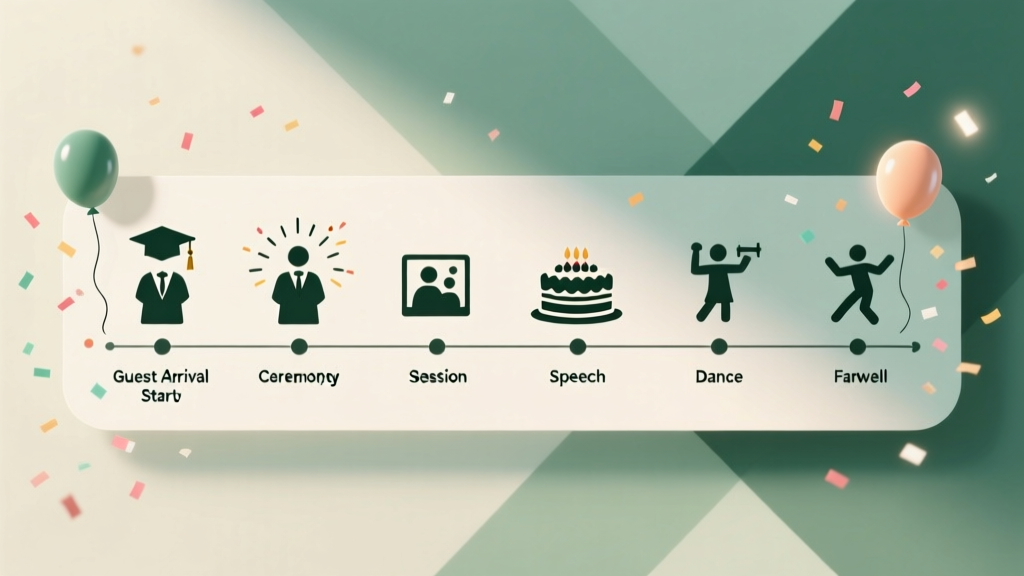
A Graduation Party Timeline Template
Graduation parties look effortless when they’re done well: guests arrive to a welcoming setup, food appears at the right pace, the guest of honor feels celebrated (not stressed), and the event ends on a high note. Behind that smooth experience is a timeline—your planning backbone that turns dozens of small decisions into a coordinated celebration.
Whether you’re hosting a backyard open house, a brunch, or a full evening party with a DJ, graduation party planning is unique because it often overlaps with finals, ceremonies, travel, and multiple family schedules. A practical graduation party timeline template helps you avoid last-minute scrambling, control your budget, and secure the vendors and rentals you actually want—before they’re booked out.
This guide walks you through a step-by-step planning timeline, checklist items, budget considerations, vendor selection tips, and common mistakes to avoid. Use it as a plug-and-play party organization system you can adapt to any size celebration.
Before You Start: Key Decisions That Shape Your Timeline
Make these foundational choices early. They affect everything from venue selection to vendor costs and staffing needs.
1) Party style and format
- Open house (guests drop in over a window of time): great for larger groups and flexible schedules.
- Seated meal (set start time, structured meal): best for smaller gatherings and formal vibes.
- Hybrid (arrival window + scheduled moment like speeches or slideshow): balances flow and meaning.
2) Guest count range
- Create a “likely” number and a “maximum” number to guide food and rental estimates.
- For open houses, plan peak traffic 60–90 minutes after the start time.
3) Location and backup plan
- Home/backyard: more control, potentially more rentals and cleanup.
- Park/community space: permits, limited setup window, weather exposure.
- Restaurant/banquet room: less logistics, more per-person cost.
- Rain plan: tent rental, indoor plan, or alternate venue option—decide early to avoid premium fees.
4) Your must-haves
Pick 3 priorities (examples: amazing food, great photos, meaningful decor, entertainment). Spend budget and planning energy there, and simplify the rest.
Graduation Party Timeline Template (Step-by-Step)
Use this as your graduation party checklist and timeline. Adjust for your event size and complexity. If you’re planning a small gathering, you can compress the schedule; if you’re planning a large celebration with rentals and vendors, stick closely to the earlier milestones.
10–12 Weeks Before: Set the Foundation
- Choose the date/time (consider graduation ceremony times, travel, competing parties, and major local events).
- Set the budget and decide who is contributing financially.
- Pick the venue (home, park, restaurant, hall) and confirm capacity, access times, and restrictions.
- Start a master planning folder (Google Drive/Notion) with:
- Guest list
- Vendor contacts
- Budget tracker
- Timeline + day-of schedule
- Receipts and contracts
- Choose a theme or design direction (school colors, modern minimal, “Then & Now,” travel/adventure, future career).
Trend tip: Current event planning trends favor “curated simplicity”—clean color palettes, intentional signage, and fewer but higher-impact decor pieces (like a balloon garland photo moment or a personalized backdrop).
8–10 Weeks Before: Book Vendors and Major Rentals
- Secure key vendors (if needed):
- Caterer/food truck or restaurant catering
- Photographer (even 1–2 hours for portraits and family shots)
- DJ or playlist + speaker rental
- Event rental company (tables, chairs, linens, tent)
- Estimate rental needs:
- Chairs: plan 70–90% of guest count for open houses; 100% for seated events
- Tables: food table(s), gift table, memory table, beverage station, seating tables
- Shade/coverage: tents, umbrellas, canopies
- Plan your menu direction (buffet, heavy apps, dessert bar, cookout, brunch).
- Create an invitation plan: digital invites for speed, or printed for keepsakes.
Vendor selection tip: When comparing quotes, ask what’s included (delivery/setup, service staff, disposal, chafing dishes, ice, travel fees). The lowest number often becomes the highest total once add-ons appear.
6–8 Weeks Before: Guest List, Invitations, and Layout
- Finalize guest list and collect emails/addresses.
- Send invitations:
- Open house: include the full time window and a suggested “best time to come” for close family.
- Seated event: include RSVP deadline and meal details.
- Draft your party layout (simple diagram):
- Welcome area
- Gift/cards table (with pens and a card box)
- Food line flow (avoid bottlenecks)
- Drink station separate from food (reduces congestion)
- Photo area
- Trash/recycling stations (visible and convenient)
- Plan your “moment”: short toast, slideshow loop, memory jar, or a signature photo with each guest.
Real-world example: For a 60-guest open house in a backyard, placing the beverage station on the patio and the buffet line along the fence created two parallel “lanes,” preventing a crowd at the kitchen door and keeping traffic moving.
4–6 Weeks Before: Decor, Signage, and Entertainment
- Order or source decor (balloons, banner, table linens, centerpieces, yard signs).
- Prepare a photo/memory display:
- Timeline wall (“Kindergarten to Cap & Gown”)
- Digital slideshow on a TV
- “Advice for the Grad” cards
- Plan music and announcements:
- Build a playlist by vibe (arrival, peak time, wind-down)
- Test speaker coverage for indoor/outdoor spaces
- Confirm rentals and vendors with deposit dates and delivery windows.
Trend tip: Self-serve stations are still popular—think mocktail bar, coffee bar, nacho bar, or “build-your-own” dessert cups. They create interaction while simplifying service.
2–3 Weeks Before: Food Counts, Shopping Lists, and Staffing
- Check RSVPs and follow up with key guests.
- Finalize headcount with caterer and rental company.
- Create a detailed shopping list if DIY food:
- Food ingredients
- Servingware (tongs, ladles, cake knife)
- Paper goods or rentals
- Ice (plan extra in warm weather)
- To-go containers for leftovers
- Assign help:
- Greeter/welcome person
- Food restock person
- Photo helper (captures group shots)
- Cleanup lead
Practical tip: If you want to enjoy the party, don’t “host and run the buffet.” Assign at least one reliable person to keep food stocked and tidy.
7–10 Days Before: Confirmations and Final Prep
- Confirm all vendors (arrival time, contact person, payments due, setup details).
- Finalize your day-of schedule (sample below).
- Prep signage:
- Welcome sign
- Food labels (helpful for allergies)
- Cards & gifts table sign
- Photo booth instructions
- Weather check and activate Plan B if needed (tent, indoor layout, fans/heaters).
2–3 Days Before: Setup Sprint
- Deep clean key areas (bathrooms, kitchen, entryway, outdoor spaces).
- Pre-stage supplies in labeled bins:
- Decor
- Serving items
- Paper goods
- Games/activities
- Emergency kit (tape, scissors, stain remover, safety pins, sunscreen, bug spray)
- Prep make-ahead foods and chill beverages.
- Create a cash-free payment plan for any remaining balances (envelopes, digital payments ready).
Day-Of Graduation Party Schedule (Sample Template)
Adjust timing for your party length and vendor arrivals.
- 8:00 AM – Rental delivery (tables/chairs/tent), quick walk-through
- 9:00 AM – Arrange layout: seating, stations, trash/recycling bins
- 10:30 AM – Decor setup (backdrop, centerpieces, signage)
- 11:30 AM – Food setup: chafers, coolers, labeling
- 12:00 PM – Sound check, slideshow loop ready, lighting check
- 12:30 PM – Host/grad gets dressed and takes pre-party photos
- 1:00 PM – Guests arrive; greeter starts welcome flow
- 2:00 PM – Peak guest window; restock food and drinks
- 3:00 PM – Planned moment (toast, slideshow highlight, group photo)
- 4:00 PM – Dessert push + coffee/mocktail refresh
- 5:00 PM – Wind-down; begin packing non-essentials
- 6:00 PM – Party ends; cleanup team begins; leftovers packed
Graduation Party Budget Breakdown (With Practical Ranges)
Budgets vary by region and guest count, but this structure helps you allocate realistically. Start with your total, then assign percentages.
- Food & beverage: 40–55%
- Venue (if rented): 10–25%
- Rentals (tables, chairs, linens, tent): 10–20%
- Decor & signage: 5–12%
- Entertainment & activities: 0–10%
- Photo/video: 5–15%
- Contingency (unexpected costs): 5–10%
Example budget: 50 guests, backyard open house ($1,500 total)
- Food & beverage: $750 (sandwich platter, sides, dessert, drinks, ice)
- Rentals: $300 (chairs + 2–3 tables)
- Decor & signage: $150 (backdrop + balloons + printed signs)
- Entertainment: $50 (speaker rental or upgrades)
- Photo: $150 (1 hour mini-session or friend with planned shot list)
- Contingency: $100
Cost-control strategies that still feel elevated
- Do one statement piece (balloon garland or custom backdrop), keep tables simple.
- Offer two signature drinks + water instead of a full beverage spread.
- Use a dessert bar with smaller portions (mini cupcakes, cookie tray, fruit) to reduce waste.
- Schedule the party between meal times (2–5 PM) and serve heavy appetizers.
Vendor Selection Tips (Catering, Rentals, Photography)
Catering and food
- Ask about portion guidance for open houses (drop-in events need flexible quantities).
- Confirm hot-holding equipment (chafers, sternos) and who supplies them.
- Request allergy-friendly labels or make your own labels.
Rental companies
- Check delivery fees, setup/breakdown, and minimum orders.
- Verify surface requirements for tents and if staking is allowed (especially at parks).
- Ask about replacement fees for damaged linens or chairs.
Photographers
- Book a short coverage block to capture:
- Family portraits
- Grad with friends
- Decor details (before guests arrive)
- Provide a shot list and name key family members.
Common Graduation Party Planning Mistakes to Avoid
- Underestimating setup time: Decor and stations take longer than expected. Build in buffer time.
- Ignoring traffic flow: Putting drinks next to the buffet creates bottlenecks.
- No weather plan: Even a simple backup (canopies + indoor layout) reduces stress.
- Over-ordering food without a plan: Know what you’ll do with leftovers (to-go containers, family distribution).
- Skipping signage: Labels reduce questions, speed up lines, and support allergy awareness.
- Trying to do everything yourself: Assign roles so the host and graduate can be present.
Quick Graduation Party Checklist (Copy/Paste)
Planning
- Date/time confirmed
- Budget set + tracking sheet started
- Guest list drafted
- Venue secured + backup plan
Vendors/Rentals
- Catering booked or menu planned
- Rentals reserved (tables/chairs/linens/tent)
- Photo/video confirmed (optional)
- Music plan ready
Design/Guest Experience
- Theme/colors selected
- Decor ordered/sourced
- Signage printed
- Photo/memory display prepared
Day-of Essentials
- Servingware, trash bags, paper goods
- Card box + pens
- First-aid + emergency kit
- Leftover containers + labels
FAQ: Graduation Party Planning and Coordination
How long should a graduation open house be?
Most graduation open houses run 3–5 hours. This gives guests flexibility and reduces crowding. If you expect many drop-ins, aim for 4 hours with a clear start and end time.
How much food should I plan for an open house?
Plan for guests to eat in waves. For a mid-afternoon open house with heavy appetizers, a common approach is 6–10 appetizer servings per person, plus dessert. If your party overlaps a meal time, plan closer to a full meal per guest.
When should I send graduation party invitations?
Send them 6–8 weeks before, especially during peak graduation season when guests may have multiple events. For out-of-town family, consider 8–10 weeks.
Do I need to rent tables and chairs for a backyard graduation party?
If you’re inviting more than your home seating can comfortably handle, rentals significantly improve guest comfort and flow. For open houses, having enough chairs for 70–90% of guests is a practical target.
What’s the easiest way to keep the event organized on the day?
Use a day-of schedule plus a simple staffing plan: one greeter, one food/restock person, and one cleanup lead. Put all vendor contacts and timing in a single document you can share.
How can I make the party feel personal without overspending?
Focus on one meaningful feature: a photo timeline wall, advice cards, a memory table, or a curated playlist of the grad’s favorite songs. Pair it with a single statement decor piece (like a backdrop) and keep the rest streamlined.
Next Steps: Turn This Template Into Your Party Plan
Start by locking in your date, guest count range, and budget—then map your party backwards using the timeline sections above. Once vendors and rentals are secured, the rest becomes straightforward: invitations, layout, menu details, and a day-of schedule that keeps everything moving.
If you want more step-by-step event planning, party organization checklists, and coordination tips, explore the latest guides on smartpartyprep.com.
More Articles
 What Happened at Diddy Parties: The Unfiltered Truth About Security Failures, Guest Experiences, and What Event Planners *Actually* Learned (Not Just the Headlines)
A Little Party Never Killed Nobody All We Got: The Truth About Stress-Free Event Planning (No Perfectionism, No Overwhelm, Just Joyful Connection)
How Do You Endorse a Third Party Check Safely? 7 Critical Steps Most People Skip (and Why Your Bank Might Reject It)
What Happened at Diddy Parties: The Unfiltered Truth About Security Failures, Guest Experiences, and What Event Planners *Actually* Learned (Not Just the Headlines)
A Little Party Never Killed Nobody All We Got: The Truth About Stress-Free Event Planning (No Perfectionism, No Overwhelm, Just Joyful Connection)
How Do You Endorse a Third Party Check Safely? 7 Critical Steps Most People Skip (and Why Your Bank Might Reject It)
 Do You Bring a Gift to a Bachelorette Party? The Real Answer (No More Guesswork, Awkwardness, or Over-Spending)
What Party Was William McKinley? The Surprising Truth Behind His Political Identity — And Why Millions Still Confuse Him With Modern GOP Figures (Spoiler: It’s Not What You Think)
How to Wear Party Dress Like a Pro: 7 Non-Negotiable Styling Rules (That Most People Skip — and Regret) That Instantly Elevate Your Look, Confidence, and Comfort at Any Celebration
Do You Bring a Gift to a Bachelorette Party? The Real Answer (No More Guesswork, Awkwardness, or Over-Spending)
What Party Was William McKinley? The Surprising Truth Behind His Political Identity — And Why Millions Still Confuse Him With Modern GOP Figures (Spoiler: It’s Not What You Think)
How to Wear Party Dress Like a Pro: 7 Non-Negotiable Styling Rules (That Most People Skip — and Regret) That Instantly Elevate Your Look, Confidence, and Comfort at Any Celebration
 What Is a First Party Game? The Truth No One Tells You (It’s NOT Just ‘Made by Nintendo’ — Here’s What Actually Counts in 2024)