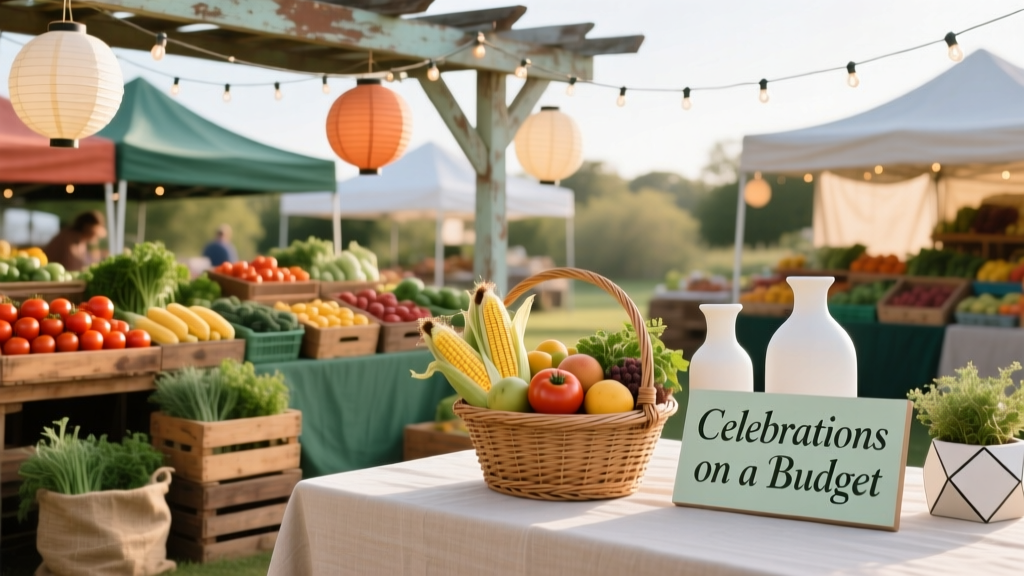
A Farmers Market on a Budget
A farmers market-style event is one of the most crowd-pleasing formats in modern event planning: it feels local, relaxed, and interactive, yet it can work for everything from a neighborhood pop-up to a school fundraiser, corporate community day, or wedding welcome event. The challenge is that “market vibe” can quietly inflate costs—tents, permits, signage, rentals, and staffing add up quickly if you don’t plan with purpose.
Proper planning matters because farmers market events have lots of moving parts: multiple vendors, food safety rules, power needs, foot-traffic flow, and weather contingencies. When your timeline and budget are organized early, you can keep fees low, reduce last-minute rentals, and create a smooth vendor experience that encourages sellers to return.
This guide breaks down how to plan a farmers market on a budget with step-by-step coordination strategies, real-world examples, a planning timeline, and cost-saving tips that still deliver a polished, professional event.
1) Define the Market Concept (So You Don’t Pay for the Wrong Stuff)
Budget-friendly event planning starts with a clear concept. A farmers market can range from a simple 8-vendor pop-up to a full-scale community event with music, kids’ activities, and cooking demos. Before you price anything, lock the essentials:
Choose your market format
- Pop-up market (2–4 hours): Lower staffing, fewer rentals, ideal for first-time organizers.
- Half-day market: More time for foot traffic, requires stronger vendor management and signage.
- Recurring market (monthly/seasonal): Higher setup effort upfront, but better vendor retention and predictable income.
Set a realistic event goal
- Fundraiser: Focus on sponsorships, vendor booth fees, and add-on revenue (raffles, branded merch).
- Community-building: Keep entry free, prioritize local makers and family activities.
- Brand activation/corporate: Emphasize photo-worthy layout, signage, and a clean guest flow.
Decide what you’re not doing
This is a proven organizational strategy: write a “Not This Time” list to protect your budget.
- No stage or live band (use a curated playlist and a small speaker system)
- No full tent village (require vendors to provide their own canopies)
- No printed maps (use a QR code sign that links to a digital vendor list)
2) Budget Basics: What a Budget Farmers Market Really Costs
Costs vary by city and venue, but most farmers market budgets fall into a few predictable categories. Use this simplified budget breakdown to stay organized and avoid surprises.
Sample budget breakdown (40–60 attendees per hour, 10–15 vendors)
- Permits/insurance: $150–$800
- Venue fees: $0–$1,500 (parks may be low-cost; private lots may cost more)
- Restrooms: $0–$300 (existing facilities vs. portable units)
- Waste management: $50–$250 (bins, liners, hauling plan)
- Signage: $60–$250 (directional signs, vendor numbers, entry signs)
- Tables/chairs: $0–$300 (borrowed vs. rented)
- Power: $0–$250 (existing outlets vs. generator)
- Staff/volunteers: $0–$600 (stipends, volunteer snacks, shirts)
- Marketing: $0–$300 (community boards, social content, flyers)
- Contingency (10%): Varies
Simple revenue model to offset costs
- Vendor booth fees: $25–$75 per booth depending on foot traffic and amenities
- Sponsorships: $250–$1,000+ (local banks, realtors, gyms, restaurants)
- Optional add-ons: Premium booth placement, electricity fee, demo slot fee
Real-world example (budget-friendly school fundraiser market)
- Venue: school parking lot (no venue fee)
- Vendors: 12 vendors x $40 = $480
- Sponsor: local grocery store = $300
- Total income: $780
- Costs: insurance $250, signage $120, waste $80, volunteer snacks $50, contingency $60
- Total costs: $560
- Net for school program: $220 + any raffle proceeds
3) Venue Selection on a Budget (Location Can Save or Sink Your Plan)
In event coordination, venue choice is your biggest lever. A great space reduces rentals, simplifies logistics, and improves guest experience.
Budget-smart venue options
- Public parks: often affordable, but may require permits and specific vendor rules.
- School or church lots: ideal for community events, usually flexible on setup.
- Community centers: access to restrooms and power can eliminate major costs.
- Partner business parking lot: negotiate free use in exchange for sponsor placement.
Venue checklist (what to confirm before booking)
- Restroom access (and hours)
- Power outlets and load capacity
- Water access (nice-to-have, important for food vendors)
- Trash plan (who provides bins, who hauls)
- Traffic flow: entry/exit points, delivery path for vendors
- Rain plan: indoor backup or reschedule terms
- Noise restrictions and event hours
4) Vendor Selection Tips That Protect Your Budget and Reputation
Vendor management is where farmers market events either shine or become chaotic. Strong vendor selection improves guest satisfaction and reduces problems on event day.
Build a balanced vendor mix
- Anchor vendors: produce, bread, eggs, honey—items that motivate attendance.
- Prepared foods: food trucks or packaged snacks; confirm permits and handwashing requirements.
- Artisan makers: candles, soaps, crafts—great for gifting and higher spend per guest.
- Community partners: master gardeners, recycling programs, local nonprofits.
Low-cost vendor recruitment strategies
- Post a simple vendor application form (Google Form) and share in local maker groups.
- Offer an “early-bird” booth rate for vendors who pay by a set deadline.
- Use a vendor referral discount (e.g., $10 off if they refer another accepted vendor).
What to include in your vendor agreement (keep it simple)
- Booth fee, what’s included (space size, table/chairs if any)
- Setup/breakdown times and vehicle unloading rules
- Insurance requirements and food safety compliance
- No-show and weather policy
- Prohibited items (or restrictions by category to prevent duplicates)
5) Step-by-Step Planning Timeline (8 Weeks to Market Day)
Use this timeline template to keep your event planning organized and prevent expensive last-minute decisions.
8 weeks out: Foundations
- Confirm event goal, date, hours, rain date (if applicable)
- Lock venue and submit permit applications
- Request insurance quotes (general liability, additional insured if required)
- Create vendor application and publish booth fees
- Draft preliminary site map (booth layout, entry, info table, waste stations)
6 weeks out: Vendors and operations
- Begin vendor selection; aim for a balanced mix
- Confirm what vendors must bring (tents, tables, weights, extension cords)
- Identify volunteers or staff leads: vendor check-in, info table, waste monitor
- Line up sponsor(s) and confirm what they receive (banner space, social posts)
4 weeks out: Guest experience and marketing
- Finalize vendor list and publish “vendor spotlight” posts
- Confirm restrooms and waste plan
- Design signage: parking, entrance, vendor numbers, rules (pets, smoking, etc.)
- Confirm any entertainment (playlist, acoustic musician, kids’ corner)
2 weeks out: Final logistics
- Send vendor packet: map, load-in instructions, rules, contact numbers
- Confirm power needs and outlets; decide if a generator is necessary
- Order supplies: zip ties, tape, cones, trash liners, hand sanitizer
- Create a run-of-show for staff/volunteers
1 week out: Tighten details
- Confirm vendor attendance and collect remaining payments
- Print signage and booth numbers
- Check weather; message vendors about any adjustments
- Prepare cash box or digital payment plan for onsite sales (booth fees, raffle)
Event day: Execution
- Mark booth spaces early (chalk, cones, numbered signs)
- Run vendor check-in and direct load-in traffic
- Do a safety walk: cords taped down, tent weights secured, clear fire lanes
- Assign a “floater” to solve vendor issues quickly
- Capture photos and short videos for future marketing
6) Farmers Market Day Checklist (Print-Friendly)
- Operations: site map, vendor list with phone numbers, incident log sheet
- Check-in table: pens, wristbands/badges (optional), vendor packet copies
- Signage: entrance, parking, rules, vendor numbers, sponsor signs
- Supplies: tape, zip ties, scissors, first-aid kit, sunscreen
- Waste: trash/recycling bins, liners, gloves, pickup schedule
- Guest experience: info board/QR code, lost & found, seating corner (if available)
- Weather plan: tarps, extra weights, communication template for delays
7) Cost-Saving Strategies That Still Look Professional
Current event planning trends favor sustainability, local partnerships, and “simple but intentional” styling. That’s great news for a budget market—your best upgrades are often organizational, not expensive décor.
High-impact, low-cost upgrades
- Unify signage: Use consistent fonts/colors on all signs for a cohesive look.
- Number booths: Guests navigate faster, and vendor issues are easier to handle.
- Create a central info point: One table with a big “INFO” sign reduces confusion.
- Use a QR code vendor directory: Saves printing and supports last-minute changes.
Reduce rentals with smart vendor requirements
- Require tents with weights (safer and prevents you from renting)
- Encourage vendors to bring tables/chairs
- Offer limited “rental kits” first-come, first-served at a small fee
Marketing on a shoestring (that actually drives attendance)
- Vendor cross-promotion: Give each vendor a pre-written caption and event graphic.
- Community calendars: Local libraries, chambers of commerce, neighborhood groups.
- Short-form video: A 15-second vendor teaser often outperforms paid ads.
- Directional signs: Two well-placed signs near main roads can beat a week of flyers.
8) Common Planning Mistakes to Avoid
- Overbooking similar vendors: Too many of the same product type frustrates vendors and hurts sales. Use category caps.
- Ignoring power needs: If vendors show up expecting electricity, last-minute generator rental can break your budget.
- Skipping a rain plan: Weather is a certainty over time. Have a reschedule policy and a communication template.
- Poor load-in traffic flow: Vendors stuck in a bottleneck delay your opening and create safety issues.
- Underestimating signage: Confused guests spend less time (and less money). Clear signs are a budget-friendly win.
- No contingency fund: Plan 10% for unexpected costs (extra bins, last-minute printing, minor repairs).
9) FAQ: Planning a Farmers Market Event on a Budget
How many vendors do I need for a small farmers market?
For a first-time pop-up, 8–15 vendors usually feels full without overwhelming the space. Aim for variety: at least 2–3 produce/food staples, 1–2 prepared food options, and the rest makers or specialty items.
Do I need insurance for a farmers market?
Many venues require general liability insurance, and food vendors often need their own coverage. Ask your venue for exact requirements (coverage amount and additional insured wording) before you commit to a date.
What’s a fair booth fee for a budget market?
Common booth fees range from $25 to $75. Set your fee based on expected foot traffic, whether you provide tables/power, and local market rates. If you’re new, start modest and offer an early-bird rate to fill spots.
How do I keep the event organized with volunteers?
Assign clear roles with simple scripts: vendor check-in lead, traffic/load-in helper, info table attendant, and a floater. Provide a one-page run-of-show, contact list, and a 10-minute pre-event briefing.
What are easy add-on revenue ideas that don’t feel pushy?
Try a raffle table, sponsor-funded “market tote” giveaway, or a donation jar tied to a visible goal (e.g., “Help fund the community garden”). Keep it simple and place it near the info table.
How can I make a budget farmers market feel special?
Focus on experience over décor: a clean layout, friendly check-in, clear signage, music at a comfortable volume, and a small seating area. Add a “featured vendor of the hour” announcement to keep energy up.
Actionable Next Steps
- Pick your format and goal (pop-up, half-day, recurring) and write a “Not This Time” list.
- Choose a cost-saving venue with restrooms and power to reduce rentals.
- Build your vendor plan with category caps and a simple agreement.
- Use the 8-week timeline to lock permits, insurance, and operations early.
- Set a realistic budget with a 10% contingency and a basic revenue model (booth fees + sponsor).
With the right coordination tools, a farmers market on a budget can look polished, run smoothly, and become a repeat community favorite. For more practical event planning guides, timelines, and party organization checklists, explore the resources at smartpartyprep.com.
More Articles
 How to Dress at a Masquerade Party: The 7-Step No-Stress Blueprint (That Actually Works—Even If You Hate Costumes)
Where Can I Have a Pool Party? 7 Realistic, Budget-Friendly, and Permitted Options You Haven’t Considered (Including Hidden Gems with Zero Permit Headaches)
How to Dress at a Masquerade Party: The 7-Step No-Stress Blueprint (That Actually Works—Even If You Hate Costumes)
Where Can I Have a Pool Party? 7 Realistic, Budget-Friendly, and Permitted Options You Haven’t Considered (Including Hidden Gems with Zero Permit Headaches)