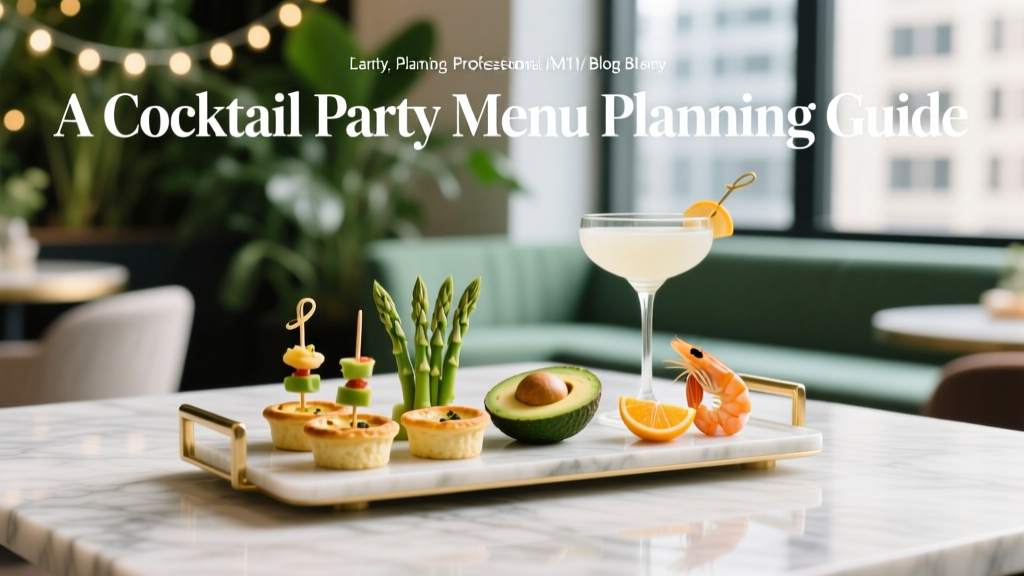
A Cocktail Party Menu Planning Guide
A cocktail party can feel effortless to guests—beautiful bites circulating, drinks flowing, conversation humming. Behind the scenes, it’s the result of smart menu planning and calm coordination. Unlike a seated dinner, a cocktail-style event asks you to balance variety, portioning, timing, and dietary needs while keeping food easy to eat standing up.
Proper planning matters because the menu drives nearly every decision: your budget, prep schedule, equipment needs, vendor selection, staffing, beverage plan, and even the room layout. When your menu is built with intention, you reduce last-minute scrambling, prevent food waste, and create the kind of event where guests feel taken care of.
This guide walks you through a step-by-step cocktail party menu planning process with practical timelines, budget breakdowns, and real-world examples so you can organize your event with confidence.
1) Start with the Event Basics (Before You Pick a Single Bite)
Clarify the “big four” planning inputs
- Guest count: Your menu math and purchasing begin here. Create an A-list and a realistic RSVP estimate (typically 70–85% attendance depending on the type of invite and season).
- Event length: A 2-hour cocktail party needs fewer pieces than a 4-hour event with speeches or activities.
- Time of day: Guests expect more food during dinner hours (5:30–8:00 p.m.). A late-night cocktail party can lean into small bites and dessert-forward options.
- Venue and setup: Kitchen access, refrigeration, oven capacity, and bar placement will shape what’s realistic. Limited kitchen? Prioritize room-temperature canapés and vendor-delivered trays.
Define your food “role” (light reception vs. meal replacement)
A frequent cocktail party planning mistake is not deciding whether the menu is a meal. Choose one:
- Light reception: Guests snack, then dine later. Aim for fewer pieces and lighter proteins.
- Heavy hors d’oeuvres (meal replacement): Guests can comfortably skip dinner. Plan more substantial bites, add a station or two, and increase total portions.
Trend watch: what guests are loving right now
- “Mini meals” and handheld comfort classics (sliders, dumplings, mini tacos) presented elegantly
- Global small plates with clear labels (Mediterranean mezze, Korean-inspired bites, Latin flavors)
- Low-ABV and zero-proof pairing options that feel just as special as cocktails
- Diet-aware menus (gluten-free, dairy-free, vegan) without making those guests feel like an afterthought
2) Build a Balanced Cocktail Party Menu
Use the “variety formula” for easy, crowd-pleasing planning
A reliable cocktail party menu includes:
- 2–3 cold bites (fast to serve, minimal equipment)
- 2–3 hot bites (adds comfort and perceived value)
- 1–2 substantial items (protein-forward or starch-based)
- 1 sweet finish (mini desserts or passed truffles)
- 1–2 “safe” familiar options for selective eaters
Pick foods designed for cocktail-style mingling
Prioritize bites that are:
- One to two bites max (no cutting required)
- Low-mess (avoid drippy sauces unless contained)
- Easy to hold (skewers, cups, crostini, mini buns)
- Stable (won’t wilt or separate quickly)
Menu example: 25-person home cocktail party (2.5 hours)
- Cold: Caprese skewers; smoked salmon cucumber rounds
- Hot: Mini crab cakes with lemon aioli; chicken satay with peanut sauce
- Substantial: Slider trio (beef + veggie); small fries cones (optional)
- Sweet: Mini chocolate mousse cups
- Diet-friendly add: Hummus trio with veggie sticks and GF crackers
Menu example: 75-person corporate cocktail reception (3 hours)
- Passed cold: Tuna tartare cones; tomato-olive bruschetta (vegan)
- Passed hot: Short rib arancini; mushroom potsticker with ginger dip
- Stations: Mediterranean mezze board station; carve-and-serve turkey/porchetta station with rolls
- Dessert: Mini tart assortment and coffee service
3) Portion Planning: How Much Food and Drink to Serve
Food portion guidelines (practical range)
Use these estimates as your cocktail party planning baseline:
- Light reception (2–3 hours): 6–10 pieces per person
- Meal replacement (3–4 hours): 12–18 pieces per person
- Add extra if the guest list includes big appetites, limited other food options nearby, or the event runs long.
Simple planning math
- 50 guests, meal replacement: 14 pieces/person = 700 total pieces
- Divide by variety: 7 menu items = ~100 pieces each (adjust for popularity—make more of the “safe” favorites)
Beverage planning for cocktail parties
- Average consumption: 2 drinks in the first hour, then 1 drink/hour after
- Plan mocktails: Aim for at least 1 zero-proof signature option; this is a current event planning trend that improves guest experience and inclusivity.
- Water is non-negotiable: Offer still and sparkling options; set water stations to reduce bar lines.
4) Step-by-Step Planning Timeline + Checklist
4–6 weeks before: set the foundation
- Confirm guest count range and RSVP method (digital invites with reminders improve response rates)
- Choose event style: light reception vs. heavy hors d’oeuvres
- Establish your budget cap and top priorities (food quality, open bar, décor, entertainment)
- Decide: DIY, partial cater, or full-service caterer
- Create your draft menu and identify dietary requirements (add a note on the invite)
3–4 weeks before: lock the menu and vendors
- Finalize menu items and service style (passed trays, stations, or hybrid)
- Book key vendors if needed:
- Caterer or drop-off catering
- Bartender or bar service
- Rentals (glassware, cocktail tables, chafers, linens)
- Plan beverage list and quantities (include ice and garnishes)
- Confirm kitchen logistics: fridge space, oven schedule, serving platters
2 weeks before: purchasing and production plan
- Collect RSVPs and adjust counts (build a 5–10% buffer)
- Create a prep schedule by day (shopping, chopping, assembling, baking)
- Write labels for allergens and dietary callouts (gluten-free, contains nuts, etc.)
- Finalize staffing: helpers for set-up, food replenishment, and clearing
1 week before: confirm every detail
- Confirm delivery times and contact info for vendors
- Walk through the party flow:
- Where guests enter and receive first drink
- Where food is staged and replenished
- Where trash and dish drop zones are hidden but accessible
- Inventory serving tools: tongs, toothpicks, napkins, small plates, cocktail picks
48 hours before: prep, chill, stage
- Prep cold items that hold well (dips, sauces, washed greens, cut produce)
- Batch cocktails or syrups if applicable (label and date)
- Pick up rentals and confirm counts immediately
- Buy ice close to event time (or arrange delivery)
Day of event: execution checklist
- Set up bar and water stations first (reduces early congestion)
- Stage food in waves: 30–40% of items out at start; replenish over time
- Keep hot foods hot and cold foods cold (food safety and quality)
- Assign roles:
- One person monitoring food levels
- One person clearing glassware/plates
- One person handling the “surprises” (missing items, spills, vendor questions)
5) Budget Considerations (With a Sample Breakdown)
Typical cost drivers for cocktail party menus
- Labor and staffing: Passed hors d’oeuvres require more hands than stationed platters.
- Protein choices: Seafood and premium cuts increase spend quickly.
- Rentals: Glassware, cocktail tables, chafers, and linens add up—but can elevate the entire event.
- Waste factor: Over-ordering and poor pacing are the most common budget leaks.
Sample budget breakdown (75 guests, mid-range, 3 hours)
Adjust based on your city, venue requirements, and service level:
- Food: 40–50% (passed bites + 1 station)
- Beverage: 20–30% (beer/wine + 2 signature cocktails + NA options)
- Staffing: 10–20% (bartenders, servers, event help)
- Rentals: 5–15% (glassware, cocktail tables, chafers)
- Décor and florals: 5–10% (focus on high-impact areas: entry, bar, stations)
- Contingency: 5–10% (extra ice, last-minute dietary need, replacement items)
Practical ways to save without looking “budget”
- Use one premium item (like crab cakes) and support it with elevated vegetarian bites
- Choose seasonal ingredients and local vendors
- Limit to two signature cocktails plus beer/wine rather than a full open bar
- Replace complex passed desserts with a beautiful dessert board (cookies, mini brownies, fruit)
6) Vendor Selection Tips for Smooth Cocktail Party Coordination
Choosing a caterer or drop-off partner
- Ask if they specialize in cocktail party catering and passed hors d’oeuvres timing
- Request sample menus with piece counts and portion assumptions
- Confirm what’s included: serving platters, chafing dishes, sternos, garnish, labels
- Ask about substitutions for dietary restrictions and allergen handling
Hiring bar support
- For 50–75 guests, plan 1 bartender per 50 guests for a simple bar; add more for craft cocktails.
- Confirm licensing/insurance expectations for your venue
- Ask for an ice plan (who buys, who stores, who replenishes)
7) Common Cocktail Party Menu Planning Mistakes (and How to Avoid Them)
- Not serving enough “real” food: If your event overlaps dinner hours, include at least 1–2 substantial items or a station.
- Too many complicated bites: A menu with seven fussy items creates delays and increases staffing needs. Balance showstoppers with simple wins.
- Ignoring dietary needs: Plan at least two clearly labeled options that work for common restrictions (GF and vegan are the most helpful anchors).
- Putting everything out at once: Guests will overeat early, and food quality declines. Stage in waves and replenish.
- Forgetting the “invisible” essentials: Cocktail napkins, small plates, toothpicks, trash bins, and water stations prevent chaos.
- Underestimating ice: Running out of ice is an event-planning classic. Plan more than you think, especially in warm weather.
8) Quick Reference: Cocktail Party Menu Planning Checklist
- Guest count + RSVP plan
- Event length + start time
- Menu role: light vs. meal replacement
- Food mix: cold/hot/substantial/sweet + dietary options
- Piece count per person + total production numbers
- Beverage plan: alcohol + zero-proof + water
- Equipment: chafers, platters, serving tools, labels
- Staffing assignments + timeline for replenishment
- Budget categories + contingency
- Vendor confirmations + delivery windows
FAQ: Cocktail Party Menu Planning
How many appetizers do I need for a 2-hour cocktail party?
Plan for 6–10 pieces per person for a light reception. If it’s during dinner hours or guests are likely to skip a meal, increase to 10–12 pieces and add at least one substantial item.
What are the best foods for a cocktail party where guests stand and mingle?
Choose one- to two-bite foods that don’t require cutting: skewers, crostini, mini sliders, dumplings, stuffed mushrooms, cups (shrimp cocktail cups, mousse cups), and dips with sturdy dippers.
Should I do passed hors d’oeuvres or stations?
A hybrid approach works well: stations keep guests fed continuously and reduce staffing pressure, while a few passed items create energy and a hosted feel. For corporate events, stations also help manage traffic flow.
How do I accommodate dietary restrictions without doubling my budget?
Build in naturally inclusive items (mezze, vegetable skewers, salsa/guac, rice-based bites) and label clearly. Plan two solid options that work for vegan and gluten-free guests, then supplement with one or two additional flexible bites.
What’s a reasonable cocktail party budget per person?
It varies by market and service level, but many hosts land in the mid-range by combining drop-off catering with limited bar options. Decide your “must-haves” first, then allocate 5–10% for a contingency buffer to protect the plan.
Actionable Next Steps
- Decide whether your cocktail party menu is a light reception or a meal replacement.
- Pick 6–8 menu items using the variety formula (cold, hot, substantial, sweet, plus dietary-friendly choices).
- Calculate portions using a per-person piece count, then stage service in waves.
- Map your timeline—vendors, rentals, prep days, and day-of roles—so execution feels calm and coordinated.
If you want more step-by-step event planning support, explore additional party organization and coordination guides on smartpartyprep.com—and make your next gathering feel as effortless as it looks.
More Articles
 Stop Wasting Hours Coordinating 'A and B Party Rentals' — Here’s the Exact 7-Step System Top Planners Use to Lock In Perfectly Matched Vendors (Without Overpaying or Double-Booking)
What to Make for a Barbecue Party: The 7-Step Stress-Free Menu Builder (No More Last-Minute Panic, Dry Chicken, or 3 Types of Potato Salad)
A Little Party Never Killed Nobody All We Got: The Truth About Stress-Free Event Planning (No Perfectionism, No Overwhelm, Just Joyful Connection)
Stop Wasting Hours Coordinating 'A and B Party Rentals' — Here’s the Exact 7-Step System Top Planners Use to Lock In Perfectly Matched Vendors (Without Overpaying or Double-Booking)
What to Make for a Barbecue Party: The 7-Step Stress-Free Menu Builder (No More Last-Minute Panic, Dry Chicken, or 3 Types of Potato Salad)
A Little Party Never Killed Nobody All We Got: The Truth About Stress-Free Event Planning (No Perfectionism, No Overwhelm, Just Joyful Connection)
 Why Was the Libertarian Party Formed? The Untold Story Behind America’s Third-Largest Political Party — How Frustration with Vietnam, Nixon, and Big Government Sparked a Radical Experiment in Liberty
Does the Black Panther Party still exist today? The truth behind its legacy—and how its revolutionary principles power modern movements like BLM, mutual aid networks, and youth-led civic initiatives in 2024.
How to Throw 'A Killer Party: A Murder Mystery Musical' Without Losing Your Mind (7 Steps That Actually Work — Backed by 12 Real Hosts)
Why Was the Libertarian Party Formed? The Untold Story Behind America’s Third-Largest Political Party — How Frustration with Vietnam, Nixon, and Big Government Sparked a Radical Experiment in Liberty
Does the Black Panther Party still exist today? The truth behind its legacy—and how its revolutionary principles power modern movements like BLM, mutual aid networks, and youth-led civic initiatives in 2024.
How to Throw 'A Killer Party: A Murder Mystery Musical' Without Losing Your Mind (7 Steps That Actually Work — Backed by 12 Real Hosts)
 Is Third Party Sick Pay Taxable? The Truth No One Tells You (And Why Your Payroll Team Might Be Getting It Wrong)
What to Wear to an Evening Wedding Party: The Stress-Free 7-Minute Dress Code Decoder (No More Guesswork, No Awkward Outfits)
What Is 3rd Party Sick Pay? The Hidden Pitfalls (and $12K+ Savings) Most Employers Miss When Outsourcing Short-Term Disability & Absence Management
How to Watch Party Down (Legally & Seamlessly): The Only 2024 Guide You’ll Need for Streaming, Group Sync, Snacks, and Zero Tech Headaches
Is Third Party Sick Pay Taxable? The Truth No One Tells You (And Why Your Payroll Team Might Be Getting It Wrong)
What to Wear to an Evening Wedding Party: The Stress-Free 7-Minute Dress Code Decoder (No More Guesswork, No Awkward Outfits)
What Is 3rd Party Sick Pay? The Hidden Pitfalls (and $12K+ Savings) Most Employers Miss When Outsourcing Short-Term Disability & Absence Management
How to Watch Party Down (Legally & Seamlessly): The Only 2024 Guide You’ll Need for Streaming, Group Sync, Snacks, and Zero Tech Headaches