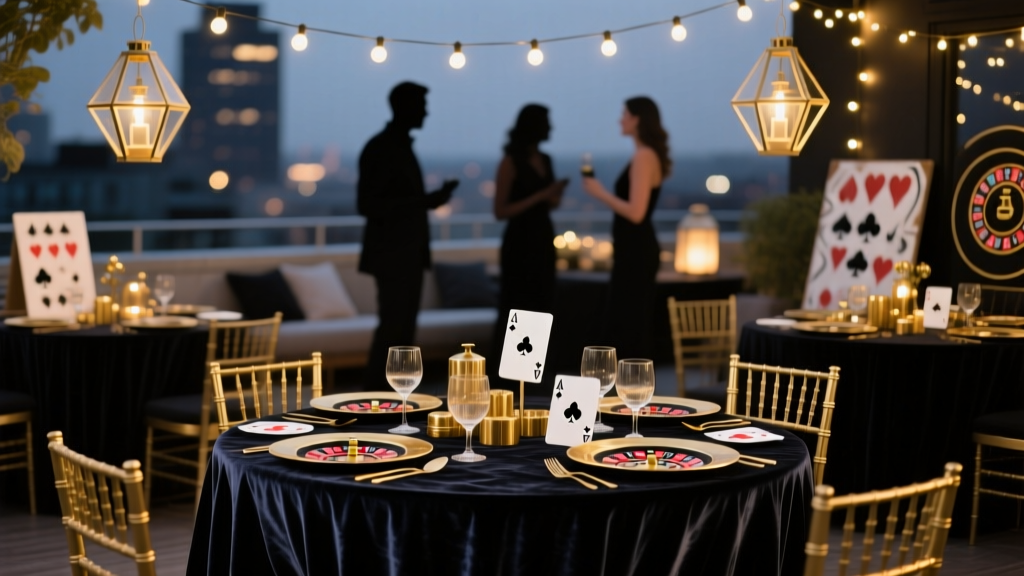
A Casino Night on a Budget
A casino night can feel like a high-end gala—without needing a high-end budget—when the planning is intentional. The secret isn’t spending more; it’s making smart choices about what guests actually experience: smooth flow, great lighting, clear “rules of play,” and a few standout details that make the room feel immersive.
Because casino-themed parties combine entertainment, décor, food and beverage, and sometimes fundraising, small planning gaps show up fast. Missing chips, unclear prize rules, or a crowded table layout can stall the fun. A solid event planning timeline and a practical checklist keep you organized and make the night feel professionally coordinated, even in a backyard, community hall, or office break room.
This guide breaks down how to plan a casino night on a budget with step-by-step coordination tips, budget breakdowns, vendor selection strategies, and real-world examples you can adapt to birthdays, corporate events, team-building parties, and charity fundraisers.
Start with the Basics: Goals, Guest Count, and Format
Choose your casino night “type”
Locking in the event type early prevents overspending and keeps decisions consistent.
- Just for fun: Guests play with “funny money” and trade chips for small prizes.
- Fundraiser: Guests buy chips or entry packages; prizes can be donated or sponsored.
- Corporate/team event: Focus on social play, low stakes, and easy-to-learn games.
Set your guest count and play style
- Guest count: Estimate within a 10–15% range to avoid overbuying.
- Game mix: Pick 2–4 games max for a budget event (more games = more equipment and staffing).
- Dealer plan: Use volunteer “dealers” or simple self-dealt games to reduce costs.
Budget-first planning (a proven organizational strategy)
A common event planning trend is “priority-based budgeting”: spend on the top 2–3 elements guests feel most (often entertainment, food/drink quality, and atmosphere). Everything else is simplified.
Budget Breakdown: What a Casino Night Really Costs
Use this sample budget framework for party organization and coordination. Percentages work for most sizes; swap the numbers to fit your total.
Sample budget allocations (by percentage)
- Space/venue: 0–30% (free home/office vs. rented hall)
- Casino equipment (tables, chips, cards, roulette wheel): 15–35%
- Food & beverage: 20–35%
- Décor & printables (signage, table numbers, backdrops): 5–15%
- Prizes: 5–15%
- Music/AV/lighting: 0–10%
- Contingency: 5–10%
Real-world budget examples
- $300 “House Party” (20–30 guests): DIY décor, card games, printed play money, snacks + one signature drink.
- $1,000 “Community Room” (40–60 guests): 1–2 rented table tops, volunteer dealers, buffet appetizers, mid-level prizes.
- $2,500 “Small Corporate Night” (75–100 guests): more rentals, branded signage, upgraded appetizers, a few sponsor-donated prizes.
Venue and Layout: Make It Feel Like a Casino (Without the Cost)
Budget-friendly venue options
- Home, garage, or backyard (rent one tent only if weather risk is high)
- Office, break room, or lobby after hours
- Community center, VFW/Elks hall, school cafeteria (often low-cost weekday rates)
- Restaurant private room (minimum spend can replace rental fees)
Simple layout rules that improve flow
Guest experience is mostly traffic flow. Use these coordination tips:
- Entrance zone: Check-in + chips + rules card (prevents bottlenecks later).
- Game zone: Tables around the perimeter; keep a clear center aisle.
- Food/drink zone: Separate from games to avoid spills and crowding.
- Prize/redemption zone: One station with visible prizes and a clear closing time.
Atmosphere on a budget (high impact, low spend)
- Lighting: Dim overheads; add LED uplights or warm lamps. Lighting is a major trend because it transforms spaces quickly.
- Color palette: Black + red + gold reads “casino” instantly.
- Music: A curated playlist (swing, jazz lounge, modern Vegas) at a consistent volume.
- Photo moment: One backdrop wall (fringe curtain + “Casino Night” sign) beats scattered décor.
Games & Equipment: Smart Ways to Save
Best budget game mix
Pick games that are familiar and quick to learn.
- Blackjack: Easy, fast rounds, minimal equipment.
- Poker (Texas Hold’em): Great for a tournament format (one table can run many rounds).
- Roulette (optional): High visual impact, but roulette wheels can cost more.
- “Big Wheel” or prize wheel: Fun alternative to roulette for lower budgets.
DIY vs. rental: what’s worth renting?
- Worth renting: 1–2 casino table toppers with felt (instant upgrade), or a roulette wheel for visual wow.
- DIY friendly: Card tables, chips, decks, signage, play money, and basic centerpieces.
Dealer staffing options
- Volunteer dealers: Provide a 30-minute training + cheat sheets.
- Friends-as-dealers rotation: People sign up for 45-minute shifts so they still get to play.
- Hire 1 “lead dealer”: One pro can train volunteers and keep games running smoothly.
Food & Beverage: Keep It Classy and Easy
Menu approach for casino night planning
Finger foods are the most practical. Choose items that can be eaten standing and won’t grease up cards/chips.
- Sliders, skewers, spring rolls, stuffed mushrooms
- Charcuterie cups, veggie shooters, popcorn bar
- Mini desserts (brownie bites, cupcakes, cookies)
Budget beverage strategy
- One signature cocktail (plus a mocktail version) reduces waste and lines.
- Beer/wine only is often cheaper than a full bar.
- Self-serve station with labeled cups keeps staffing low.
Real-world example: “$8-per-person snack plan” (50 guests)
- 2 large snack boards (cheese, crackers, fruit)
- 2 hot appetizers in slow cookers
- Popcorn bar with 3 seasonings
- Mini cookie tray
Prizes and “Funny Money” Systems That Work
Pick one simple prize model
- Chip raffle: Chips become raffle tickets for prizes (easy and fair).
- Prize shop: Chips are redeemed like an arcade (fun, but requires more staffing).
- Tournament awards: Top 3 chip totals win set prizes (fastest to run).
Budget-friendly prize ideas
- Gift cards ($10–$25) to coffee shops or local restaurants
- “Experience” vouchers: preferred parking, extra PTO hour (corporate), front-of-line passes
- Theme baskets (movie night, brunch kit, game night)
- Sponsor-donated items (ask local businesses for small contributions)
Pro tip: protect your budget with prize caps
Decide the maximum prize value before you print rules. Example: “Total prize value not to exceed $300” and keep 10% aside for last-minute additions.
Step-by-Step Planning Timeline (With Checklist Items)
6–8 weeks out: Foundation & bookings
- Define event purpose (fun vs. fundraiser vs. corporate) and set a firm budget cap
- Choose date/time (casino nights work well 7–11 p.m. or 6–10 p.m.)
- Confirm venue and basic layout plan
- Select 2–4 games and decide rental vs. DIY
- Start vendor research (equipment rentals, caterer, bartender if needed)
- Create a guest list + invitation plan (email invite + RSVP deadline)
4 weeks out: Design, menu, and staffing
- Finalize décor plan and color palette (black/red/gold)
- Confirm menu and beverage strategy (self-serve vs. staffed)
- Recruit dealers/volunteers and assign roles
- Set prize model (raffle, prize shop, tournament)
- Create your “casino rules” one-pager:
- Chip value
- How to earn more chips (optional)
- End time for final hands
- Prize redemption details
2 weeks out: Production details
- Order/print signage: check-in, rules, table labels, drink menu, prize list
- Confirm rentals and delivery/pickup times in writing
- Build a floor plan with table placements and power needs
- Finalize playlist and test speaker setup
- Plan a simple run-of-show (see template below)
48–72 hours out: Execution prep
- Confirm headcount and adjust food quantities
- Prep “cashier” kits: chips, play money, rules cards, pens, tape
- Assemble prizes and label them with chip/ticket values
- Send a reminder message with dress code and start time
Event day: On-site coordination checklist
- Set up check-in/cashier station first
- Place game tables, then signage and lighting
- Do a 15-minute dealer briefing: rules, pacing, and guest support
- Set food station with clear labels and trash/recycling nearby
- Test music volume and any microphones
- Keep a small “fix-it kit”: scissors, tape, markers, stain remover, extra batteries
Simple run-of-show template (adjust times)
- 6:00 Doors open, guests receive chips, rules explained
- 6:30 Games active, appetizers open
- 8:30 “Last call” for final hands or tournament close
- 8:45 Chip redemption / raffle ticket drop closes
- 9:00 Winners announced, prizes awarded, photo moment
- 9:15 Wind-down playlist, casual mingling
Vendor Selection Tips (So You Don’t Overspend)
Casino equipment rentals
- Request packages (tables + chips + cards + layout) and compare per-table pricing
- Ask about delivery/setup fees (often the hidden cost)
- Confirm what’s included: dealer buttons, discard trays, extra decks
- Read cancellation policies and damage waivers
Catering and beverages
- Ask for “casino-friendly” menus that minimize utensils
- Choose 2–3 appetizer types in larger quantities (cheaper than 8 different items)
- Confirm service style: drop-off vs. staffed (drop-off saves significantly)
Event planning trend: micro-upgrades instead of full-service
Many hosts are booking fewer vendors and adding targeted upgrades—like one staffed bar hour, a single premium backdrop, or one professional dealer—to keep the event polished while staying within budget.
Common Casino Night Planning Mistakes (and How to Avoid Them)
- Too many games, not enough players: Start with fewer tables so the room feels lively; add more only if needed.
- Unclear rules or prize system: Post rules at check-in and announce key times (final hands, redemption close).
- Overcomplicated chip values: Use simple denominations and consistent starting stacks.
- Poor table spacing: Leave walkways; crowded tables reduce participation.
- Food placed near game action: Keep snacks separate to protect cards/chips and improve flow.
- No contingency fund: Reserve 5–10% for last-minute needs (extra ice, tape, batteries, or a missing deck).
FAQ: Casino Night on a Budget
How many casino tables do I need for 50 guests?
For a casual casino-themed party, 2–3 tables (or stations) is usually enough. Rotate guests with a tournament schedule or add non-table activities (photo backdrop, raffle, snack bar) to keep the flow smooth.
What’s the easiest casino game for beginners?
Blackjack is the fastest to teach and keeps rounds moving. Provide a basic strategy card at the table so guests feel confident without slowing down gameplay.
How do I run a casino night fundraiser without legal issues?
Rules vary by location. A common approach is to use “entertainment-only” gaming with no cash payout and award donated prizes via raffle or chip redemption. If fundraising is involved, check local regulations and venue policies before you advertise the format.
What’s the best way to keep costs down but still look upscale?
Invest in lighting and one focal point (backdrop or a single felt table topper). Keep décor minimal elsewhere, stick to a tight color palette, and use clear signage to make the event feel professionally coordinated.
Should I hire professional dealers?
If your budget allows, hiring even one lead dealer can elevate the experience and reduce confusion. For tight budgets, volunteer dealers work well with a short training session and printed cheat sheets.
How far in advance should I send invitations?
Send invites 4–6 weeks ahead for most events, with an RSVP deadline 10–14 days before. That timing supports accurate headcount planning, food ordering, and equipment decisions.
Next Steps: Your Budget Casino Night Action Plan
- Set your total budget cap and pick your top three priorities (games, food/drink, atmosphere).
- Choose 2–4 games and decide what to rent versus DIY.
- Build your layout and run-of-show so the night flows without bottlenecks.
- Lock your prize model early and communicate it clearly through signage and announcements.
- Use the planning timeline above to stay on track and reduce last-minute spending.
For more step-by-step event planning guides, party organization checklists, and coordination tips, explore the resources at smartpartyprep.com.
More Articles
 What to Wear on a Bachelorette Party: The Stress-Free 5-Minute Outfit Formula (No More Last-Minute Panic, Matching Mishaps, or ‘Is This Too Much?’ Doubts)
 What Are the Main Political Parties in Poland? A Clear, Up-to-Date Breakdown of Power, Ideology, and Electoral Influence (2024 Edition)
What political party is Candace Owens? The Truth Behind Her Affiliation, Why It’s Misunderstood, and How Her Independent Stance Actually Shapes Modern Conservative Messaging — Not What You’ve Heard
What Are the Main Political Parties in Poland? A Clear, Up-to-Date Breakdown of Power, Ideology, and Electoral Influence (2024 Edition)
What political party is Candace Owens? The Truth Behind Her Affiliation, Why It’s Misunderstood, and How Her Independent Stance Actually Shapes Modern Conservative Messaging — Not What You’ve Heard
 What Happened During the Boston Tea Party? The Real Story Behind the Protest — Not Just Tea, But Tactics, Timing, and Tactical Theater That Changed History
What political party was Aaron Burr? The Surprising Truth Behind His Shifting Loyalties, Why Historians Still Debate His Alignment, and How His Party Switches Fueled America’s First Constitutional Crisis
Is Third Party Sick Pay Taxable in NJ? The Truth About What You Must Report (and What the IRS & NJ Division of Taxation Actually Require)
What Happened During the Boston Tea Party? The Real Story Behind the Protest — Not Just Tea, But Tactics, Timing, and Tactical Theater That Changed History
What political party was Aaron Burr? The Surprising Truth Behind His Shifting Loyalties, Why Historians Still Debate His Alignment, and How His Party Switches Fueled America’s First Constitutional Crisis
Is Third Party Sick Pay Taxable in NJ? The Truth About What You Must Report (and What the IRS & NJ Division of Taxation Actually Require)
 What Is a Right Wing Political Party? 7 Myths You Still Believe (and Why They’re Costing You Informed Civic Decisions Today)
What Does Left Party Mean? The Surprising Trend That’s Saving Hosts $287+ Per Event (And Why 68% of Planners Are Getting It Wrong)
How Much to Give at an Engagement Party? The Real Answer (No Awkward Guessing, No Social Pressure — Just Clear, Culture-Smart Guidelines Based on 200+ Real Guest Surveys)
What Is a Right Wing Political Party? 7 Myths You Still Believe (and Why They’re Costing You Informed Civic Decisions Today)
What Does Left Party Mean? The Surprising Trend That’s Saving Hosts $287+ Per Event (And Why 68% of Planners Are Getting It Wrong)
How Much to Give at an Engagement Party? The Real Answer (No Awkward Guessing, No Social Pressure — Just Clear, Culture-Smart Guidelines Based on 200+ Real Guest Surveys)