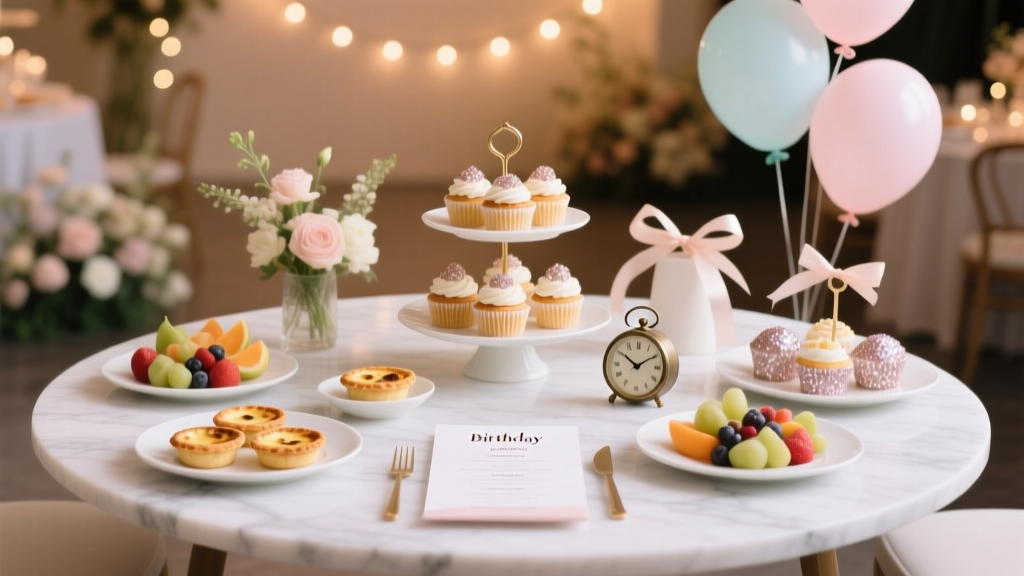
A Birthday Party Menu Planning Guide
A great birthday party menu doesn’t happen by chance. It’s the result of smart event planning, clear timing, and intentional choices that match your guest list, venue, and budget. When the food plan is solid, everything else gets easier: your timeline runs smoother, your vendors know what to deliver, your host duties shrink, and guests feel cared for from the first bite to the last.
Menu planning also helps you avoid the most common party-day stressors—running out of ice, missing allergy-friendly options, underestimating how long food takes to prep, or overspending on items guests barely touch. Whether you’re organizing a backyard birthday party, a restaurant gathering, or a kids’ celebration at a venue, the same coordination principles apply.
This guide breaks birthday party menu planning into simple steps, with practical checklists, a planning timeline, budget tips, vendor selection advice, real-world examples, and common mistakes to avoid—so you can host with confidence.
Step 1: Define the Party Basics (Menu Decisions Start Here)
Clarify your event details
Before you pick dishes, lock in the “menu drivers” that influence portions, serving style, and logistics:
- Date and time: A 2:00 p.m. party needs lighter fare; a 6:30 p.m. party signals dinner.
- Duration: 2 hours typically needs snacks + cake; 3–5 hours needs a more substantial meal plan.
- Guest count: Create an “expected” number and a “max” number (for buffer).
- Age group: Kids, teens, adults, or mixed. This changes everything from spice level to serving format.
- Venue and equipment: Kitchen access, fridge space, outlets, grill, warming trays, tables for buffet, trash setup.
- Theme and vibe: Casual, elevated, DIY, or catered. Menu can reinforce the theme without being complicated.
Choose your serving style
Pick the format that fits your party organization plan and available help:
- Self-serve buffet: Best for most home parties; easy to scale; requires labels and flow planning.
- Plated meal: More formal; higher coordination; better for smaller groups.
- Grazing table: Trend-forward and photo-friendly; works well for open-house parties and mixed ages.
- Food stations: Taco bar, pasta station, slider station; speeds service and feels interactive.
- Drop-off catering: Popular trend for busy hosts—restaurant-quality food without full-service staffing.
Step 2: Build a Balanced Birthday Party Menu
Use the “Menu Map” framework
A reliable way to plan any party menu is to map categories first, then fill in specific items:
- Welcome bite: Something easy and quick (chips + salsa, crudités cups, popcorn bar).
- Main food: The heart of your menu (pizza, tacos, BBQ, pasta, sliders).
- Two sides: One fresh (salad/fruit) + one hearty (mac & cheese, potato salad).
- Something for dietary needs: A clearly labeled option that’s naturally gluten-free, vegetarian, or dairy-free.
- Dessert: Cake plus one extra treat (cookies, cupcakes, fruit skewers).
- Beverages: Water, one zero-sugar/low-sugar option, and one fun signature drink (kid-friendly or adult).
Plan for dietary needs without overcomplicating
Instead of creating separate meals, choose “inclusive by design” menu items:
- Taco bar: Corn tortillas, rice, beans, proteins, toppings (easy GF/vegetarian coverage).
- Build-your-own bowls: Grains + veggies + sauces; guests customize for allergies and preferences.
- Skewers and platters: Simple ingredients, easy labeling, less cross-contamination.
Labeling tip: Use simple cards: “Contains nuts,” “Gluten-free,” “Vegetarian,” “Dairy-free.” This is a proven event coordination strategy that reduces repeated questions and supports guest comfort.
Match portions to the schedule
Use these portion rules as a practical starting point:
- Appetizer-only (2 hours): 6–8 pieces per person
- Appetizers + light meal (3 hours): 10–12 pieces per person
- Full meal (3–5 hours): 1 main + 2 sides per person; 1.5 portions for teens
- Cake: Plan 1 slice per person (plus 10% buffer); cupcakes simplify serving
Step 3: Real-World Birthday Menu Examples (By Party Type)
Kids’ birthday party (2–3 hours, high energy)
- Main: Pizza (mix of cheese/pepperoni/veggie)
- Sides: Fruit cups, veggie sticks + ranch
- Snack: Popcorn or pretzel bites
- Dessert: Cupcakes + simple cake for the moment
- Drinks: Water, juice boxes, lemonade
Coordination win: Choose foods that are “one-hand friendly” so kids can eat while moving between activities.
Adult birthday cocktail-style party (3 hours, mingling)
- Grazing table: Cheeses, charcuterie, olives, crackers, fruit, dips
- Hot bites: Mini meatballs, flatbread slices, stuffed mushrooms
- Vegetarian option: Caprese skewers or hummus trio
- Dessert: Dessert shooter cups or cookie platter
- Beverages: Sparkling water, signature cocktail/mocktail, wine/beer
Trend tip: Mocktail stations are a current event planning trend—thoughtful, inclusive, and visually appealing.
Backyard summer birthday (4 hours, casual meal)
- Main: Burger + chicken or veggie burger option
- Sides: Corn on the cob, pasta salad, watermelon
- Condiments bar: Pickles, onions, sauces, cheese, lettuce/tomato
- Dessert: Ice cream sandwiches + cake
- Drinks: Cooler with labeled cans + big water dispenser
Organization tip: Set up one “food zone” and one “drink zone” to prevent traffic jams.
Step 4: Menu Planning Timeline (Step-by-Step)
3–4 weeks before the party
- Confirm guest count range and party time window
- Choose serving style (buffet, stations, plated, drop-off catering)
- Draft your menu map (welcome bite, main, sides, dessert, drinks)
- Identify dietary needs (ask on invite or message key guests)
- Set your food and beverage budget ceiling
- Decide: DIY, partial DIY, or catering/vendor support
2 weeks before
- Finalize menu items and quantities
- Book vendors (caterer, bakery, rental company) if needed
- Create your shopping list (split into shelf-stable, refrigerated, frozen)
- Plan serving supplies:
- Plates, napkins, cups, utensils
- Serving tongs/spoons, trays, labels
- Coolers, ice, fuel for warmers, foil wrap
- Map your buffet layout and guest flow
1 week before
- Confirm RSVPs and adjust quantities
- Order cake/dessert (or confirm pickup/delivery time)
- Do a pantry run for non-perishables
- Write a prep plan by day:
- What can be made ahead
- What must be fresh
- What needs reheating
- Assign helpers (set-up, grill duty, drink refills, cleanup)
2–3 days before
- Buy perishables (produce, dairy, meats)
- Pre-chop veggies (store with paper towel to reduce moisture)
- Make dips, sauces, and dressings
- Freeze ice packs; confirm cooler space
- Print or write food labels for allergens
Day before
- Prep dishes that hold well (pasta salad, pulled chicken, baked goods)
- Set up a staging area for serving pieces
- Confirm vendor pickup/delivery windows and payment/tip plan
- Charge speakers, set lights if outdoors, confirm trash/recycling bins
Party day (simple execution schedule)
- 3–4 hours before: Set tables, buffet layout, drink stations, coolers with ice.
- 2 hours before: Finish fresh items; start warming trays/slow cookers.
- 1 hour before: Put out welcome snacks; keep mains covered until guests arrive.
- Guest arrival: Snacks and drinks accessible immediately; keep food replenishment in batches.
- 60–90 minutes in: Serve main food when most guests have arrived.
- Dessert moment: Cake/candles; then set out dessert platter for self-serve.
- Last 30 minutes: Pack leftovers safely; label containers; begin light cleanup.
Birthday Party Menu Checklist (Quick Copy-and-Go)
- Menu finalized + quantities calculated
- Dietary needs accounted for + labels prepared
- Serving style confirmed + layout planned
- Shopping lists separated by store/section
- Ice plan: how many bags + where to store
- Hot-holding plan: slow cookers/warmers/fuel
- Cold-holding plan: coolers/ice pans/fridge space
- Trash and recycling bins lined and placed
- Leftover containers ready
- Helper roles assigned (food refill, drinks, cleanup)
Budget Planning: What to Spend and Where
Typical budget breakdown (starting point)
Your birthday party budget varies by region and guest count, but this structure helps keep spending under control:
- Food: 40–55%
- Beverages: 10–20%
- Cake/dessert: 10–15%
- Supplies (disposables, ice, serving ware): 10–15%
- Rentals or staffing (optional): 0–20%
Per-person cost examples
- DIY snack-heavy party: $8–$15 per person
- DIY meal + cake: $15–$30 per person
- Drop-off catering: $20–$45 per person
- Full-service catering: $45–$100+ per person
Cost-saving strategies that still feel elevated
- Limit variety, not abundance: Fewer menu items with smarter quantities reduces waste.
- Choose flexible mains: Tacos, pasta, pizza, BBQ scale easily.
- Buy one “wow” item: A statement cake, a grazing board centerpiece, or a signature mocktail.
- Use seasonal produce: Lower cost, better flavor, better presentation.
- Rent or borrow big-ticket gear: Beverage dispensers, chafers, extra tables.
Vendor Selection Tips (Caterers, Bakeries, and Rentals)
How to choose the right food vendor
- Ask about experience with your party style: buffet setup, drop-off catering, dietary needs.
- Confirm what’s included: serving utensils, setup, sternos, labeling, delivery fees.
- Request a clear portion guide: reputable vendors explain how many guests each tray serves.
- Check timing and logistics: delivery window, hot holding, reheating instructions.
- Review cancellation and change policies: especially if RSVPs fluctuate.
Bakery tips for birthday cakes and desserts
- Order 2+ weeks ahead for custom designs or popular weekends
- Confirm serving size guidance (a “tall” cake slices differently than a sheet cake)
- Consider a cutting cake + cupcakes combo for speed and crowd control
- Ask about temperature tolerance if the party is outdoors
Common Birthday Menu Planning Mistakes (and What to Do Instead)
- Mistake: Planning too many dishes.
Do instead: Use the menu map and cap it: 1 main, 2 sides, 1–2 snacks, cake + one extra dessert. - Mistake: Ignoring timing and food safety.
Do instead: Keep cold foods cold (coolers/ice) and hot foods hot (warmers/slow cookers). Put out food in smaller batches. - Mistake: No ice, no backup drinks.
Do instead: Overbuy ice (it’s the first thing to disappear) and include water as a primary beverage. - Mistake: Forgetting serving tools and labels.
Do instead: Pack a “buffet kit” (tongs, spoons, tape, marker, labels, foil). - Mistake: Serving messy foods without setup support.
Do instead: Add napkin stations, wet wipes for kids, and a clear food zone away from activities. - Mistake: Waiting until the party starts to cook everything.
Do instead: Prep ahead and delegate one person as “food coordinator” for refills and timing.
FAQ: Birthday Party Menu Planning
How much food should I make for a birthday party?
Plan based on time of day and duration. For a 2-hour party with snacks, aim for 6–8 appetizer portions per person. For a meal-based party, plan 1 main + 2 sides per person, plus a little extra for teens and big eaters.
What’s the easiest menu for a mixed-age birthday party?
A build-your-own option (taco bar, pasta bar, slider station) works well because kids can keep it simple and adults can customize with toppings and sauces.
Should I do cake and another dessert?
Yes, if it’s a longer party or you’re serving a lighter meal. Keep the second dessert simple—cookies, brownies, or fruit skewers—so cake remains the main moment.
How do I plan for allergies without making separate meals?
Offer at least one naturally allergy-friendly dish (for example, corn tortilla tacos with bean and veggie options) and label foods clearly. Keep serving utensils separate to reduce cross-contact.
Is drop-off catering worth it for a birthday party?
For many hosts, yes. Drop-off catering is a current trend because it reduces cooking stress while staying more budget-friendly than full-service catering. It’s especially helpful when you’re coordinating games, décor, or a tight party timeline.
What are the biggest hidden menu costs?
Ice, disposable serving supplies, extra condiments, delivery fees, and last-minute grocery runs. Build a 10% buffer into your food and beverage budget to cover these.
Actionable Next Steps for Your Birthday Party Menu Plan
- Lock in your party time, guest count range, and serving style today.
- Draft a simple menu map with one inclusive option for dietary needs.
- Use the timeline above to schedule ordering, shopping, and prep.
- Create a buffet kit and assign one helper as your food-and-drink coordinator.
- Set a realistic budget, then spend strategically on one “wow” detail guests will remember.
If you’re ready to keep planning with less stress and better organization, explore more event planning guides, party organization checklists, and coordination tips at smartpartyprep.com.
More Articles
 What Is Block Party? The Truth Behind This Community Tradition (Spoiler: It’s Not Just Grilling & Balloons — Here’s How to Plan One That Actually Builds Neighborhood Trust in 2024)
How Many Party Members Can You Have in Expedition 33? The Official Capacity Limits, Real-World Group Booking Tips, and What Happens If You Go Over (Spoiler: It’s Not Just a Number)
What Is Block Party? The Truth Behind This Community Tradition (Spoiler: It’s Not Just Grilling & Balloons — Here’s How to Plan One That Actually Builds Neighborhood Trust in 2024)
How Many Party Members Can You Have in Expedition 33? The Official Capacity Limits, Real-World Group Booking Tips, and What Happens If You Go Over (Spoiler: It’s Not Just a Number)
 How Much Is Mickey's Very Merry Christmas Party in 2024? We Broke Down Every Cost—Including Hidden Fees, Value Comparisons, & When to Buy for Maximum Savings (Spoiler: It’s Not What You Think)
Do Both Parties Have to Agree to an Annulment? The Truth About Unilateral Annulments, Grounds You Can Prove Alone, and Why Your Spouse’s Signature Isn’t Always Required — Even If They Refuse to Cooperate
Did political parties begin favorably in the United States? The shocking truth behind Washington’s warning, Hamilton’s scheming, and how America’s first partisan clash nearly derailed democracy before it even launched
How Much Is Mickey's Very Merry Christmas Party in 2024? We Broke Down Every Cost—Including Hidden Fees, Value Comparisons, & When to Buy for Maximum Savings (Spoiler: It’s Not What You Think)
Do Both Parties Have to Agree to an Annulment? The Truth About Unilateral Annulments, Grounds You Can Prove Alone, and Why Your Spouse’s Signature Isn’t Always Required — Even If They Refuse to Cooperate
Did political parties begin favorably in the United States? The shocking truth behind Washington’s warning, Hamilton’s scheming, and how America’s first partisan clash nearly derailed democracy before it even launched
 Step-by-Step Guide to a Masquerade Ball
The Do Nothing Party Isn’t Lazy — It’s the Highest-ROI Social Strategy of 2024 (Here’s Exactly How to Host One Without Stress, Spending, or Scheduling Overload)
Step-by-Step Guide to a Masquerade Ball
The Do Nothing Party Isn’t Lazy — It’s the Highest-ROI Social Strategy of 2024 (Here’s Exactly How to Host One Without Stress, Spending, or Scheduling Overload)
 Which Political Party Is Better for the Middle Class? We Analyzed 12 Years of Tax Policy, Wage Growth, Housing Affordability, and Education Spending — Here’s What Data (Not Rhetoric) Reveals About Real Impact on Families Earning $50K–$125K