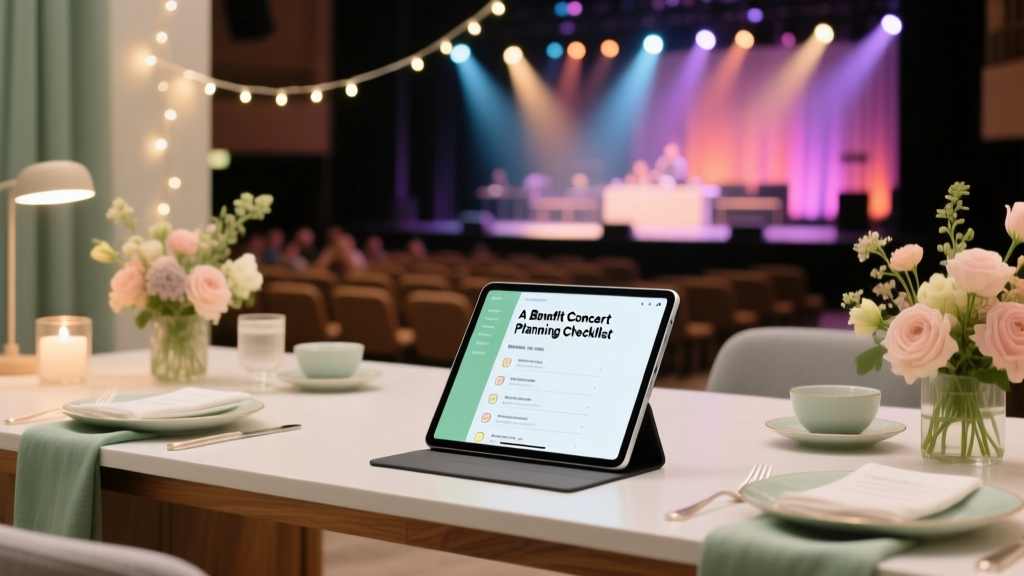
A Benefit Concert Planning Checklist
A benefit concert can do what few fundraising formats can: create a shared experience that moves people emotionally and motivates them to give. When the mission is clear and the production feels professional, attendees don’t just donate—they become supporters who talk about your cause long after the last encore. That’s why benefit concert planning needs more than enthusiasm; it needs a disciplined event planning checklist, a realistic budget, and a coordination plan that keeps everyone aligned.
Live music events also come with high-stakes logistics: sound and lighting, venue rules, licensing, safety, backstage flow, volunteer staffing, and tight schedules. One missed detail can ripple into delayed doors, frustrated guests, or lost revenue. Proper planning protects the guest experience and the reputation of your organization, while maximizing donations, sponsorship value, and community impact.
This guide breaks down benefit concert planning step-by-step with a practical timeline, budget considerations, vendor selection tips, and common mistakes to avoid—so you can run a smooth, inspiring fundraising event that meets your goals.
Define the Purpose, Scope, and Success Metrics
Start with clear fundraising goals
Before you book a venue or contact performers, lock in the “why” and translate it into measurable outcomes. A strong benefit concert plan starts with a simple set of targets:
- Fundraising goal: Net amount you need to raise (after expenses).
- Attendance goal: Total tickets sold + VIP/sponsor guests.
- Donor conversion goal: New donors captured, monthly givers enrolled, email list growth.
- Community impact goal: Awareness reach, partnerships, volunteer signups.
Choose the right benefit concert format
Match your concept to your audience and capacity. Popular formats include:
- Single headliner + openers (great for ticket revenue).
- Multi-act community showcase (excellent for local sponsors and broad appeal).
- Acoustic “intimate” set (lower production cost; strong storytelling potential).
- Hybrid/streamed concert (trend: expanded reach with virtual tickets and live donation prompts).
Build your core planning team and responsibilities
Benefit concerts succeed when roles are assigned early. Even if you’re volunteer-led, structure matters.
- Event Lead/Producer: Final decisions, timeline ownership, vendor oversight.
- Talent Coordinator: Artist outreach, contracts, hospitality rider, schedules.
- Sponsorship Lead: Packages, outreach, fulfillment (logos, mentions, booths).
- Operations & Venue Liaison: Load-in, floor plan, safety, permits, staffing.
- Marketing & Ticketing: Promotions, email/SMS, social, ticketing platform.
- Finance Lead: Budget tracking, payments, cash handling plan.
Step-by-Step Benefit Concert Planning Timeline (Checklist)
Use this as your benefit concert planning checklist. Adjust based on venue availability and artist schedules.
12–16 Weeks Out: Foundations and Key Bookings
- Confirm event goals: net fundraising target, attendance, donor capture strategy.
- Select date range (include 1–2 backup dates).
- Choose format: seated/standing, all-ages/21+, indoor/outdoor, hybrid streaming.
- Create a preliminary budget (see sample breakdown below).
- Shortlist and book the venue:
- Capacity, accessibility (ADA), parking/transit, noise curfew.
- Included equipment (PA, lights, stage) vs. rentals needed.
- Insurance requirements and security staffing rules.
- Book talent (or confirm local lineup) and define compensation structure:
- Reduced fee, pro bono, revenue share, or donation in lieu of payment.
- Written agreement with set times, arrival, cancellation terms.
- Decide your fundraising model:
- Ticket sales, sponsorships, pledge drive, auction/raffle, text-to-give, matching gifts.
- Set up your ticketing and donation infrastructure:
- Mobile-friendly ticketing page, donation add-on at checkout.
- QR codes for on-site giving and a plan for weak Wi-Fi (offline backups).
8–12 Weeks Out: Sponsors, Promotion, and Production Planning
- Build sponsorship packages:
- Tiered benefits (logo placement, stage mentions, VIP tickets, booth space).
- Deliverables checklist (when logos due, where displayed).
- Secure key vendors and production partners:
- Sound/AV, lighting, staging (if not included).
- Photographer/videographer (trend: short-form video highlights for donor follow-up).
- Security, EMT/first aid coverage (per venue or local regulations).
- Merch table support or POS system if selling items.
- Create your event run-of-show draft:
- Doors time, opener sets, speaking moments, donation appeal, encore buffer.
- Keep mission moments concise and scheduled (don’t “wing it”).
- Launch marketing plan:
- Email campaign cadence, social posts, partner cross-promotion.
- Press release to community calendars and local media.
- Street team flyers for local businesses (with QR code to ticket page).
- Volunteer plan:
- Recruit for check-in, ushers, donation ambassadors, merch, backstage runner.
- Write role cards with shift times and escalation contacts.
4–8 Weeks Out: Logistics, Permits, and Guest Experience
- Confirm permits and compliance:
- Public assembly permits, outdoor noise permits, alcohol permits (if applicable).
- Performance rights considerations (venue often covers; confirm).
- Insurance: general liability, liquor liability if serving alcohol.
- Finalize floor plan and traffic flow:
- Entry/check-in, security screening, donation stations, sponsor booths.
- Accessible seating/viewing areas; clear signage and paths.
- Plan signage and branding:
- Welcome banner, sponsor wall, directional signs, donation QR posters.
- Stage backdrop or step-and-repeat for photos.
- Develop the fundraising “moment”:
- 1–3 minute mission story + clear ask + matching gift announcement.
- Display a live fundraising thermometer (projected or manual board).
- Confirm artist hospitality and backstage needs:
- Green room setup, water/snacks, meal plan, parking/load-in instructions.
2–4 Weeks Out: Final Confirmations and Coordination
- Lock the run-of-show and distribute to all stakeholders (venue, artists, production, volunteers).
- Hold a production call:
- Load-in time, soundcheck schedule, mic count, backline needs, cueing method.
- Confirm staffing levels:
- Front-of-house manager, stage manager, volunteer captain, security lead.
- Ticketing readiness:
- Scan app tested, will-call list exported, backup paper list prepared.
- Refund/transfer policy clear and posted.
- Prepare attendee communications:
- Parking, doors time, bag policy, accessibility notes, schedule highlights.
Week Of / Event Day: Execution Checklist
- Print or share final documents:
- Run-of-show, contact sheet, floor plan, volunteer roster, sponsor deliverables.
- Set up donation systems:
- QR codes placed at entry, bar, near stage, restrooms, merch table.
- Test Wi-Fi/cell; provide a backup hotspot if possible.
- Load-in and soundcheck managed by schedule:
- Keep a buffer for technical issues (15–30 minutes).
- Volunteer briefing:
- Mission summary, guest service standards, escalation plan, safety notes.
- Front-of-house readiness:
- Check-in stations staffed, lines managed, signage visible, ADA access clear.
- During the show:
- Stick to run-of-show; keep speaking segments tight and purposeful.
- Capture content: photos of crowd, sponsors, mission moment, artists on stage.
- Post-show:
- Thank sponsors and artists in person.
- Secure cash, reconcile POS totals, confirm donation totals captured.
- Strike/load-out coordinated with venue rules.
24–72 Hours After: Follow-Up and Impact Reporting
- Send thank-you emails/texts with donation link for those who didn’t give on-site.
- Share impact results:
- Total raised (net and gross), what it funds, next steps for supporters.
- Sponsor fulfillment:
- Send recap with photos, attendance numbers, social reach, and gratitude.
- Internal debrief:
- What worked, what didn’t, vendor notes, timeline updates for next year.
Budget Considerations (Sample Breakdown + Cost Controls)
Benefit concert budgets vary widely by venue and production needs. The goal is a strong guest experience without overspending. Here’s a simple planning template (percentages based on total event expenses):
- Venue rental & fees (15–30%): space rental, staffing, cleaning, overtime.
- Production (25–40%): sound/AV, lighting, staging, backline, technician labor.
- Talent costs (10–30%): artist fees, travel, lodging, hospitality.
- Marketing & printing (5–15%): ads, posters, signage, programs.
- Security & medical (5–10%): security guards, EMT/first aid.
- Insurance, permits, licensing (2–8%): liability, liquor, permits.
- Ticketing/processing fees (2–8%): platform + payment processing.
- Décor & guest experience (2–8%): step-and-repeat, sponsor wall, wristbands.
- Contingency (8–12%): weather backup, equipment replacement, overtime.
Real-world example: small community benefit concert (200 guests)
- Venue: $1,200 (local hall with basic stage)
- Sound/lighting: $2,000 (local AV company)
- Talent: $1,000 (reduced rate + local openers)
- Security/medical: $600
- Marketing/printing: $500
- Insurance/permits: $400
- Misc/contingency: $800
- Total expenses: $6,500
- Revenue plan: 200 tickets x $35 = $7,000 + sponsors $4,000 + donations $2,500 = $13,500
- Projected net: $7,000
Cost-control tips that protect quality
- Bundle production: Choose vendors who provide sound + lighting + tech labor.
- Use sponsorship strategically: Ask for in-kind support (printing, water, snacks, hotel rooms).
- Keep décor purposeful: Invest in high-impact pieces (signage, lighting) vs. lots of small items.
- Plan load-in/out efficiently: Overtime fees can quietly destroy your margins.
Vendor Selection Tips (Production, Venue, Ticketing)
What to look for in production partners
- Clear quotes with equipment lists, labor hours, and overtime rates.
- On-site point person during the show (not just drop-off service).
- Experience with your venue or similar spaces.
- Communication habits: fast replies, asks the right questions, proactive about needs.
Venue coordination checklist
- Capacity limits and occupancy rules (standing vs. seated).
- Exclusive vendors (bar, security, ticketing) and required staffing.
- Noise restrictions, curfew, and neighborhood considerations.
- Accessibility, restrooms, green room, load-in access, parking.
Ticketing and donation tools (trend-aware)
- Mobile-first checkout and Apple/Google Pay support.
- Donation upsells at checkout (“round up” or add $10/$25/$50).
- Text-to-give for fast giving during the mission moment.
- Data capture (email/phone opt-in) for post-event stewardship.
Common Benefit Concert Planning Mistakes to Avoid
- Overloading the program: too many speeches or long gaps between sets. Keep energy high.
- Skipping a contingency plan: weather backup, tech failure plan, extra staffing for rushes.
- Ignoring processing fees: ticketing and credit card fees add up fast—build them into pricing.
- Unclear roles on event day: “everyone helps” becomes “no one owns it.” Assign a lead for each area.
- Weak signage and guest flow: long lines hurt donations and bar sales. Use clear directional signs.
- No sponsor fulfillment system: missed logos and mentions jeopardize future sponsorships.
- Not collecting attendee data: if you can’t follow up, you lose long-term donor value.
Practical Templates You Can Copy
Mini run-of-show template (sample)
- 5:30 PM – Load-in begins
- 6:15 PM – Soundcheck (openers)
- 7:00 PM – Doors open (playlist, QR donation slides visible)
- 7:45 PM – Welcome + 60-second mission story
- 8:00 PM – Opener 1
- 8:30 PM – Opener 2
- 9:05 PM – Headliner set begins
- 9:45 PM – Fundraising moment + matching gift (2–3 minutes)
- 10:30 PM – Final song/encore
- 10:45 PM – Meet-and-greet/VIP photos (if included)
- 11:30 PM – Load-out complete
Day-of contact sheet essentials
- Event Lead name + phone
- Venue manager + phone
- Production lead + phone
- Security lead + phone
- Volunteer captain + phone
- Artist manager/rep + phone
- Emergency procedures and nearest hospital address
FAQ: Benefit Concert Planning
How far in advance should I plan a benefit concert?
Plan for 12–16 weeks for a mid-sized concert, especially if you need sponsorships and multiple vendors. Smaller community shows can be done in 6–10 weeks if the venue and talent are easy to secure.
Do performers usually play for free at a benefit concert?
Sometimes, but don’t assume. Many artists offer reduced fees, revenue splits, or donate a portion of merch sales. Use a written agreement and be clear about expectations, hospitality, and promotion responsibilities.
What’s the best way to raise money during the show?
Combine ticket revenue with a short, planned fundraising moment plus a matching gift. Make giving easy with QR codes, text-to-give, and donation ambassadors who can help guests donate quickly.
How do I keep expenses from eating up fundraising?
Set a target expense ratio (for example, keep expenses under 40–55% of projected gross), secure in-kind sponsors, avoid unnecessary rentals, and prevent venue/production overtime with a tight load-in/out plan.
Should I offer VIP tickets?
VIP add-ons can boost net revenue if they’re simple to deliver (early entry, reserved area, small reception, or meet-and-greet). Price VIP based on true value and staffing needs, not just what sounds appealing.
What should I do after the concert to maximize long-term impact?
Send a thank-you within 24 hours, share an impact update within 72 hours, and invite attendees to a next step (monthly giving, volunteering, upcoming events). Post-event stewardship often determines whether a one-time donor becomes a repeat supporter.
Actionable Next Steps
- Write your one-sentence mission and fundraising goal, then set your net target.
- Pick 2–3 potential venues and request quotes with included production details.
- Draft your run-of-show and identify where the fundraising moment fits best.
- Create a simple budget with a 10% contingency and start sponsor outreach early.
- Build your event planning checklist in a shared document so your team can coordinate in real time.
For more step-by-step event planning, party organization, and coordination guides—plus templates you can use right away—explore the resources at smartpartyprep.com.
More Articles
 How to Change Political Party in PA: The Exact 5-Step Process (No Missed Deadlines, No Paperwork Surprises, and What You Must Do 30 Days Before Primary)
Is PA a one party recording state? Yes — but here’s exactly when it’s legal, when it’s risky, and how to avoid civil lawsuits or criminal charges even if you’re technically compliant.
How to Change Political Party in PA: The Exact 5-Step Process (No Missed Deadlines, No Paperwork Surprises, and What You Must Do 30 Days Before Primary)
Is PA a one party recording state? Yes — but here’s exactly when it’s legal, when it’s risky, and how to avoid civil lawsuits or criminal charges even if you’re technically compliant.
 Who Should Be Invited to an Engagement Party? The 7-Step Guest List Framework That Prevents Awkward Omissions, Family Tensions, and Last-Minute Regrets (Backed by 127 Real Couples’ Data)
Who Throws an Engagement Party? The Truth Is It’s Not Just the Couple — Here’s Exactly Who Should Host (and Why Timing, Budget & Family Dynamics Change Everything)
Where Can You Rent Speakers for a Party? 7 Reliable Options (With Real-Time Pricing, Delivery Windows & Hidden Fees You Must Avoid)
What Does Third Party Car Insurance Cover? The Truth About What You’re *Actually* Protected Against (And What Leaves You Exposed)
Who Should Be Invited to an Engagement Party? The 7-Step Guest List Framework That Prevents Awkward Omissions, Family Tensions, and Last-Minute Regrets (Backed by 127 Real Couples’ Data)
Who Throws an Engagement Party? The Truth Is It’s Not Just the Couple — Here’s Exactly Who Should Host (and Why Timing, Budget & Family Dynamics Change Everything)
Where Can You Rent Speakers for a Party? 7 Reliable Options (With Real-Time Pricing, Delivery Windows & Hidden Fees You Must Avoid)
What Does Third Party Car Insurance Cover? The Truth About What You’re *Actually* Protected Against (And What Leaves You Exposed)