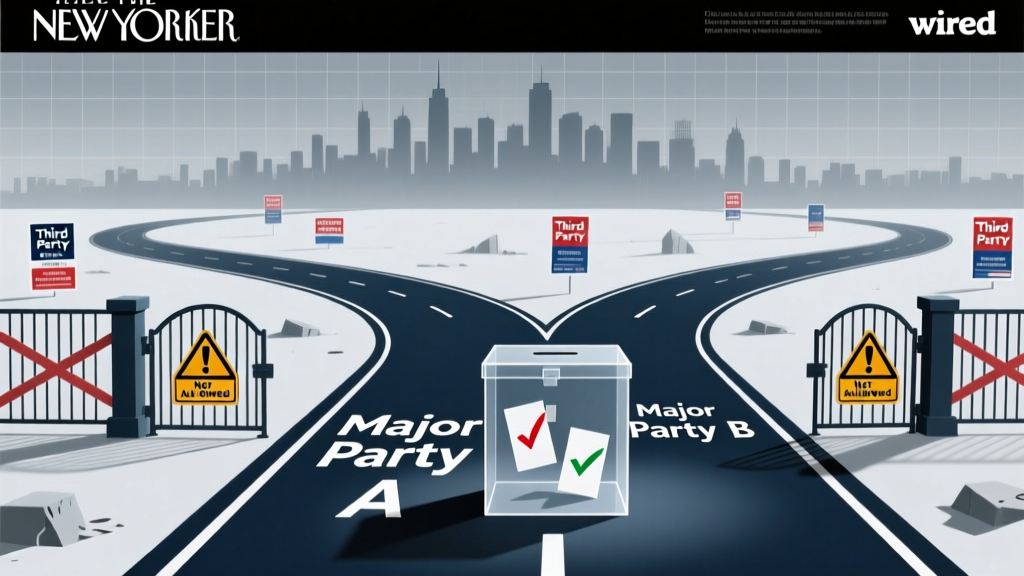
Why US Has a 2 Party System: Structural Barriers
Why This Question Matters More Than Ever
The question why does the us have a 2 party system isn’t just academic—it’s urgent. With 62% of Americans expressing dissatisfaction with both major parties (Pew Research, 2023), rising independent candidacies, and record-low trust in Congress, understanding the structural roots—not just the symptoms—is essential for anyone trying to engage meaningfully in democracy.
It’s Not About Belief—It’s About Ballots
Most people assume the US has two parties because voters naturally sort into ‘liberal’ and ‘conservative’ camps. But that’s backwards. Political scientists call this the myth of ideological bifurcation. In reality, American ideology is a spectrum—with strong regional, generational, and issue-based variation. A 2022 PRRI survey found 41% of adults identify as politically ‘independent’, and nearly half hold mixed views: pro-choice but fiscally conservative, or pro-union yet skeptical of federal overreach. So why don’t those nuanced positions coalesce into viable third parties?
The answer lies in electoral architecture—not psychology. The US uses single-member districts (SMDs) with plurality (‘first-past-the-post’) voting. In each congressional district, only one candidate wins—and they win with a simple majority (or even a 35% plurality in multi-candidate races). This creates what’s known as the Duverger’s Law effect: systems with SMD + plurality voting strongly favor two dominant parties. Why? Because voters fear ‘wasting’ their vote on a candidate who can’t win—and candidates fear splitting the vote and handing victory to their ideological opposite.
Consider Maine’s 2018 gubernatorial race: Democrat Janet Mills won with 50.9%, while Republican Shawn Moody got 42.7%. But the independent candidate, Terry Hayes, pulled 6.4%—enough to swing the outcome if even half her supporters had shifted to Moody. That ‘spoiler anxiety’ doesn’t vanish—it compounds. Over time, donors stop funding independents, media stops covering them seriously, and activists redirect energy toward influencing primaries inside the two major parties. The system becomes self-reinforcing—not by design, but by repeated, rational choices under existing rules.
The Hidden Infrastructure: Ballot Access & Campaign Finance
Even if a third-party movement gains traction, it hits a wall: ballot access. Unlike presidential candidates from the Democratic or Republican parties—who appear automatically on every state ballot—the Libertarian, Green, or newly formed Forward Party must navigate 50 separate sets of requirements. In Alabama, you need 35,412 certified signatures; in Oklahoma, it’s 50,000—and all must be collected within 90 days. In New York, minor-party candidates must secure 50,000 votes in the prior gubernatorial election just to retain automatic ballot access for four years.
Then there’s money. Federal matching funds, debate stage access, and PAC support flow overwhelmingly to the two parties. In the 2020 cycle, 94% of all federal campaign contributions over $200 went to Democrats or Republicans (FEC data). Third-party Senate candidates averaged $287,000 in total receipts—versus $11.2 million for major-party nominees. That gap isn’t incidental; it’s baked into law. The Federal Election Campaign Act (FECA) provides public financing only to parties that received ≥25% of the popular vote in the prior presidential election—a threshold no third party has cleared since 1996 (Reform Party, 8.4%).
This isn’t theoretical. In 2022, the Forward Party launched with high-profile founders (Andrew Yang, Christine Todd Whitman) and $3M in seed funding. Yet it failed to get a candidate on the ballot in 32 states—and its endorsed House candidate in CA-48 raised just $42,000 against a $2.1M Democratic incumbent. Structural disadvantage isn’t overcome by charisma or cash alone.
Historical Momentum: How Early Choices Locked in Two Parties
Many assume the two-party system emerged organically from post-Revolutionary debates between Federalists and Anti-Federalists. But that’s incomplete. What cemented duality wasn’t philosophy—it was institutional entrenchment. By the 1830s, the Democratic-Republican Party fractured, giving rise to the Democrats (led by Jackson) and the Whigs. When the Whigs collapsed over slavery in the 1850s, the Republican Party rose—but crucially, it absorbed anti-slavery Whigs, Free Soilers, and disaffected Democrats into a single coalition, not multiple new parties. That consolidation was possible because the electoral system punished fragmentation.
Compare this to Germany, which uses proportional representation (PR) with a 5% national vote threshold. There, six parties currently hold seats in the Bundestag—including Greens, FDP, AfD, and Left—because voters know a 7% vote share translates directly into ~7% of seats. In the US, 7% nationally means zero House seats unless those votes are geographically concentrated enough to win a district outright. That’s why Ross Perot earned 19% of the 1992 popular vote—and zero electoral votes. His Reform Party never recovered.
Once a two-party equilibrium forms, it becomes path-dependent: party brands gain recognition, patronage networks solidify, and state legislatures—controlled by the two parties—pass laws that protect their dominance (e.g., closed primaries, gerrymandered maps, restrictive debate commission rules). It’s less a ‘system’ and more a self-sustaining ecosystem.
What’s Changing—and Where Reform Is Actually Taking Root
Despite the inertia, cracks are appearing—not at the federal level, but in cities and states experimenting with ranked-choice voting (RCV), nonpartisan primaries, and multimember districts. Maine adopted RCV for federal elections in 2018; Alaska passed a top-four nonpartisan primary + RCV system in 2020. In 2022, Alaska’s first RCV general election saw independent candidate Nick Begich outpoll both major-party candidates in first-choice votes—and win after redistribution.
Minneapolis and New York City now use RCV for local elections. In NYC’s 2021 Democratic mayoral primary, Eric Adams won with 50.8% of final-round votes—even though he’d placed fourth in first-choice rankings. RCV allowed voters to rank alternatives without fear of ‘spoiling’—and gave lesser-known candidates airtime and viability. Crucially, RCV doesn’t eliminate parties—it changes incentives. Candidates must appeal beyond base voters to earn second- and third-choice rankings, fostering moderation and issue-based campaigning.
Meanwhile, fusion voting—allowed in 8 states—lets multiple parties endorse the same candidate, pooling ballot lines and votes. In New York, the Working Families Party regularly cross-endorses progressive Democrats, amplifying pressure for policy concessions without running spoiler campaigns. It’s a pragmatic workaround—not revolution, but evolution.
| Voting System | Impact on Party System | Real-World Example | Third-Party Viability Index* |
|---|---|---|---|
| Single-Member District + Plurality (US standard) | Strongly favors two dominant parties; penalizes vote-splitting | 2020 Presidential Race: 14 third-party candidates collectively received 2.0% of vote; zero electoral votes | 1/10 |
| Ranked-Choice Voting (RCV) in SMDs | Reduces spoiler effect; increases viability for centrist/independent candidates | Maine 2018–2022: Independents won 2 of 5 statewide executive offices under RCV | 6/10 |
| Proportional Representation (PR) + Party Lists | Enables multiparty systems; seats reflect vote share | Germany 2021: SPD 25.7%, Greens 14.8%, FDP 11.5% → all gained parliamentary representation | 9/10 |
| Top-Four Nonpartisan Primary + RCV | Breaks party gatekeeping; allows independents to compete on equal footing | Alaska 2022: Independent Nick Begich won House seat despite finishing 3rd in first round | 7/10 |
*Viability Index: 1–10 scale estimating realistic chance of winning >1 elected office above local level within 10 years under system
Frequently Asked Questions
Is the two-party system written into the US Constitution?
No—it’s entirely absent. The Constitution mentions no parties, no primaries, no ballots, and no electoral college mechanics beyond elector selection. Parties emerged organically in the 1790s and were institutionalized through practice, not law. The Constitution’s silence created space for rules—like winner-take-all voting—to evolve unchallenged.
Could a third party ever break through nationally?
Historically, yes—but only when one major party collapses (Whigs in 1850s) or when structural reform opens the door (e.g., RCV adoption). Today, breakthrough would require either: (a) simultaneous adoption of RCV in ≥15 states holding >270 electoral votes, or (b) a constitutional amendment replacing the Electoral College with national popular vote. Neither is imminent—but state-level momentum is building.
Do other countries with similar histories also have two-party systems?
No—most former British colonies use different systems. Canada and the UK use single-member districts but have multi-party systems (Liberals, Conservatives, NDP, Bloc Québécois, Greens in Canada; Labour, Conservatives, Lib Dems, SNP, Greens in UK). Why? Because they lack strict ballot access laws, have stronger public funding for smaller parties, and—critically—don’t tie presidential and legislative elections together, reducing ‘all-or-nothing’ stakes.
Does social media help or hurt third parties?
It’s double-edged. Social media lowers organizing costs and helps bypass traditional gatekeepers—but algorithms reward outrage and polarization, which benefits established parties with built-in activist bases. Viral moments rarely convert to sustained ballot access or donor pipelines. Data shows third-party candidates gain 3x more Twitter impressions than major-party challengers—but raise 1/20th the funds.
What’s the biggest misconception about third-party voters?
That they’re ‘protest voters’ acting irrationally. In fact, research by the Voter Study Group finds third-party voters are more ideologically consistent—and more informed—than average major-party voters. They often reject both parties’ coalitions on specific issues (e.g., foreign policy, drug reform, surveillance) and see no path to influence within existing structures.
Common Myths
Myth #1: “The US has two parties because Americans are politically moderate and only need two options.”
Reality: The US ranks near the bottom among advanced democracies in ideological polarization—but still has the most rigid two-party structure. Moderation doesn’t cause bipartisanship; electoral rules do.
Myth #2: “If third parties were serious, they’d just unite and run one candidate.”
Reality: Fusion voting exists in some states—but uniting diverse movements (e.g., libertarians, progressives, populists) around shared platform planks is extremely difficult. More importantly, even unified candidates face the same ballot access, fundraising, and debate exclusion barriers.
Related Topics (Internal Link Suggestions)
- How Ranked Choice Voting Works — suggested anchor text: "how ranked choice voting works"
- Ballot Access Laws by State — suggested anchor text: "state ballot access requirements"
- History of Third Parties in America — suggested anchor text: "third party candidates in US history"
- Electoral College Reform Proposals — suggested anchor text: "electoral college reform ideas"
- Proportional Representation Explained — suggested anchor text: "what is proportional representation"
Conclusion & Your Next Step
So—why does the us have a 2 party system? Not because Americans lack diversity of thought, but because our electoral machinery rewards consolidation, punishes experimentation, and evolves slowly. The good news? Change is happening—not in Washington, but in city councils, state legislatures, and ballot initiatives. If you’re frustrated by binary choices, don’t wait for a savior candidate. Research your local election rules. Attend a city council meeting on RCV implementation. Volunteer with a group advocating for fair ballot access reform in your state. Democracy isn’t a spectator sport—and the most powerful lever for change isn’t a vote cast once every four years. It’s the persistent, localized work of rewriting the rules themselves.
More Articles
 Sneaky Sasquatch Dance Party Guide (2026)
 Florida Recording Laws: One-Party Consent? (2026)
 What to Wear at Pool Party: Smart Outfit Rules (2026)
 50th Birthday Outfit Rules: Stress-Free Style (2026)
 Which Mario Party Is Best For Switch (2026)
 Stag Party Origins: Medieval Roots & Modern Planning (2026)
 Alabama One-Party Consent: When Recording Is Legal (2026)
 Third-Party Data Breach: Why Your 2026 Event Is at Risk
 Retirement Party Gifts: Etiquette Rules (2026)
 Chuck E. Cheese Party Cost in 2026: Real Prices & Savings