Who Founded the Whig Party? The Truth Behind Its Origins
Why 'Who Founded the Whig Party?' Is the Wrong Question — And What It Really Reveals About American Political Evolution
The question who founded the whig party reflects a widespread misconception: that major U.S. political parties emerge from a single founder, like a startup or a civic club. In reality, the Whig Party coalesced organically between 1833 and 1834—not through a charter or convention, but through shared outrage at President Andrew Jackson’s use of executive power, especially his veto of the Second Bank recharter and his removal of federal deposits. Understanding this isn’t just academic—it reshapes how we interpret modern partisan realignments, presidential authority debates, and even today’s grassroots coalition-building.
The Myth of the ‘Founding Father’ — And Why It Distorts History
Most Americans instinctively search for a singular founder—like Jefferson for the Democratic-Republicans or Hamilton for the Federalists. But the Whig Party had no founding document, no inaugural convention, and no formal membership rolls until years after its de facto birth. Instead, it emerged from overlapping networks: ex-Federalists disillusioned by their party’s collapse after 1816; National Republicans loyal to John Quincy Adams and Henry Clay; Anti-Masons alarmed by secretive fraternal influence; and disaffected Democrats angered by Jackson’s ‘kitchen cabinet’ and Indian Removal policies.
Historian Michael F. Holt, in his landmark The Rise and Fall of the American Whig Party, emphasizes that early Whigs didn’t even call themselves ‘Whigs’ consistently before 1835. Newspaper editors, congressional caucuses, and state-level committees adopted the label independently—often borrowing the British term to evoke resistance to ‘executive tyranny,’ referencing Britain’s 17th-century opposition to royal overreach. So while names like Henry Clay, Daniel Webster, and William H. Seward appear repeatedly in Whig origin stories, none claimed the title ‘founder.’ They were catalysts—not architects.
Three Critical Inflection Points That Forged the Whig Identity
The Whig Party wasn’t born in a day—but crystallized across three pivotal moments, each revealing how decentralized leadership shaped its DNA:
- The Bank Veto Crisis (July 1832): Jackson’s dramatic veto of the recharter of the Second Bank of the United States—accompanied by a politically charged message asserting presidential supremacy over Congress—galvanized opposition. Clay, then Senate leader, immediately organized floor debates and published rebuttals. Though the veto stood, it created the first unified anti-Jackson legislative bloc.
- The Deposit Removal Controversy (1833): When Jackson ordered Treasury Secretary Louis McLane to withdraw federal deposits from the Bank—and later fired McLane and his successor, William Duane, for refusing—Clay led Senate censure proceedings. On March 28, 1834, the Senate formally censured Jackson—the first such rebuke of a sitting president. This act became the Whigs’ foundational ‘statement of principle,’ uniting disparate critics under a banner of constitutional restraint.
- The Anti-Masonic Convention & National Coordination (1834–1835): The Anti-Masonic Party, strongest in New York and Pennsylvania, held the first national nominating convention in U.S. history in 1831. Though short-lived, it proved the viability of coordinated third-party organization. By 1834, Whig-aligned state conventions in Pennsylvania, Ohio, Kentucky, and Tennessee began using ‘Whig’ branding, issuing platforms, and endorsing joint candidates—effectively creating parallel party infrastructure without central command.
Key Figures: Not Founders, But Factional Anchors
Rather than ‘founders,’ think of these individuals as gravitational centers around which Whig sentiment coalesced—each representing distinct ideological strands that merged into the party:
- Henry Clay (KY): The ‘Great Compromiser’ provided the Whig economic vision—the American System (protective tariffs, internal improvements, national bank). His 1832 presidential run as National Republican laid groundwork—but he lost decisively. His post-defeat coalition-building in Congress made him the party’s undisputed moral and strategic north star.
- Daniel Webster (MA): Embodied Whig constitutionalism and oratorical power. His 1830 ‘Second Reply to Hayne’ speech defending Union over states’ rights became required reading for Whig candidates. Though less interested in party machinery than Clay, his intellectual authority legitimized Whig philosophy nationwide.
- Thaddeus Stevens (PA): A fiery Anti-Mason and later Radical Republican, Stevens helped merge anti-secret-society sentiment with anti-Jackson populism in the crucial Mid-Atlantic. He drafted early Whig platform planks on education and infrastructure—showcasing how local reform agendas fed national identity.
- William H. Seward (NY): As governor (1839–1843), he institutionalized Whig governance—expanding public schools, funding canals, and protecting workers’ rights. His success proved Whig policies could win elections beyond elite circles—making the party viable in diverse regions.
Whig Formation: A Comparative Timeline of Key Events
| Year | Event | Significance for Whig Coalescence | Key Actors Involved |
|---|---|---|---|
| 1828 | Andrew Jackson elected president; split in Democratic-Republican Party deepens | Created the first clear ‘anti-Jackson’ voting bloc in Congress—later called ‘National Republicans’ | John Quincy Adams, Henry Clay, Daniel Webster |
| 1831 | Anti-Masonic Party holds first national nominating convention; National Republicans nominate Clay | Demonstrated viability of organized opposition outside Democratic structure; introduced convention model Whigs would adopt | Thaddeus Stevens, William Wirt (Anti-Masonic nominee), Henry Clay |
| 1832 | Jackson vetoes Bank recharter; Clay runs as National Republican candidate | Bank issue became unifying grievance; Clay’s loss showed need for broader coalition beyond National Republicans | Jackson, Clay, Nicholas Biddle (Bank president) |
| 1833–1834 | Jackson removes federal deposits; Senate censures president; state Whig conventions begin forming | ‘Censure resolution’ served as de facto founding manifesto; state conventions established parallel party apparatus | Clay, Webster, Calhoun (initially aligned), state legislators in KY, OH, PA |
| 1836 | Whigs run multiple regional candidates (Webster, White, Mangum) against Van Buren | First national election under Whig banner—proved organizational capacity despite losing; confirmed multi-factional nature | Webster (NE), Hugh Lawson White (South), William Henry Harrison (West) |
Frequently Asked Questions
Was Henry Clay the founder of the Whig Party?
No—Clay was the party’s most influential early leader and chief ideologue, but he never claimed to found it, nor did contemporaries credit him as sole originator. The Whig Party emerged from collective action across Congress, state legislatures, and newspapers. Clay himself wrote in 1834: “We are not a party formed by design, but forced into existence by the acts of Executive usurpation.”
When was the Whig Party officially founded?
There is no official founding date. Historians point to 1833–1834 as the formative period, marked by the Senate censure of Jackson (March 1834) and the first self-identified ‘Whig’ state conventions in late 1834. The first national Whig convention wasn’t held until December 1839—six years after the party’s functional emergence.
Why did the Whig Party choose the name ‘Whig’?
The name was adopted deliberately to evoke Britain’s historic Whig Party, which opposed royal absolutism. American Whigs saw Jackson as a ‘King Andrew I’—using the veto, patronage, and military force to bypass Congress and courts. Newspapers like the Washington Globe (pro-Jackson) mocked the label, but opponents embraced it as a badge of constitutional vigilance.
What happened to the Whig Party?
The Whig Party collapsed between 1852 and 1856 over irreconcilable divisions on slavery—especially after the Kansas-Nebraska Act fractured its northern and southern wings. Most Northern Whigs joined the new Republican Party by 1856; Southern Whigs dispersed into the Constitutional Union Party or joined Democrats. Its legacy endures in advocacy for federal investment in infrastructure, education, and banking regulation.
Did any Whig presidents serve full terms?
Only two Whigs won the presidency: William Henry Harrison (1841) and Zachary Taylor (1849). Harrison died 31 days into office; Taylor died 16 months in. John Tyler (Harrison’s VP) and Millard Fillmore (Taylor’s VP) completed those terms—but both broke with the Whig Party over policy, making them effectively independent executives. Thus, no Whig president served a full, elected four-year term.
Common Myths About Whig Origins
- Myth #1: The Whig Party was founded at a single meeting or convention. Reality: No such gathering occurred. Early coordination happened via letters, newspaper editorials (e.g., The National Journal), and informal Senate caucuses—not formal assemblies.
- Myth #2: The Whigs were simply ‘anti-Jackson’ with no positive agenda. Reality: While opposition to Jackson catalyzed unity, the Whigs advanced a robust platform—the American System—centered on federally funded roads/canals, a national bank, and protective tariffs to foster domestic industry.
Related Topics (Internal Link Suggestions)
- Origins of the Republican Party — suggested anchor text: "how the Republican Party emerged from Whig collapse"
- American System economics — suggested anchor text: "Clay’s American System explained"
- Andrew Jackson’s veto power legacy — suggested anchor text: "how Jackson transformed the presidential veto"
- 1836 presidential election analysis — suggested anchor text: "why the Whigs ran three candidates in 1836"
- Anti-Masonic Party history — suggested anchor text: "the forgotten third party that helped build the Whigs"
Conclusion & Next Step
So—who founded the whig party? Not one person, but dozens of legislators, editors, governors, and activists responding in real time to democratic overreach and institutional crisis. Their decentralized, principle-driven coalition offers a powerful case study for today’s civic organizers: lasting political change rarely begins with a manifesto—it begins with coordinated dissent, shared language, and the courage to name your opposition. If you’re researching 19th-century party development—or drawing parallels to modern political realignment—start by examining primary sources: the Congressional Globe debates of 1833–1834, digitized letters from Clay and Webster, and state Whig convention minutes held at the Library of Congress. Your next step? Download our free Whig Party Primary Source Toolkit, featuring annotated transcripts, maps of early Whig strongholds, and a timeline builder you can customize.
More Articles
 Brunch Event Decor Ideas That Wow
 Where to Watch Hunting Party (2026) — Streaming Guide
 Foam Party Planning Guide: Safe, Fun & Instagram-Worthy
 Bonfire Party: Stress-Free, Smoke-Light (2026)
 Keep Food Warm at Parties: 7 Stress-Free Methods (2026)
 Gender Reveal Party: Truth, Risks & Better Alternatives
 How to Allow Third-Party Cookies in 2026
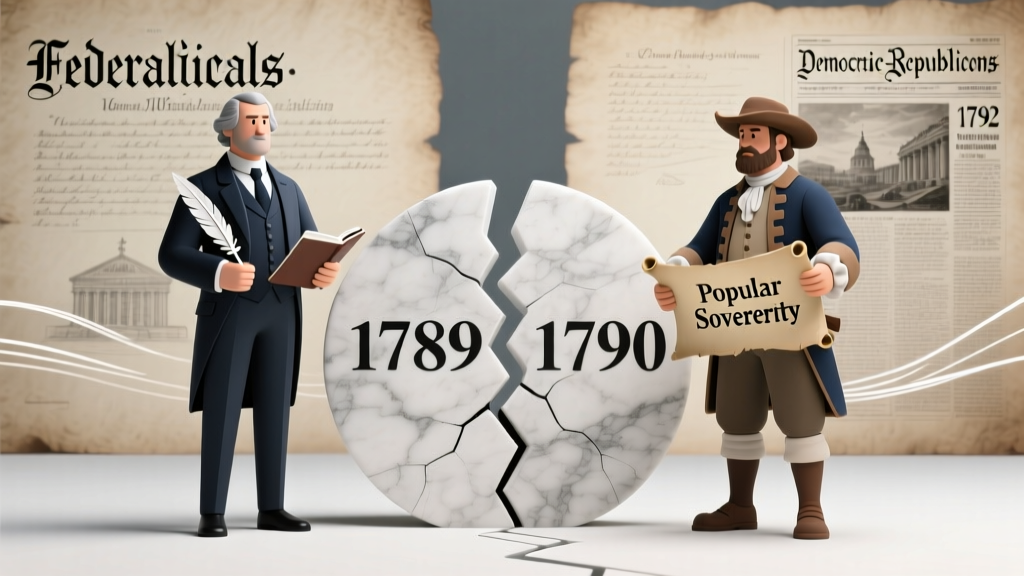 First US Parties: Federalists vs. Democratic-Republicans
 Farm Party Support: Who Delivers for Farmers (2026)
 Where to Host a 1st Birthday Party (2026)