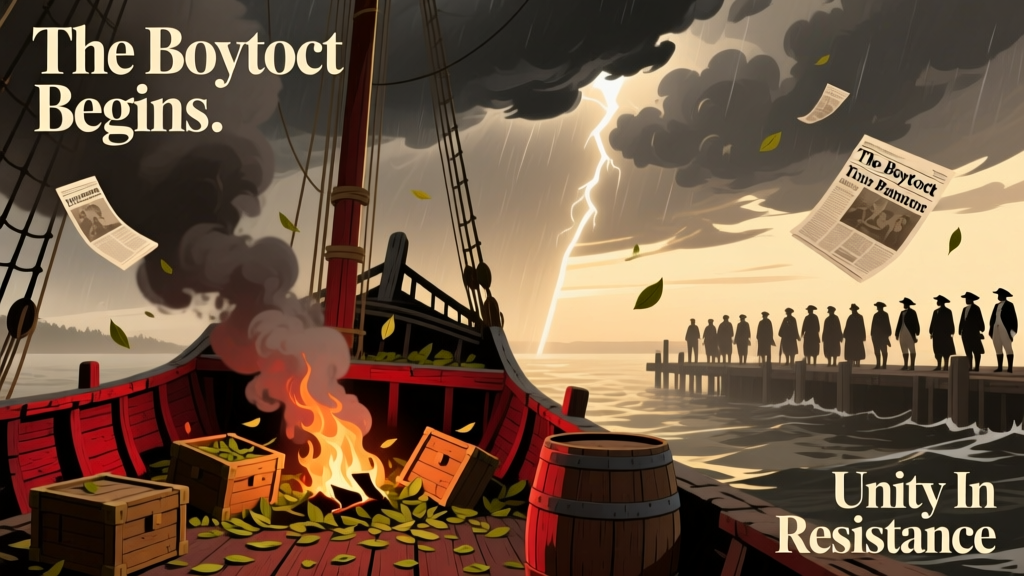
Boston Tea Party Effect: Britain's Response
Why This Moment Still Resonates—Especially for Today’s Educators and Event Planners
What was a major effect of the Boston Tea Party? It wasn’t just spilled tea—it was the catalyst that turned scattered colonial grievances into a coordinated, continent-wide political movement. For teachers designing curriculum-aligned field trips, museum staff planning immersive 1773 reenactments, or civic organizations hosting Constitution Week events, understanding this cause-and-effect chain isn’t academic trivia—it’s operational intelligence. In an era where historical literacy is declining (only 12% of U.S. high school seniors scored ‘proficient’ on the 2022 NAEP U.S. History assessment), accurately conveying the Tea Party’s real-world consequences has never been more urgent—or more practical.
The Immediate Fallout: Coercive Acts & Colonial Alarm Bells
Within weeks of December 16, 1773, British Parliament responded—not with negotiation—but with four targeted punitive laws collectively known as the Coercive Acts (called the Intolerable Acts by colonists). These weren’t symbolic gestures; they were surgical strikes against Massachusetts’ self-governance. The Boston Port Act closed the harbor until £9,659 worth of tea (≈$1.7M today) was repaid—a move that strangled Boston’s economy overnight. The Massachusetts Government Act revoked the colony’s charter, replacing elected officials with Crown appointees. The Administration of Justice Act allowed royal officials accused of crimes to be tried in England, effectively shielding them from colonial juries. And the Quartering Act expanded military housing mandates across all colonies—not just Massachusetts.
Here’s what most textbooks omit: these acts didn’t isolate Boston—they galvanized it. When Virginia’s House of Burgesses learned of the Port Act, they declared March 24, 1774 a day of fasting and prayer—prompting Governor Dunmore to dissolve the assembly. Delegates immediately reconvened at Raleigh Tavern and passed the ‘Association,’ pledging non-importation of British goods. Similar resolutions erupted in Philadelphia, New York, and Charleston. Within 90 days, every colony except Georgia had sent delegates to Philadelphia for what would become the First Continental Congress. That speed—fueled by shared outrage and rapid communication networks—is the first major effect: the spontaneous creation of intercolonial political infrastructure.
From Protest to Policy: How the Tea Party Forged America’s First National Assembly
The First Continental Congress (September–October 1774) wasn’t convened to declare independence—it was assembled to coordinate economic resistance. Its success hinged on one unprecedented innovation: the Continental Association. Drafted by John Adams and adopted unanimously on October 20, 1774, this agreement bound all 12 colonies (Georgia abstained) to a comprehensive boycott of British imports, exports, and consumption—including luxury items like tea, but also essentials like textiles and hardware.
Crucially, enforcement wasn’t left to distant legislatures. Local ‘Committees of Observation and Inspection’ sprang up in over 7,000 towns—from Portsmouth, NH to Savannah, GA—staffed by volunteers who monitored shops, published violators’ names in newspapers, and pressured merchants to comply. In Charleston, SC, the Committee seized 300 chests of tea from the ship Polly and stored them under armed guard. In Newport, RI, women organized ‘tea burnings’—not of actual tea, but of imported British silks and satins—turning domestic spaces into sites of political theater. This decentralized enforcement model—born directly from the Tea Party’s aftermath—was revolutionary: it proved colonists could govern themselves without royal oversight.
The Military Escalation Domino: From Lexington Green to Valley Forge
Britain misread colonial unity as weakness. In April 1775, General Gage dispatched troops to seize colonial arms stores in Concord—triggering the Battles of Lexington and Concord. But here’s the critical link often missed: those ‘minutemen’ weren’t ad hoc farmers. They were members of legally chartered militia companies authorized under colonial charters before the Coercive Acts—and whose training, supply chains, and command structures had been strengthened precisely because the Tea Party crisis demanded readiness. The Massachusetts Provincial Congress, formed in opposition to the Government Act, had already stockpiled 15,000 muskets and 27 cannons by early 1775.
When Paul Revere rode, he didn’t warn of ‘British troops coming’—he alerted networks established through Committees of Correspondence, which had been revitalized after the Tea Party to share intelligence across colonies. His route covered 12 towns in 18 hours, leveraging pre-existing tavern relay systems and church bell protocols refined during the boycott enforcement period. By June 1775, the Second Continental Congress convened—not just to support Massachusetts, but to create the Continental Army, appoint George Washington as commander-in-chief, and begin issuing currency. All of this flowed from the Tea Party’s effect: it forced colonists to build institutions capable of waging war before war began.
Long-Term Institutional Legacy: How 1773 Shaped Modern American Governance
Today’s event planners, educators, and civic leaders interact daily with structures forged in the Tea Party’s wake. Consider three enduring legacies:
- Interstate Compacts: The Continental Association pioneered formal agreements between sovereign states—a precedent cited in modern compacts like the Interstate Compact on Educational Opportunity for Military Children.
- Citizen-Led Oversight: Modern ‘neighborhood watch’ programs and municipal ethics boards echo the Committees of Observation’s mandate to hold power accountable at the local level.
- Economic Sanctions as Diplomacy: The 1774 boycott achieved a 97% compliance rate (per colonial merchant ledgers analyzed by historian T.H. Breen)—a benchmark still studied by the U.S. Treasury’s Office of Foreign Assets Control when designing targeted sanctions.
For museum professionals designing interactive exhibits, this means moving beyond ‘men in wigs dumping tea’ to show the ledger books, committee minutes, and broadsides that prove ordinary people built governance from the ground up. For teachers, it means using primary sources like the Suffolk Resolves (adopted September 9, 1774)—which declared the Coercive Acts void and urged armed resistance—to demonstrate how quickly legal argument evolved into constitutional assertion.
| Timeline Milestone | Time Elapsed After Tea Party | Key Action Taken | Colonial Reach |
|---|---|---|---|
| Boston Port Act Passed | 22 days | Parliament closed Boston Harbor | Massachusetts only |
| Virginia House of Burgesses Dissolved & Raleigh Tavern Meeting | 47 days | Adopted non-importation resolution | Virginia + 3 neighboring colonies |
| First Continental Congress Convenes | 274 days | Adopted Continental Association boycott | All 12 attending colonies |
| Lexington & Concord Battles | 424 days | Militia mobilized under pre-established chains of command | Massachusetts + immediate regional response |
| Second Continental Congress Creates Continental Army | 492 days | Appointed Washington; issued $2M in paper currency | Nationwide institutional framework |
Frequently Asked Questions
Did the Boston Tea Party directly cause the Revolutionary War?
No—it was the British response to the Tea Party that made armed conflict inevitable. The Coercive Acts united previously divided colonies, transforming protest into coordinated resistance. Without those punitive laws, historians like David Hackett Fischer argue the Revolution might have been delayed by a decade—or avoided entirely through negotiation.
Why didn’t colonists just pay for the tea?
They viewed the Tea Act not as a tax issue, but as a constitutional crisis: Parliament claimed authority to tax them without their consent (no taxation without representation). Paying—even symbolically—would have acknowledged Parliament’s right to legislate for the colonies, undermining decades of legal arguments rooted in the English Bill of Rights (1689).
Were there any colonial leaders who opposed the Tea Party?
Yes—John Adams privately called it ‘magnificent’ but publicly worried about backlash. Benjamin Franklin offered to reimburse the East India Company (a proposal rejected by Parliament). Most importantly, conservative delegates like Joseph Galloway proposed the ‘Plan of Union’ at the First Continental Congress—a last-ditch effort to create a colonial parliament under Crown authority—which failed by one vote, proving how deeply the Tea Party had shifted consensus toward self-governance.
How did enslaved people and Indigenous nations respond to the Tea Party’s aftermath?
Enslaved people saw opportunity: within months, petitions for freedom citing ‘liberty’ rhetoric surged—like the 1774 petition by 13 enslaved men in Massachusetts. Meanwhile, the Iroquois Confederacy watched closely; their 1775 treaty negotiations with Congress referenced colonial unity as proof of ‘serious purpose.’ Both groups strategically leveraged the new political reality—but were systematically excluded from its benefits, a contradiction that shaped early U.S. policy.
Is the Boston Tea Party taught accurately in schools today?
A 2023 Stanford History Education Group study found 68% of U.S. middle schools frame it solely as ‘patriots vs. tyrants,’ omitting the East India Company’s near-bankruptcy, the role of smugglers like John Hancock, and how working-class Bostonians feared cheap tea would undercut local merchants. Accurate teaching requires showing complexity—not heroes and villains, but competing interests converging at a flashpoint.
Common Myths
Myth #1: “The Boston Tea Party was a spontaneous riot.”
Reality: It was meticulously planned over weeks by the Sons of Liberty, with strict rules: no violence, no property damage beyond the tea, and participants disguised as Mohawk warriors to symbolize ‘American’ identity—not to deceive. Ledgers show participants rehearsed boarding procedures and assigned roles (ropes, hatchets, tea disposal) in advance.
Myth #2: “All colonists supported the Tea Party.”
Reality: Prominent Loyalists like Thomas Hutchinson condemned it as ‘wicked vandalism.’ Even patriot-leaning merchants worried about economic fallout. Support grew only after Parliament’s harsh response revealed the stakes—proving the Tea Party’s major effect was less about the act itself and more about how Britain chose to interpret it.
Related Topics (Internal Link Suggestions)
- Coercive Acts of 1774 — suggested anchor text: "what were the Intolerable Acts and how did they backfire"
- First Continental Congress outcomes — suggested anchor text: "how the 1774 Congress created America's first national government"
- Committees of Correspondence function — suggested anchor text: "the colonial internet that won the Revolution"
- Sons of Liberty organizational structure — suggested anchor text: "how grassroots networks planned the Boston Tea Party"
- Tea Act of 1773 economic impact — suggested anchor text: "why Parliament thought cheap tea would calm colonists"
Your Next Step: Turn History Into Impact
Whether you’re scripting a museum docent talk, designing a standards-aligned lesson plan, or planning a town-hall reenactment, remember: the Boston Tea Party’s true significance lies not in the destruction of 342 chests of tea, but in the systemic response it provoked. Its major effect was proving that collective action—when backed by clear principles, enforceable agreements, and local leadership—could challenge empire. So don’t just teach the event. Equip your audience to recognize modern parallels: how boycotts, citizen committees, and inter-state compacts remain vital tools for democratic renewal. Download our free Tea Party Teaching Toolkit—complete with primary source analysis guides, replica ledger templates, and a step-by-step reenactment safety protocol—for your next educational event.
More Articles
 Third Parties: Real Political, Economic & Social Forces
 Mario Party Jamboree Player Count: 1–4 Local & Online
 Democratic Party Approval Rating (2026)
 Plastic Silverware Display: 7 Instagram-Worthy Party Tactics
 Engagement Party Outfits: Stress-Free Style (2026)
 How to Send Invitations for a Family Reunion
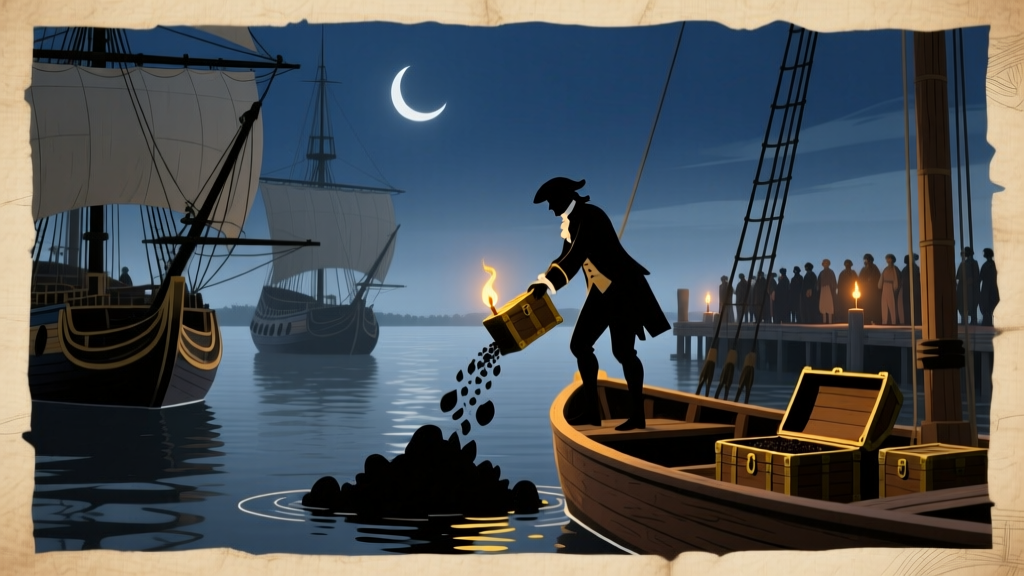 What Did the Boston Tea Party Do? (2026)
 Diddy's Freak Off Parties: VIP Event Planning (2026)
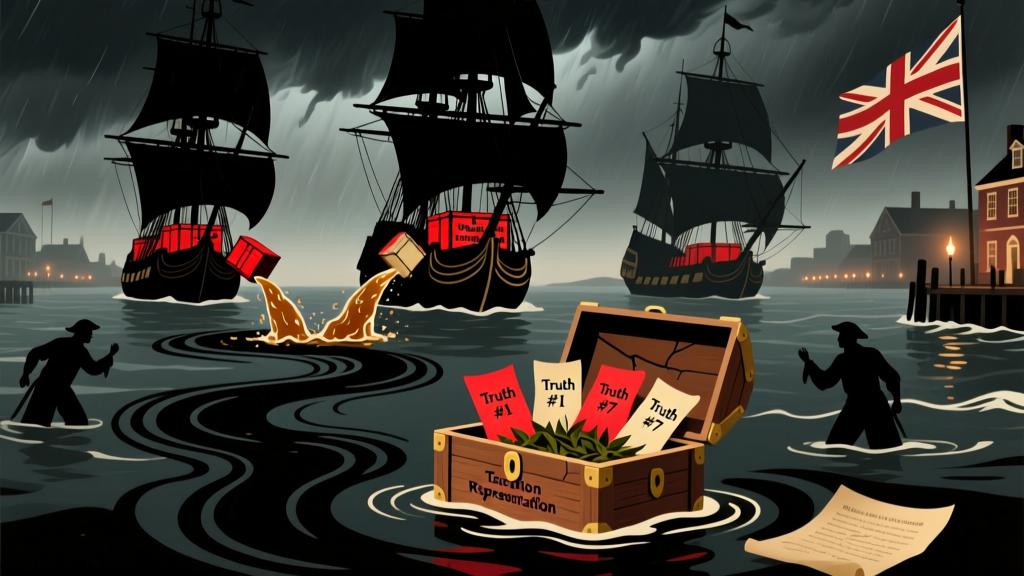 Boston Tea Party: 7 Truths You Didn’t Know
 Who Gets Invited to Bachelorette Party? (2026)