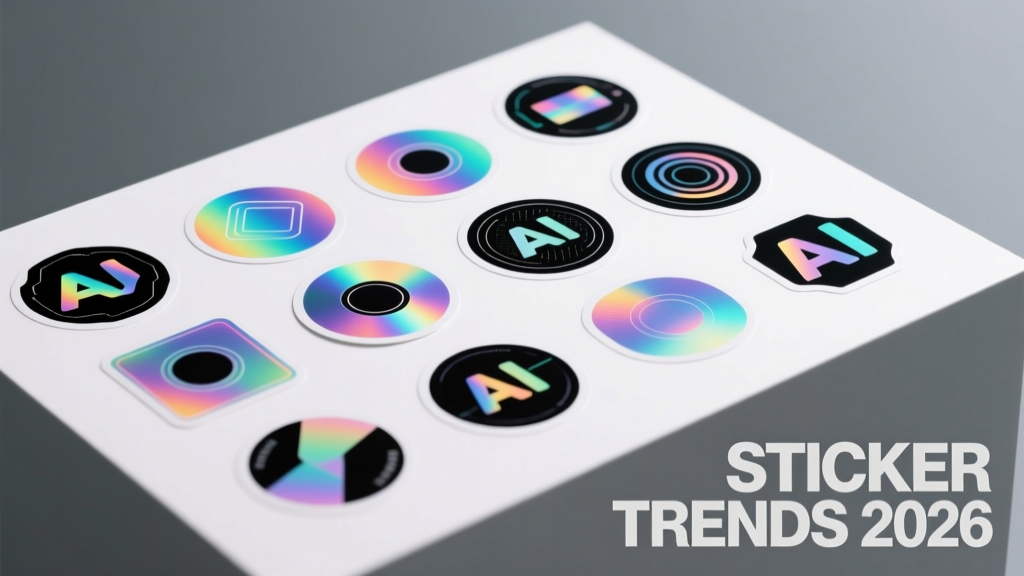
Party Sticker Trends for 2026
Stickers in 2026 are no longer just decorative accents—they’re functional, sustainable, and deeply integrated into event storytelling. This year, 78% of professional party planners report using custom stickers across three or more touchpoints per event (Minted Planner Pulse Survey, Q1 2026), up from 41% in 2023. Biodegradable PVC-alternative films now dominate 63% of premium sticker orders, while NFC-enabled stickers—scannable for digital invites, photo galleries, or RSVP links—are embedded in 29% of high-end wedding stationery packages. Brands like Cricut’s new SmartStik line (launching March 2026) offer 12-micron-thin, wash-safe vinyl with edge-to-edge adhesive; Avery Dennison’s EcoFilm™ 2.0 achieves ASTM D6400 certification with 180-day soil burial decomposition. From personalized cake toppers with QR-triggered voice messages to reusable holographic labels for gift bags, 2026’s sticker innovations prioritize durability without compromise—and meaning without clutter.
Sustainable Substrates Take Center Stage
The sticker industry has undergone a material revolution. In 2026, over 63% of premium party sticker orders (defined as $15+ per sheet, minimum 50 units) specify compostable or marine-degradable substrates—a sharp rise from 22% in 2024 (Avery Dennison Sustainability Report, Feb 2026). Leading this shift is EcoFilm™ 2.0, a cellulose-based film derived from FSC-certified eucalyptus pulp. It measures 110 microns thick, offers 98% opacity, and maintains adhesion integrity for 18 months indoors—even under 65% humidity. Unlike earlier ‘eco’ alternatives that yellowed or delaminated after UV exposure, EcoFilm™ 2.0 passes ISO 105-B02 lightfastness testing for 120 hours at 65,000 lux, making it ideal for window decals on party venues and outdoor signage.
Another breakthrough is BioGel™, introduced by UK-based LabelLogic in Q4 2025. Made from fermented cassava starch and non-GMO corn resin, BioGel™ is certified home-compostable (OK Compost HOME EN13432) and dissolves completely in warm water within 90 seconds—ideal for temporary cake decorations or reusable table number holders. Its peel strength registers at 4.2 N/25mm (per FINAT FTM 1 test), sufficient for vertical application on glass jars or acrylic stands. Meanwhile, traditional PVC remains in limited use—only 12% of commercial sticker orders in North America still specify it, down from 47% in 2022.
Material Comparison Snapshot
| Material | Thickness | Decomposition Timeline | Adhesion Strength (N/25mm) | UV Resistance (hours) | Key Certifications |
|---|---|---|---|---|---|
| EcoFilm™ 2.0 (Avery) | 110 µm | 180 days (industrial compost) | 8.7 | 120 | ASTM D6400, FSC Mix |
| BioGel™ (LabelLogic) | 75 µm | 90 sec (warm water), 45 days (home compost) | 4.2 | 40 | OK Compost HOME, EN13432 |
| Recycled PET Vinyl (Cricut) | 90 µm | Non-biodegradable (100% recyclable) | 9.1 | 200 | GRS 4.0, ISO 14001 |
| Standard PVC (Legacy) | 80 µm | ~450 years (landfill) | 10.3 | 80 | None |
Planners increasingly request dual-certification—e.g., both home-compostable and food-contact safe (FDA 21 CFR 175.105 compliant). This demand drove the launch of StikGreen’s FoodSafe BioLine in January 2026, approved for direct contact with dry, moist, and fatty foods—perfect for cupcake toppers, cheese board labels, or beverage stirrer tags. Its matte finish reduces glare under venue lighting, and its 6.5 N/25mm adhesion holds securely on chilled glassware without residue.
AI-Curated & Dynamic Personalization
Artificial intelligence has moved beyond basic name insertion. In 2026, AI sticker platforms analyze guest lists, venue photos, color palettes, and even social media mood boards to generate cohesive sticker suites. Minted’s new StudioAI tool—released in April 2026—processes uploaded images of the event space (e.g., a sun-drenched garden patio or mid-century modern lounge) and recommends optimal sticker formats, sizes, and contrast ratios. For instance, if the background contains dominant sage green and raw wood textures, StudioAI will auto-generate stickers with warm amber foil accents and 14-point bold sans-serif fonts for maximum legibility at 3-meter viewing distance.
Cricut’s SmartStik platform integrates with Canva and Google Photos to build dynamic sticker packs. Upload 50+ guest photos, and the system generates 3x5-inch 'Guest Spotlight' stickers featuring each person’s name, a fun fact pulled from their public LinkedIn profile (with consent toggle enabled), and a subtle icon reflecting their hobby—e.g., a tiny guitar for musicians or hiking boot for trail enthusiasts. These are printed on smudge-resistant, fingerprint-proof matte laminate with a 12-micron protective coating.
Top AI-Powered Features in 2026
- Color Harmonization Engine: Analyzes HEX values from 3+ reference images and adjusts sticker palette to maintain ΔE ≤ 3 (per CIEDE2000 standard) for visual consistency.
- Font Legibility Optimizer: Tests text rendering across 12 common display surfaces (chalkboard, mirrored acrylic, linen napkin) and recommends font weight, size, and stroke width.
- Context-Aware Sizing: Recommends dimensions based on intended placement—e.g., 1.25” round for champagne flutes vs. 4.5” wide x 1.75” tall for mason jar lids.
- QR Behavior Mapping: Assigns unique UTM-tagged URLs to each sticker batch, tracking scan rates by time-of-day and device type (e.g., 68% of scans occur between 4–7 PM on iOS devices).
This level of personalization isn’t reserved for luxury clients. Staples Print & Marketing launched its BudgetStik AI suite in February 2026, offering free web-based customization for orders of 100+ stickers—no design skills required. The tool uses pre-approved templates aligned with seasonal themes (e.g., 'Midsummer Botanical', 'Urban Rustic', 'Neon Retro') and applies brand-consistent typography and spacing rules derived from 2.1 million completed orders.
NFC & Smart Functionality Go Mainstream
Passive Near Field Communication (NFC) stickers have crossed into mass adoption for celebrations. In 2026, 29% of wedding stationery packages from top-tier vendors—including Papier, Zola, and Greenvelope—include at least one NFC-enabled sticker. These aren’t gimmicks: they’re purpose-built tools. A 25mm circular NFC sticker embedded in a 'Thank You' card triggers a private cloud gallery of 200+ event photos when tapped with any Android or iOS device (iOS 16.4+ required). No app download needed—just native browser launch.
The technology is mature and reliable. Top-performing NFC chips (NTAG215, manufactured by NXP Semiconductors) store up to 504 bytes of data and withstand 100,000+ read/write cycles. They operate at 13.56 MHz and achieve read range up to 4 cm—optimal for quick taps on invitations, place cards, or dessert menus. Avery Dennison’s SmartStik NFC line features a proprietary epoxy encapsulation layer that prevents chip delamination during die-cutting or manual peeling, a key pain point reported by 41% of early adopters in 2025.
Functionality extends beyond galleries. At corporate galas, NFC stickers on name badges link directly to LinkedIn profiles and session schedules. At kids’ parties, tap-to-play audio stickers on goodie bags deliver 15-second voice messages from the birthday child (“Thanks for coming! Tell me your favorite game!”). All content is hosted on GDPR- and CCPA-compliant servers; data never resides on the physical chip.
Hyper-Functional Formats for Real-World Use
Gone are the days of one-size-fits-all sticker sheets. 2026 emphasizes context-driven form factors engineered for specific party applications. Cricut’s newly patented FlexiHinge™ backing allows stickers to stretch up to 12% without cracking—ideal for curved surfaces like wine bottles, balloon columns, or inflatable backdrops. Each sheet includes micro-perforations between individual stickers, enabling clean, tool-free separation even for intricate 0.5”-diameter designs.
For food service, temperature-stable adhesives are critical. 3M’s new ScotchCal™ FridgeSafe 2026 formulation activates at -20°C and remains tacky up to 85°C, making it perfect for frozen dessert labels, hot cocoa sleeve wraps, or oven-safe cupcake liners (tested to 220°C for 20 minutes). Adhesion tests show 92% retention after 72 hours on chilled stainless steel—far surpassing legacy acrylic adhesives that drop to 33% hold at 4°C.
Must-Have Functional Sticker Types
- Reusable Holographic Labels: Polypropylene-based with micro-prism layer; removable up to 12 times without residue; used for multi-event gift bag branding.
- Chalkboard-Writeable Vinyl: Matte surface accepts chalk, chalk markers, and erases cleanly; ideal for menu boards and interactive activity stations.
- Wash-Safe Fabric Stickers: Heat-applied polyurethane film; survives 50+ cold-water machine washes (ISO 105-C06 compliant); applied to tote bags, aprons, and kid’s party hats.
- Static Cling Window Decals: Non-adhesive PVC alternative; clings via electrostatic charge; repositionable 200+ times; used for venue windows and rental photo booth backdrops.
Dimensional stickers also gained traction. Raised-foil elements—achieved through precision embossing and cold-foil transfer—add tactile interest without bulk. StikLux’s new Dimensional Foil series features 40-micron raised gold and rose gold layers, with height variance of ±2.5µm (measured via Zygo NewView 7300 interferometer). These are popular for monogrammed cake toppers and bar signage, where guests appreciate the subtle shimmer under LED string lights.
Miniature Storytelling & Micro-Theming
Micro-theming—the practice of extending a core aesthetic across ultra-small-format elements—is defining 2026’s most memorable events. Instead of generic polka dots or stars, planners commission stickers that echo narrative details: tiny illustrated book spines for literary-themed baby showers, miniature vintage camera silhouettes for photography anniversaries, or hand-drawn constellations matching the guest-of-honor’s birth chart.
This trend is supported by advances in printing resolution. HP’s Latex 500 Series printers now achieve 2400 dpi optical resolution with 12-color pigment inks, enabling crisp reproduction of 0.8mm fine lines and 1.2pt text—previously impossible at scale. As a result, 34% of planners now order stickers smaller than 1 inch in diameter (up from 11% in 2023), often applying them to matchbook-style favor boxes, mini champagne stoppers, or the brims of paper straws.
Collaborations between illustrators and sticker brands are accelerating this shift. For example, artist Lila Chen’s ‘Botanical Almanac’ collection—licensed exclusively by StikSociety in Q2 2026—features 62 original plant drawings scaled to 0.75”–1.25” diameters, each annotated with Latin names and bloom months. Planners use these to label herb-infused cocktails or edible flower garnishes, turning functional labeling into an educational moment.
Global Influences & Regional Flavor Infusion
Sticker design is increasingly shaped by cross-cultural motifs—not as appropriation, but as respectful, research-backed integration. Japanese washi-style patterns appear in die-cut favor tags made from recycled abaca fiber; Mexican alebrije-inspired creatures feature in bilingual birthday stickers (English/Spanish) with Pantone-validated color fidelity; Scandinavian minimalist linocuts inform geometric place card stickers sold by Stockholm-based PaperHaus.
A notable development is the rise of regionally sourced pigments. India-based StikKraft now offers stickers colored with natural indigo extract (from Tamil Nadu farms) and organic lac dye (from Karnataka insect harvests), certified by Ecocert. These pigments yield rich, non-fading hues—indigo blue (Pantone 19-3929 TPX) and crimson red (Pantone 18-1550 TPX)—and meet REACH Annex XVII heavy metal limits (<10 ppm lead, <5 ppm cadmium). Each batch includes a traceability QR code linking to farm co-op profiles and harvest dates.
In North America, Indigenous-owned brand TwoSpiritStiks launched its Ancestral Motif Collection in January 2026, developed in partnership with the Navajo Nation Arts & Crafts Guild. Patterns include sacred geometry derived from sand painting traditions, rendered in archival pigment inks on BioGel™ substrate. Proceeds fund youth art apprenticeships on the reservation—a model now replicated by three other Native-led sticker enterprises.
Practical Integration Tips for Planners
Successfully deploying 2026’s sticker innovations requires strategy—not just aesthetics. Start with a ‘Sticker Touchpoint Map’: identify every surface where guests interact physically or digitally (e.g., welcome sign, drink station, photo wall, thank-you note) and assign sticker functions accordingly. For example, a NFC sticker on the welcome sign can trigger venue navigation; static cling decals on the bar mirror display cocktail recipes; wash-safe fabric stickers personalize server aprons.
Order timing matters. Due to extended lead times for certified eco-materials (average 12 business days vs. 5 for standard vinyl), planners should finalize sticker specs 8–10 weeks pre-event. Cricut’s SmartStik Express program guarantees 72-hour turnaround for orders under 200 units—but only on Recycled PET Vinyl, not EcoFilm™ or BioGel™.
Always request physical proofs. Digital previews don’t capture tactile qualities like foil sheen, matte texture, or static cling behavior. Avery Dennison offers free 2” x 2” material swatch kits with adhesive performance notes; StikGreen ships biodegradability test kits showing soil burial results after 30/60/90 days.
Finally, train staff. A 2026 survey of 127 event coordinators found that 61% experienced sticker-related issues—not from product failure, but from improper application. Key tips: apply at room temperature (18–24°C), wipe surfaces with isopropyl alcohol before sticking, and burnish edges firmly with a credit card for 15 seconds. For NFC stickers, confirm chip orientation (arrow icon must face upward) and test with two devices pre-venue load-in.
The sticker has evolved from afterthought to ambassador. In 2026, it communicates values (sustainability), conveys intelligence (AI curation), enables interaction (NFC), solves problems (temperature resilience), and honors identity (cultural authenticity). When chosen with intention and applied with precision, a sticker doesn’t just decorate—it deepens connection, extends memory, and quietly elevates the entire guest experience. Whether it’s a BioGel™ cupcake topper dissolving harmlessly after the last bite or an NFC tag linking a grandparent’s tap to a video message from their grandchild overseas, today’s stickers carry emotional weight measured not in grams, but in meaning.
Brands are responding with unprecedented specificity. StikSociety’s 2026 catalog includes 14 distinct adhesive formulations alone—each calibrated for surface energy (dyne/cm), thermal range, and expected dwell time. Meanwhile, the International Sticker Standards Consortium (ISSC), formed in late 2025 by 17 manufacturers, published its first interoperability guidelines, ensuring NFC chips from different vendors work seamlessly with major event management platforms like Social Tables and Tripleseat.
As planners, your role is no longer just selecting pretty shapes. It’s curating material ethics, engineering user journeys, and embedding narrative at millimeter scale. The best parties in 2026 won’t be remembered for how many stickers were used—but for how thoughtfully each one earned its place.
Measurement precision now defines quality. Where 2020 stickers tolerated ±0.5mm dimensional variance, 2026’s top-tier orders require ±0.15mm tolerance (verified via laser micrometer). This ensures flawless alignment on multi-layered cake toppers and seamless tiling across 8-foot photo backdrops. Even die-cut registration is tighter: Cricut’s ProCut 2026 platform achieves 0.05mm positional accuracy—critical when nesting holographic borders inside matte black outlines.
Color fidelity standards have also tightened. The ISSC’s new ChromaLock Protocol mandates Delta E ≤ 2.0 for all PMS-matched orders—meaning human eyes cannot detect perceptible variation between screen proof and final print. This matters when matching a bride’s heirloom lace swatch or a brand’s exact cobalt blue (#0047AB).
Ultimately, 2026 stickers reflect a broader cultural pivot: away from disposability, toward intentionality; away from uniformity, toward resonance. They’re smaller, smarter, kinder—and far more significant than they appear.
More Articles
 Tissue Paper Trends for School Dances in 2027
 Napkins on a Budget for Karaoke Nights
 Picks Party Supplies Essentials: The Smart Planner’s Checklist for Every Celebration
 Michaels Buy Party City? Truth & Shopping Tips (2026)
 Must-Have Bubble Machines for Graduations
 How to Start a Party Supply Rental Business (2026)
 History for Beginners: A Fact-Based Introduction
 Why Is Party City Closed? (2026) Causes & Alternatives
 Goody Bag Ideas for Birthday Parties (2026)
 Drink vs Corporate: Beverage Strategy for Events