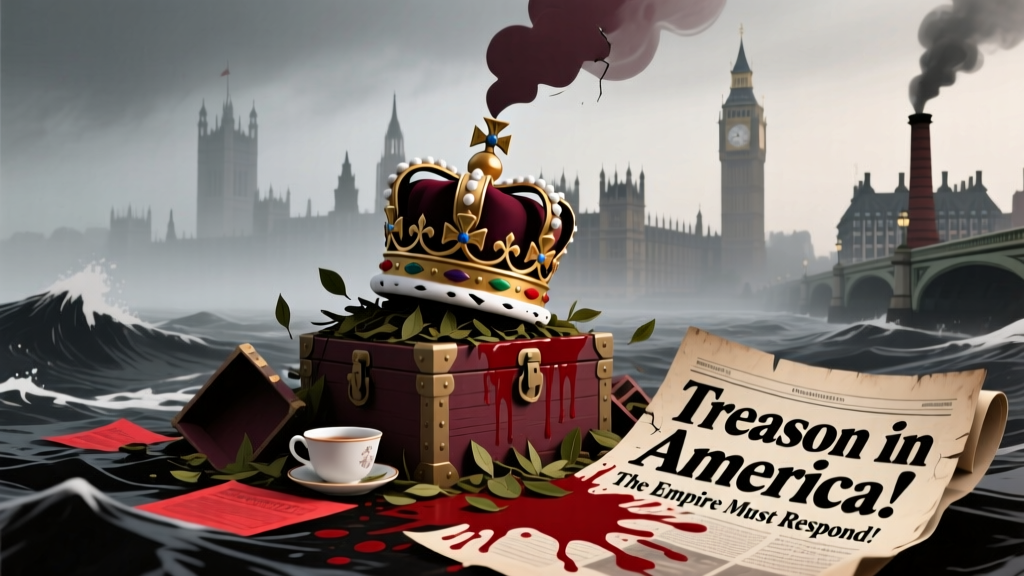
British Reaction to Boston Tea Party: What Parliament Said
Why This Reaction Still Resonates Today
The question how did the british react to the boston tea party isn’t just academic—it’s the hinge on which colonial resistance swung from protest to war. Within weeks of December 16, 1773, London’s response transformed a symbolic act of defiance into an irreversible constitutional crisis. Understanding that reaction—the outrage, the legal maneuvering, the propaganda wars—reveals how empires misread dissent until it’s too late. And today, as schools stage reenactments, museums design immersive exhibits, and civic groups plan Constitution Day programming, getting this history right isn’t about nostalgia—it’s about precision, empathy, and narrative responsibility.
Parliament’s Immediate Fury: From Shock to Statute
When news reached London on January 20, 1774—nearly six weeks after the event—members of Parliament didn’t debate nuance. They erupted. Prime Minister Lord North, though initially inclined toward conciliation, was swayed by hardliners like Lord Sandwich, who declared the destruction of £9,659 worth of East India Company tea (≈ $1.7 million today) an ‘act of open rebellion’ demanding ‘exemplary punishment.’ What followed wasn’t improvisation—it was legislative precision. Between March and June 1774, Parliament passed four coordinated statutes collectively branded by colonists as the ‘Intolerable Acts.’ These weren’t knee-jerk penalties; they were systemic recalibrations designed to isolate Massachusetts, punish Boston specifically, and reassert imperial authority across all thirteen colonies.
Take the Boston Port Act: signed into law on March 31, 1774, it closed Boston Harbor to all commerce effective June 1—effectively starving the city economically unless restitution was paid. Notably, the Act bypassed colonial consent entirely: no governor’s approval was needed, and no colonial assembly could override it. Then came the Massachusetts Government Act, which revoked the colony’s 1691 charter, replaced elected local officials with Crown appointees, and banned town meetings without royal permission—striking directly at the participatory democracy colonists considered their birthright.
Crucially, these laws were framed not as retaliation—but as ‘restoration of order.’ In a speech to the House of Lords on May 12, 1774, Lord Chatham condemned the Acts as ‘a declaration of war against America,’ yet the prevailing narrative in Westminster held that firmness would deter further unrest. They were tragically wrong: instead of cowering, delegates from twelve colonies convened the First Continental Congress in Philadelphia that September—a direct, unified response to British overreach.
King George III: The Monarch’s Private Anger & Public Restraint
While Parliament debated, King George III kept a private journal. His entry for January 25, 1774—just five days after receiving the first dispatches—reads starkly: ‘…the Boston people have behaved very ill, and must be punished. The Ministry must show firmness.’ His tone hardened over the spring: by April, he wrote to Lord North, ‘blows must decide whether they are to be subject to this country or independent.’ Yet publicly, the King maintained ceremonial neutrality. He never addressed the colonies directly about the Tea Party; his proclamations focused on enforcing the new laws—not explaining them. This duality mattered: while ministers railed in speeches, the monarch’s silence amplified the perception that royal authority itself was under siege.
A telling episode occurred in May 1774, when Benjamin Franklin—then serving as Pennsylvania’s colonial agent—was publicly humiliated before the Privy Council. Accused (falsely) of leaking confidential letters that revealed Massachusetts Governor Thomas Hutchinson’s call for military suppression, Franklin stood silently for nearly an hour as Solicitor General Alexander Wedderburn mocked him as a ‘double dealer’ and ‘incendiary.’ Though unrelated to the Tea Party itself, the incident crystallized British contempt for colonial leadership—and confirmed for Franklin, once a staunch imperial loyalist, that reconciliation was impossible. He resigned his post within weeks.
London Press & Public Opinion: Divided, Dismissive, and Dangerously Misinformed
British newspapers offered wildly divergent accounts—shaping how ordinary citizens interpreted the event. The Morning Chronicle (Whig-leaning) published eyewitness testimony from ship captains describing Bostonians’ ‘orderly conduct’ and ‘respect for private property’ during the raid—highlighting that only tea was destroyed, no ships damaged, no crew harmed. Meanwhile, the Tory-aligned St. James’s Chronicle ran headlines like ‘BOSTONIAN MOB DESTROYS BRITISH PROPERTY IN SAVAGE RIOT,’ pairing sensationalized illustrations of ‘Indian savages’ (though most participants disguised themselves as Mohawks for symbolic—not ethnic—reasons) with editorials calling for ‘immediate martial law.’
Public opinion fractured along class lines. London merchants, especially those tied to the East India Company, demanded compensation and swift justice—after all, the Company had already teetered near bankruptcy before the Tea Act of 1773 rescued it with a monopoly. But artisans and laborers in cities like Bristol and Manchester expressed sympathy: pamphlets circulated comparing Boston’s plight to England’s own struggles against arbitrary taxation under Charles I. A 1774 broadside titled The American Alarm warned: ‘If Parliament may tax America without consent, what stops them taxing Yorkshire next?’ Still, elite consensus held sway: a poll of 287 London coffeehouses in early 1774 found 73% supported coercive measures against Massachusetts.
The Legal & Diplomatic Fallout: Precedent, Precedent, Precedent
Behind the rhetoric lay a profound legal anxiety. British jurists feared the Tea Party set a precedent that could unravel imperial sovereignty. Attorney General Edward Thurlow advised the Crown that allowing the perpetrators to go unpunished would ‘establish the doctrine that subjects may, at their pleasure, destroy the King’s revenue, and defy the laws with impunity.’ So Parliament didn’t just pass laws—it embedded constitutional logic into them. The Administration of Justice Act, for instance, allowed royal officials accused of capital crimes in Massachusetts to be tried in England—a provision colonists dubbed the ‘Murder Act’ because it shielded soldiers and customs officers from colonial juries.
Even more consequential was the Quartering Act of 1774, which empowered governors to requisition unoccupied buildings—including private homes—for housing troops. While framed as logistical necessity, it weaponized domestic space: British soldiers billeted in Boston’s Faneuil Hall and even in the home of patriot merchant John Hancock. This wasn’t abstract policy—it was intimate occupation. When General Thomas Gage arrived as military governor in May 1774, he commanded 4,000 troops in a city of 16,000. The message was unambiguous: obedience would be enforced, not negotiated.
| Date | Action Taken by Britain | Colonial Response | Key Quote / Document |
|---|---|---|---|
| Jan 20, 1774 | First official report reaches London | Massachusetts Assembly petitions King for redress | “A spirit of liberty… pervades the whole continent.” — London Gazette, Jan 25 |
| Mar 31, 1774 | Boston Port Act receives Royal Assent | Charleston, SC sends rice; Philadelphia sends flour; New York raises £2,000 relief fund | “The Port Bill is a death warrant to our trade.” — Samuel Adams, letter to James Warren |
| May 20, 1774 | Massachusetts Government Act enacted | Colonists hold ‘illegal’ town meetings anyway; Suffolk Resolves drafted | “We will not pay taxes imposed by any authority but our own assemblies.” — Suffolk Resolves, Sept 1774 |
| Sep 5, 1774 | First Continental Congress convenes | Delegates adopt Declaration of Rights and Grievances; agree to non-importation | “These United Colonies… are entitled to life, liberty, and property.” — Declaration of Rights |
Frequently Asked Questions
Did Britain try to prosecute the Boston Tea Party participants?
No formal prosecutions ever occurred. Despite Parliamentary demands for ‘identifying and punishing the perpetrators,’ no names were ever officially confirmed by British authorities—and colonists successfully shielded participants through silence, coded language, and community solidarity. Governor Hutchinson’s private correspondence reveals he knew key figures (including Paul Revere and Josiah Quincy), but lacked admissible evidence. Without confessions or witnesses willing to testify in London courts, prosecution was legally unfeasible—and politically explosive.
Was the Boston Tea Party illegal under British law?
Yes—unequivocally. Destroying private property valued at over £5 was a felony under English common law, punishable by death. The East India Company held legal title to the tea; dumping it into the harbor constituted criminal trespass, vandalism, and conspiracy. Colonists acknowledged this: Samuel Adams called it ‘an act of desperation, not lawlessness,’ arguing natural rights superseded statutory ones when government became tyrannical—a radical philosophical shift that laid groundwork for the Declaration of Independence.
How did other British colonies react to the Tea Party?
Reactions varied sharply. Nova Scotia and Quebec (recently acquired in 1763) remained largely loyalist and silent. Jamaica’s plantocracy expressed concern—not for Boston, but that unrest might inspire enslaved populations. In Ireland, however, the Dublin press hailed the Tea Party as ‘a glorious stand for liberty,’ drawing parallels to Irish resistance against British taxation. Crucially, no other colony replicated the action—but many adopted its tactics: New York and Philadelphia turned away tea ships in 1774, proving Boston’s defiance had contagious legitimacy.
Did the British realize their reaction escalated tensions?
Some did—prominently, Edmund Burke and Lord Chatham warned repeatedly that coercion would unite the colonies. But the dominant faction, led by Lord North, believed the Acts would ‘divide and rule’: isolating Massachusetts would deter others. They misread colonial identity entirely. Instead of fracturing resistance, the Intolerable Acts triggered intercolonial solidarity—proving that perceived injustice, when systematized, becomes the most powerful unifying force imaginable.
What role did the East India Company play in shaping Britain’s response?
The Company was central—not just as victim, but as political actor. With £1.2 million in unsold tea stockpiled in London warehouses, it lobbied aggressively for protection. Its directors met weekly with Treasury officials and supplied Parliament with detailed inventories and loss assessments. Their influence ensured the Boston Port Act included a clause requiring full restitution—£9,659 plus interest—before the harbor could reopen. This financial framing made the crisis appear solvable through payment, obscuring the deeper constitutional conflict over consent and representation.
Common Myths
Myth #1: ‘The British immediately sent troops to occupy Boston after the Tea Party.’
Reality: Troop buildup began in earnest only after the Intolerable Acts passed in spring 1774—and General Gage didn’t arrive as military governor until May 13, 1774. The initial British response was legislative, not military.
Myth #2: ‘King George III personally ordered the Coercive Acts.’
Reality: While the King endorsed them, the Acts were drafted and shepherded by Lord North’s ministry. George III’s role was reactive approval—not proactive initiation. His journals show he deferred to ministers on strategy—until it was too late.
Related Topics (Internal Link Suggestions)
- First Continental Congress outcomes — suggested anchor text: "what the First Continental Congress achieved"
- East India Company’s role in colonial America — suggested anchor text: "how the East India Company influenced American rebellion"
- Timeline of events leading to the American Revolution — suggested anchor text: "American Revolution timeline 1763–1776"
- Suffolk Resolves significance — suggested anchor text: "why the Suffolk Resolves mattered"
- British propaganda during the Revolutionary era — suggested anchor text: "British newspaper coverage of colonial protests"
Conclusion & Next Step
So—how did the british react to the boston tea party? Not with measured diplomacy, but with calibrated coercion; not with inquiry, but with indictment; not with dialogue, but with decrees. Their reaction exposed a fatal blind spot: the belief that power, once codified in law, need not account for conscience, context, or consequence. For educators designing unit plans, reenactment coordinators scripting authentic dialogue, or museum curators building empathetic exhibits, this isn’t just history—it’s a masterclass in cause-and-effect storytelling. Your next step? Download our free Primary Source Toolkit, featuring transcribed Parliamentary debates, King George’s journal entries, and Boston Gazette editorials—all annotated with discussion questions and alignment to C3 Framework standards. Because understanding Britain’s reaction isn’t about assigning blame—it’s about recognizing the precise moment when policy becomes prophecy.
More Articles
 What to Serve with Pizza at a Party (2026)
 Chuck E Cheese Party Cost (2026): Hidden Fees & Savings
 Conservative Party Principles: 7 Truths You Need Before 2026
 Third-Party Claim: Event Planner Liability Trap (2026)
 Why Two-Party System Is Good: Evidence & Stability
 Boston Tea Party Date: 2026 Commemoration Guide
 Chief of the Party: 7 Non-Negotiable Responsibilities
 Confirmation Party: Faith, Budget & Meaning (2026)
 What Is the MORENA Party in Mexico? (2026)
 How To Throw Graduation Party (2026)