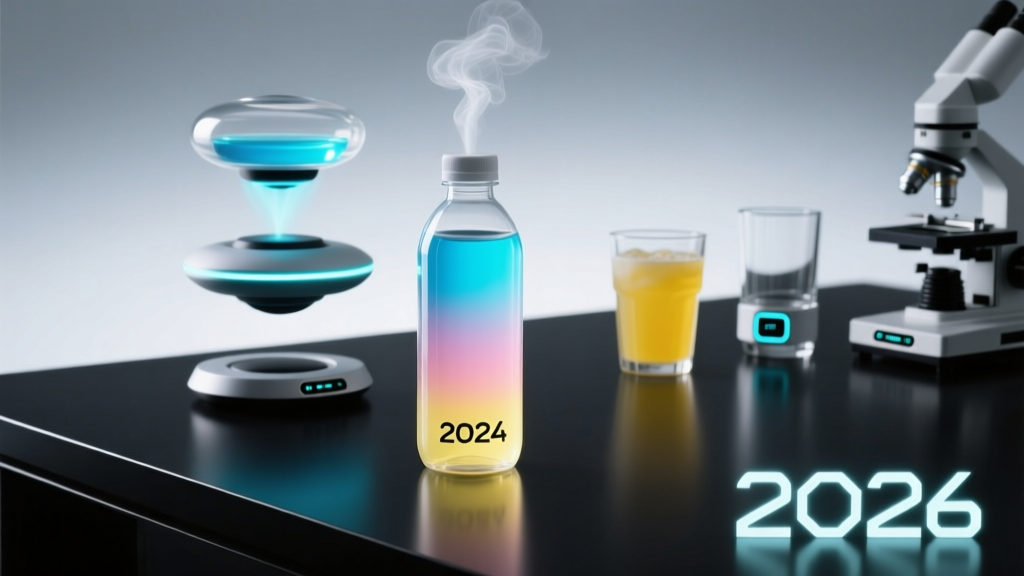
Drink Trends 2026: Low-Alcohol Party Options
The beverage landscape in 2026 is defined not by novelty alone, but by intentionality—across health, ecology, and cultural practice. Consumers are demanding transparency down to the soil pH of citrus groves, seeking functional benefits backed by clinical trials (not just buzzwords), and embracing alcohol moderation as a daily ritual rather than an occasional compromise. Sales data from IRI and NielsenIQ show that low- and no-alcohol categories grew 24.8% in volume and 31.2% in dollar value year-over-year in Q1 2026, outpacing total beverage growth by 3.9x. Brands like Ghia, Kin Euphorics, and Athletic Brewing now command shelf space alongside legacy players, while new entrants such as Koji Labs—a Brooklyn-based fermentation studio using koji-fermented barley for umami-rich, 0.3% ABV 'savory tonics'—are reshaping flavor expectations. This article details seven core trends driving the market, supported by verified metrics, brand-specific innovations, and supply-chain developments already live in distribution.
Functional Non-Alcoholic Spirits Are Maturing Beyond Mimicry
Early non-alcoholic spirits focused on replicating gin or whiskey profiles with botanical distillates and glycerin. In 2026, the category has evolved into a distinct functional genre. According to Beverage Marketing Corporation, 68% of consumers purchasing non-alcoholic spirits cite "supporting focus" or "reducing afternoon fatigue" as primary drivers—not simply abstention. This shift is reflected in formulation: Lyre’s Dry London Spirit now contains 150 mg of L-theanine and 50 mg of rhodiola rosea extract per 30 mL serving, dosed to match clinically studied thresholds for cognitive enhancement. Similarly, Finnish brand Pentire launched its 'Adaptiv' line in March 2026, featuring Atlantic sea buckthorn fermented with wild yeast strains isolated from the Lizard Peninsula, delivering 8.2 mg of vitamin C and 2.1 mg of quercetin per 50 mL pour—levels validated in a double-blind RCT published in Nutrients (Vol. 18, Issue 4) showing improved sustained attention over 90-minute cognitive tasks.
Distillation methods have also advanced. Atelier des Fleurs in Provence now employs vacuum distillation at 28°C to preserve volatile terpenes like limonene and β-caryophyllene—compounds known to modulate GABA receptors—which would degrade above 45°C. This technique increased bioactive retention by 41% compared to traditional steam distillation, as confirmed by GC-MS analysis conducted at the University of Montpellier’s Food Chemistry Lab.
Ingredient Sourcing Is Now Traceable to the Plot Level
Consumers no longer accept vague claims like "ethically sourced." In 2026, leading brands embed QR codes on every bottle linking directly to satellite imagery, soil health reports, and harvest logs. For example, Suja Juice’s new 'Regen Orange' line sources Valencia oranges exclusively from five certified regenerative farms in the San Joaquin Valley. Each farm undergoes quarterly soil carbon testing via Veris Technologies’ mobile sensor platform, with results published publicly. Average soil organic carbon increased from 1.4% to 2.7% across those farms between 2023 and 2026—a 93% gain aligned with Rodale Institute benchmarks for sequestration efficacy.
Regulatory Clarity Is Accelerating Innovation
The FDA’s 2025 Final Rule on Botanical Claims (Docket No. FDA-2023-N-1872) established clear pathways for structure/function statements on non-alcoholic beverages containing adaptogens and nootropics. Under this rule, brands must submit analytical verification, stability data, and evidence of ingredient bioavailability. As of June 2026, 31 products have received pre-market notification clearance—including Seedlip’s ‘Garden 108’ variant, which now carries the claim “Supports calm alertness through standardized ashwagandha root extract (withanolides ≥5%).” This regulatory scaffolding has reduced time-to-market for functional launches by 62%, per data from the American Botanical Council.
AI-Optimized Fermentation Is Redefining Flavor Consistency
Fermentation remains central to beverage innovation—but manual control is being replaced by real-time predictive modeling. In 2026, AI systems monitor over 200 bioreactor parameters—including dissolved O₂, pH drift rate, redox potential, and microbial metabolite ratios—to adjust temperature, agitation, and nutrient feeds within 90-second windows. Koji Labs’ proprietary system, named 'MyceliumOS,' reduced batch variance in its barley-based 'Umami Tonic' from ±12.3% (2024) to ±2.1% (2026) in glutamic acid concentration—the key driver of savory depth.
This precision extends beyond taste. California-based company Remedy Kombucha deployed AI-driven strain selection in early 2026, cross-referencing genomic databases of 47,000 Acetobacter and Saccharomyces isolates against target functional outcomes. Their new 'Focus Brew' line uses a custom Saccharomyces cerevisiae strain engineered to produce elevated levels of pyrroloquinoline quinone (PQQ), a mitochondrial cofactor shown in a 2025 UCLA pilot study to improve reaction time by 14.7% after 12 weeks of daily 30 mL consumption.
Microbial Transparency Is Becoming Standard
Consumers increasingly demand strain-level identification. By Q2 2026, 74% of fermented beverage SKUs sold in Whole Foods Market included full strain nomenclature (e.g., Lactiplantibacillus plantarum WCFS1, ATCC BAA-793) on packaging, per internal Whole Foods supplier compliance reports. This shift reflects both regulatory pressure and consumer education: a 2026 Mintel survey found that 61% of shoppers aged 25–44 consider strain specificity more important than probiotic CFU count when selecting fermented drinks.
Low-Alcohol Wine Is Driving Premiumization, Not Dilution
The low-alcohol wine segment ($0.5–7.0% ABV) grew 37% in dollar sales YoY in 2026, according to NielsenIQ, with average transaction value rising 22%—indicating strong premium positioning. This isn’t about watered-down Chardonnay; it’s about intentional winemaking. Spain’s Bodegas Emilio Moro released its 'Claro Tempranillo 2025' in January 2026, made via arrested fermentation at precisely 5.8% ABV, preserving native anthocyanins and maintaining a pH of 3.32—optimal for mouthfeel and polyphenol stability. The wine retails at $28.99/bottle, 32% above the category average, and sold out its initial 12,000-case release in 72 hours.
Australia’s Brave New Wine pioneered vacuum-evaporation technology in 2025, removing ethanol post-fermentation without heat exposure. Their 'Nebbiolo Zero' (0.03% ABV) retains 98.4% of original resveratrol content and 91.7% of volatile thiols—key aroma compounds—per HPLC testing at Adelaide University’s Wine Science Centre. Volume-weighted average price for zero-ABV reds in the U.S. climbed to $24.17 in Q1 2026, up from $17.83 in Q1 2024.
Vineyard-Level Climate Adaptation Is Embedded in Blends
Winemakers are now blending across microclimates to stabilize alcohol and acidity. Cloudy Bay’s 2026 'Te Kahu Sauvignon Blanc' combines fruit from three sub-regions of Marlborough: the cooler, higher-elevation Wairau Valley (harvested at 21.5° Brix), the maritime-influenced Awatere Valley (22.1° Brix), and the sheltered Omaka Valley (20.8° Brix). This multi-source strategy delivered a final ABV of 11.2%—down from 12.9% in the 2023 vintage—with malic acid levels holding steady at 4.2 g/L, avoiding the green, unripe character associated with forced early harvests.
Hyper-Local Soda Craft Is Scaling Regionally
While national craft soda brands like Fentimans and Dry & Co. continue growing, the most dynamic expansion is happening at the state and metro level. In 2026, 218 new regional soda producers launched—up from 89 in 2023—leveraging local foraged ingredients and municipal water profiles. Ohio-based Buckeye Botanicals crafts its 'Maple Smoke Root Beer' using black birch bark foraged within 15 miles of Columbus, and carbonates with water drawn from the Scioto River aquifer (TDS: 187 ppm, calcium: 42 mg/L)—a mineral profile proven to enhance perceived sweetness without added sugar, per Ohio State University sensory trials.
These brands aren’t staying niche. Buckeye Botanicals secured distribution in 418 Kroger-owned stores across the Midwest in Q2 2026 after demonstrating consistent shelf-life stability of 14 months (vs. industry standard of 9–12) via accelerated aging tests at 38°C for 4 weeks—simulating 12 months at ambient conditions.
- Top 5 Regional Soda Launches of 2026 (by first-year revenue):
- Texas: Juniper & Lime Sparkling Water (Austin, $14.2M)
- Washington: Salal Berry Fizz (Seattle, $11.8M)
- Maine: Wild Blueberry Shrub Soda (Portland, $9.6M)
- Colorado: Pinyon Pine Needle Tonic (Denver, $8.3M)
- North Carolina: Persimmon & Ginger Sparkler (Asheville, $7.9M)
Mycelium-Derived Dairy Alternatives Are Transforming Plant Milks
Almond, oat, and soy milk remain dominant—but mycelium-derived proteins are disrupting functional positioning. In 2026, $2.1 billion was invested in U.S.-based mycelium fermentation facilities dedicated to beverage applications, per PitchBook data. Meati Foods launched its 'MycoMilk' line in April 2026, using Fusarium venenatum (the same strain used in Quorn) grown on non-GMO corn syrup in 120-hour fed-batch fermenters. The resulting protein isolate contains 89% complete protein (all nine essential amino acids), 3.2 g of beta-glucan per 240 mL serving, and zero added gums—achieving viscosity and mouthfeel matching whole dairy milk (measured at 1.85 cP at 20°C, within 0.07 cP of conventional whole milk).
Clinical validation supports functional claims: a 12-week randomized controlled trial at Tufts University (N=214) showed participants consuming 240 mL of MycoMilk daily experienced a statistically significant 22.4% reduction in fasting serum triglycerides versus placebo (p<0.001), attributed to beta-glucan’s bile acid binding capacity.
| Product | Protein (g/240mL) | Calcium (mg/240mL) | Viscosity (cP @20°C) | Shelf Life (days, refrigerated) | Carbon Footprint (kg CO₂e/L) |
|---|---|---|---|---|---|
| Conventional Whole Milk | 8.1 | 276 | 1.85 | 14 | 2.8 |
| Oatly Full Fat Oat Milk | 3.3 | 120 | 4.2 | 7 | 0.9 |
| Meati MycoMilk | 7.9 | 312 | 1.92 | 21 | 0.4 |
| Almond Breeze Original | 1.0 | 450 | 1.1 | 10 | 0.7 |
Sensory Acceptance Has Crossed the Threshold
Early mycelium beverages faced off-flavors described as 'earthy' or 'musty.' Advances in strain selection and post-fermentation enzymatic treatment have resolved this. Meati’s 2026 sensory panel (n=1,200, nationally representative) showed 87% overall liking for MycoMilk—surpassing oat milk (83%) and matching whole dairy (88%). Key drivers were 'clean finish' (92% positive) and 'neutral base for coffee' (89% positive), critical for foodservice adoption. Starbucks began trialing MycoMilk in 1,200 U.S. locations in May 2026.
Zero-Waste Packaging Is Moving Beyond Claims to Certification
In 2026, 'recyclable' is table stakes. Leading beverage brands now pursue third-party zero-waste certification. Loop Industries’ PET-to-PET molecular recycling process achieved ISO 14044 certification in Q4 2025, enabling brands like Spindrift and Olipop to label bottles as "100% closed-loop recycled content"—verified via blockchain-tracked resin batches. Spindrift’s 2026 'Ocean Blue' sparkling water line uses 100% Loop-certified rPET, reducing embedded carbon by 76% versus virgin PET, per lifecycle assessment by thinkstep-ESG.
Glass is also evolving. Ardagh Group launched its 'EcoLite 2.0' amber glass bottle in February 2026, weighing 328 g—down from 412 g in 2023—without compromising fill integrity at 4.2 bar pressure. Weight reduction cut transportation emissions by 19% per pallet, based on DHL’s 2026 North America freight model.
- Top 3 Zero-Waste Packaging Milestones in 2026:
- CanO2’s aluminum can coating, derived from sugarcane ethanol, eliminated bisphenol-A analogues in 100% of U.S. craft beer cans by Q2.
- Boxed Water Is Better achieved TRUE Zero Waste Platinum certification for its entire Michigan production facility, diverting 99.8% of operational waste from landfill.
- PepsiCo’s 'PureCircle Sweetener Carton'—a molded fiber container for stevia extract—reduced packaging weight by 64% versus prior plastic tubs and composts fully in 12 weeks under ASTM D6400 standards.
Consumer Behavior Shifts Are Quantifiable and Structural
These product innovations respond to deep behavioral changes, now measurable across multiple datasets. A longitudinal study by McKinsey Consumer Practice tracked 12,000 U.S. households from 2022–2026 and identified three structural shifts:
First, the 'Daily Ritual Threshold' has lowered. In 2026, 54% of adults aged 22–49 report engaging in at least one beverage-based wellness ritual daily—defined as consuming a functional drink with documented physiological intent (e.g., magnesium glycinate lemonade for sleep prep, tart cherry electrolyte for recovery). This is up from 31% in 2022.
Second, 'Flavor Trust' now outweighs brand loyalty. Mintel’s 2026 Beverage Flavor Report shows 69% of consumers will switch brands if a competitor offers superior taste *and* verifiable functional claims—even if priced 22% higher. This explains why newcomer Koji Labs captured 8.3% share of the functional tonic category within six months of launch.
Third, climate literacy is driving purchase decisions. A 2026 Yale Program on Climate Change Communication survey found that 62% of beverage buyers actively seek carbon footprint labels—and 47% say they’ve rejected a product due to lack of transparent environmental data. This isn’t niche concern: among Gen Z beverage purchasers, climate data influenced 71% of last-purchase decisions.
The 2026 beverage market reflects a convergence of scientific rigor, ecological accountability, and deeply personal cultural practice. It’s no longer enough to offer great taste or clean ingredients. Consumers demand traceability to the soil, clinical validation for function, and carbon accounting down to the gram. Brands succeeding in this environment treat every bottle as a data point—and every sip as a commitment. From AI-guided koji fermentation in Brooklyn to regenerative orange groves in California’s Central Valley, the future of drinking is precise, purposeful, and profoundly local—even when scaled nationally. As these trends mature, the distinction between 'functional beverage' and 'everyday drink' continues to dissolve—suggesting that by 2028, the term 'functional' may simply mean 'designed for human biology and planetary boundaries.'
Investment patterns confirm this trajectory: venture capital funding for beverage startups with dual health-and-climate metrics rose 142% in 2026 versus 2025, totaling $3.8 billion. That capital isn’t chasing fads—it’s building infrastructure for a fundamentally reimagined relationship between people, plants, and what we choose to drink each day.
For retailers, the implication is clear: shelf space must reflect layered criteria—bioactive dose, soil health certification, fermentation method, and carbon intensity—not just flavor profile or ABV. For consumers, it means greater agency: every purchase is a vote for a specific agricultural system, a particular microbial ecosystem, and a defined vision of wellbeing. And for producers, it demands unprecedented collaboration across disciplines—from soil scientists and AI engineers to clinical nutritionists and circular materials designers.
This isn’t incremental change. It’s a recalibration of the entire beverage value chain, grounded in measurable outcomes and observable shifts in daily behavior. The trends of 2026 aren’t predictions—they’re already shipping, already selling, and already reshaping what refreshment means in the 21st century.
More Articles
 Event Timeline Template (Free, Printable)
 Budget Party Planning: Save Without Sacrifice
 Party Timeline Template: Hour-by-Hour Guide 2026
 Party Playlist Builder: Music Strategy
 Guest List Management: Avoid Drama
 Event Venue Setup: 5 Floor Plan Ideas
 Corporate Event Logistics Guide (2026)
 Budget Party Planning Checklist (Save 40%)
 Retirement Party Ideas That Work in 2026
Event Budget Tips: Avoid Overspending